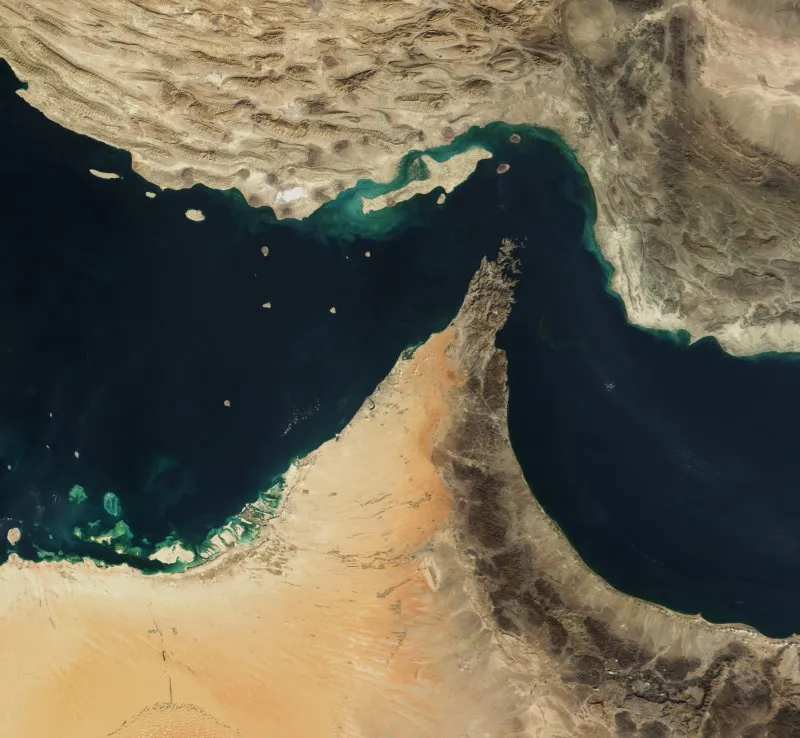
Iran's Revolutionary Guard said on Friday that two more tankers suffered incidents in the Strait of Hormuz — one in the eastern part, the other in the west — and were then stopped in the waters to the south. According to the Guard, both ships were sailing with their radar and positioning systems switched off, were trying to leave via routes Tehran opposes, had US military backing, and kept going despite repeated radio warnings.
The Guard gave no name, flag, cause of the incidents or word on the crews.
What is actually in dispute
The fight is not about one ship. It is about who authorises passage through the waterway that carries a decisive share of the world's oil. Iran maintains that vessels must coordinate with Iranian authorities and use corridors close to the northern shore. Ships avoiding that control have used the southern route, which Washington encourages.
The head of US Central Command (CENTCOM), Adm. Brad Cooper, says the internationally recognised transit routes are already free of Iranian mines, that Iran's navy has been destroyed and that the Revolutionary Guard no longer operates in the waterway. On 29 October the Guard's spokesman, Brig. Gen. Abolfazl Mohebi, demanded the opposite: "Prove your claim of mine-clearing in the Strait of Hormuz with independent evidence, not a statement!"
The incidents since Wednesday
On Thursday the Revolutionary Guard had said three tankers exploded and caught fire after striking mines on the southern route, and Iran's navy reported a fourth vessel damaged and ablaze in the eastern part of the strait. Iranian officials said all of them were in prohibited, unsafe areas. It is unclear whether the two ships cited on Friday are additional vessels.
The same day, the UK Maritime Trade Operations centre (UKMTO) reported that a small boat attached two explosive devices to a tanker's hull above the waterline. The devices detonated, started a fire in the engine room and briefly disabled the ship, about 25 nautical miles northeast of Khasab, Oman. The fire was put out, the crew was unharmed, no pollution was reported and the vessel resumed its voyage. The Financial Times identified the ship as the Louise 1. On the available record it is the first successful limpet-mine attack in the strait since the war between the United States and Iran began in February 2026, and who carried it out is not known.
Oman's Maritime Security Centre also reported that the Royal Navy of Oman evacuated 25 crew members from a Panama-flagged vessel that was attacked and caught fire about 1.6 nautical miles off Musandam. The ship was not named. Also on Thursday, at around 7.30pm local time, another tanker was struck by a projectile on the southern route, with no injuries and no environmental impact, according to the UKMTO; who fired is not known.
Qatar's mediation
Qatari mediators returned to Tehran on Friday with a revised proposal to end the war. According to CBS News, citing a source briefed on the talks, there are signs of progress, and Iran's answer was expected by the end of the week. Axios reported that the mediators are seeking common ground on inspections of nuclear facilities and sanctions relief, though the conditions for formally opening negotiations remain unsettled.
Iranian Foreign Minister Abbas Araghchi wrote on 28 October that "Iran continues to give diplomacy a chance to succeed". The next day the semi-official Tasnim agency said Tehran would not drop its core conditions for a ceasefire: an end to the US blockade of Iranian ports, sanctions relief and the release of frozen assets.
In parallel, Axios reported that the United States and Israel are weighing large-scale strikes on Iran after the US midterm elections on 3 November. The Associated Press, citing two diplomats, reported that Washington had warned allies in the region of possible new attacks and Iranian retaliation, with no final decision taken. President Donald Trump told a Kansas City radio station on Friday that the war would end "soon", without saying whether by diplomacy or by force, and that the United States wants guarantees that Iran will never obtain a nuclear weapon.
The deadlock already has an effect beyond the region: as long as the two accounts of the strait's safety remain incompatible, every shipowner has to choose between the route Tehran authorises and the one Washington calls clean — and hull insurance charges for that uncertainty.
With information from Euronews, CBS News, Reuters, AFP, the Associated Press, UKMTO, Axios and the Financial Times.