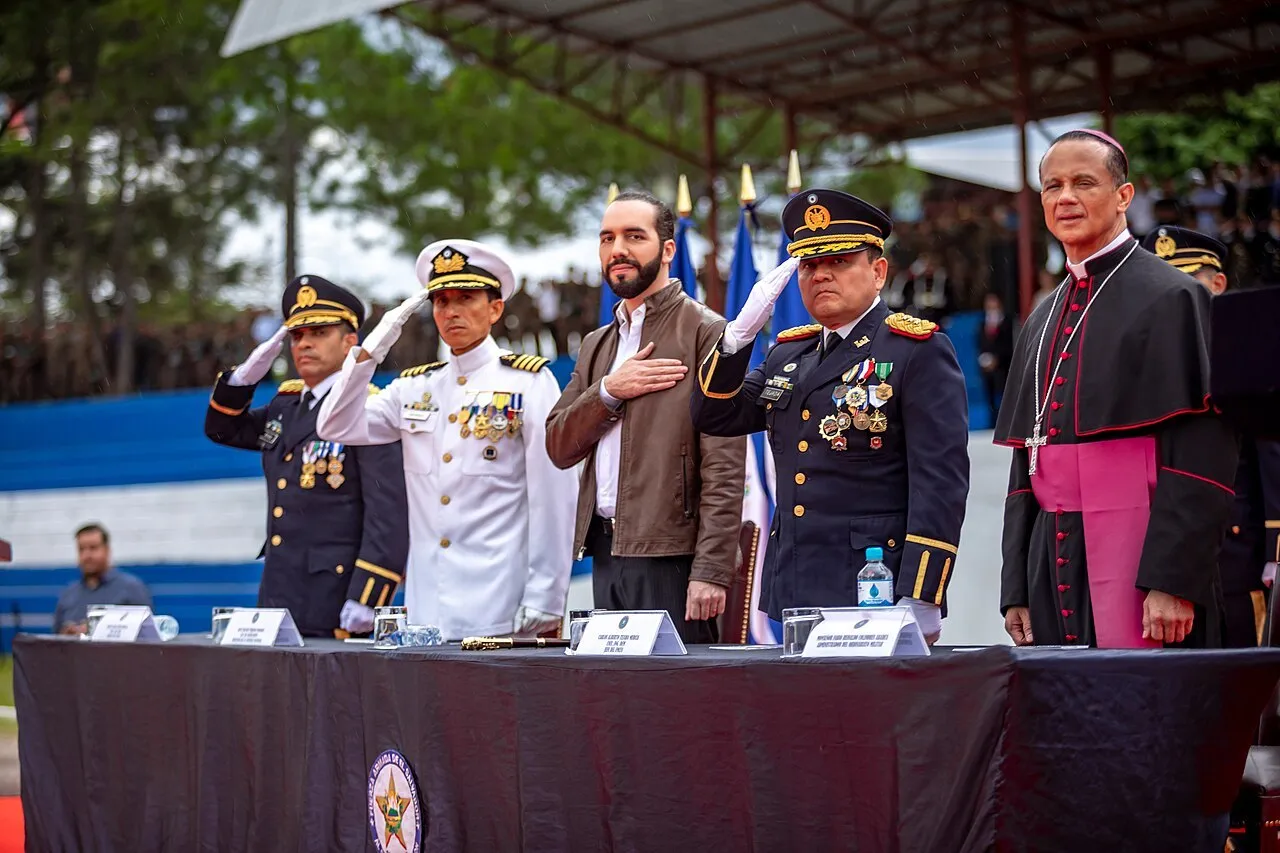
El Salvador's government announced on Wednesday, 28 October 2026, that it will keep "the operational deployment of more than two thousand soldiers" in Haiti to find and rescue four air force technicians missing since 18 October. The statement from the Cancillería (El Salvador's foreign ministry), carried by Salvadoran and international outlets, set no deadline and did not describe how the search stands.
The announced figure is larger than the one operational sources record. According to official data cited by the news agency EFE, the Salvadoran contingent in the Caribbean country reached about 1,300 troops after a group of 690 landed on Tuesday, 27 October. Before the ambush, El Salvador contributed little more than a hundred personnel to the multinational force.
On either count, it is the largest troop deployment by a single state to Haiti since the United Nations Stabilisation Mission in Haiti (Minustah) ended in 2017, having operated since 2004.
The 18 October ambush
The four servicemen lost contact on 18 October, when the armoured vehicle they were travelling in was attacked with high-calibre weapons and explosives in the Santo neighbourhood of Croix-des-Bouquets, north of Port-au-Prince. They were returning from buying food at a market. According to the account published by Infobae, international troops tried to reach the site and could not do so by land or by air because of the gunfire.
The four belong to Task Force Libertad II, part of the Gang Suppression Force (GSF), the anti-gang force created by the UN to replace the Kenyan-led mission. Their stated role was technical and humanitarian — medical evacuations and protection of helicopters and vehicles — not urban combat.
Authorities and analysts attribute the kidnapping to the 400 Mawozo gang, which has a record of mass abductions. The Viv Ansanm alliance it belongs to controls, by various estimates, more than 80% of the Haitian capital.
On 24 October, The New York Times reported that charred remains found outside Port-au-Prince might belong to the servicemen. President Nayib Bukele ruled that out on social media, citing the presence of a minor among the remains, of a person much taller than his soldiers and of foreign military uniforms. The UN-backed force said it would not confirm identities without official forensic evidence.
"The government prefers to keep quiet and act"
Bukele had already warned gang leaders that if the four men did not come back alive, they would face an offensive like the one he applied at home.
On Wednesday, according to the foreign ministry's account, the president spoke by telephone with Haitian Prime Minister Alix Didier Fils-Aimé about the operation and the continuation of the Salvadoran mission. He thanked Haitian authorities, local security forces and the population for their support, and restated his government's commitment to security cooperation.
A Salvadoran government source told the Haitian newspaper Le Nouvelliste that the deployment is carried out "in communication with the Haitian government", described Haiti as "a friendly country that helps" and said it "is not an invasion of the country". Asked about the secrecy surrounding the operation, the same source answered: "The government prefers to keep quiet and act."
Fils-Aimé's cabinet had not commented publicly on the rescue operation. EFE noted that the volume of troops suggests a scope beyond fighting the gangs, and that the deployment falls outside the mandate the United Nations Security Council set for the GSF in September 2025.
A multinational force at a third of its planned size
The GSF remains far below its intended strength. EFE describes it as having more than a thousand personnel from El Salvador, Guatemala, Jamaica, Mongolia, Sri Lanka and Chad, under the command of Mongolian Major General Edernebat Batsuuri. Reuters, cited by Infobae, puts it at about 2,000 members, roughly a third of the 5,500 foreseen for the mission.
Haitian outlets reported the arrival of Salvadoran equipment on three aircraft in recent days, and further charter flights were being discussed in Port-au-Prince. A Salvadoran law authorises the presence of its troops in Haiti until the end of 2027.
The gap between the two figures — a thousand personnel for the entire multinational force and more than two thousand announced by a single country — explains the unease of the specialists quoted by the region's press: an operation of that size, in densely populated neighbourhoods and with a weakened local police, raises questions about the chain of command and about the risk of direct armed clashes.
With information from EFE, Infobae, Le Nouvelliste, Reuters, The New York Times and swissinfo.