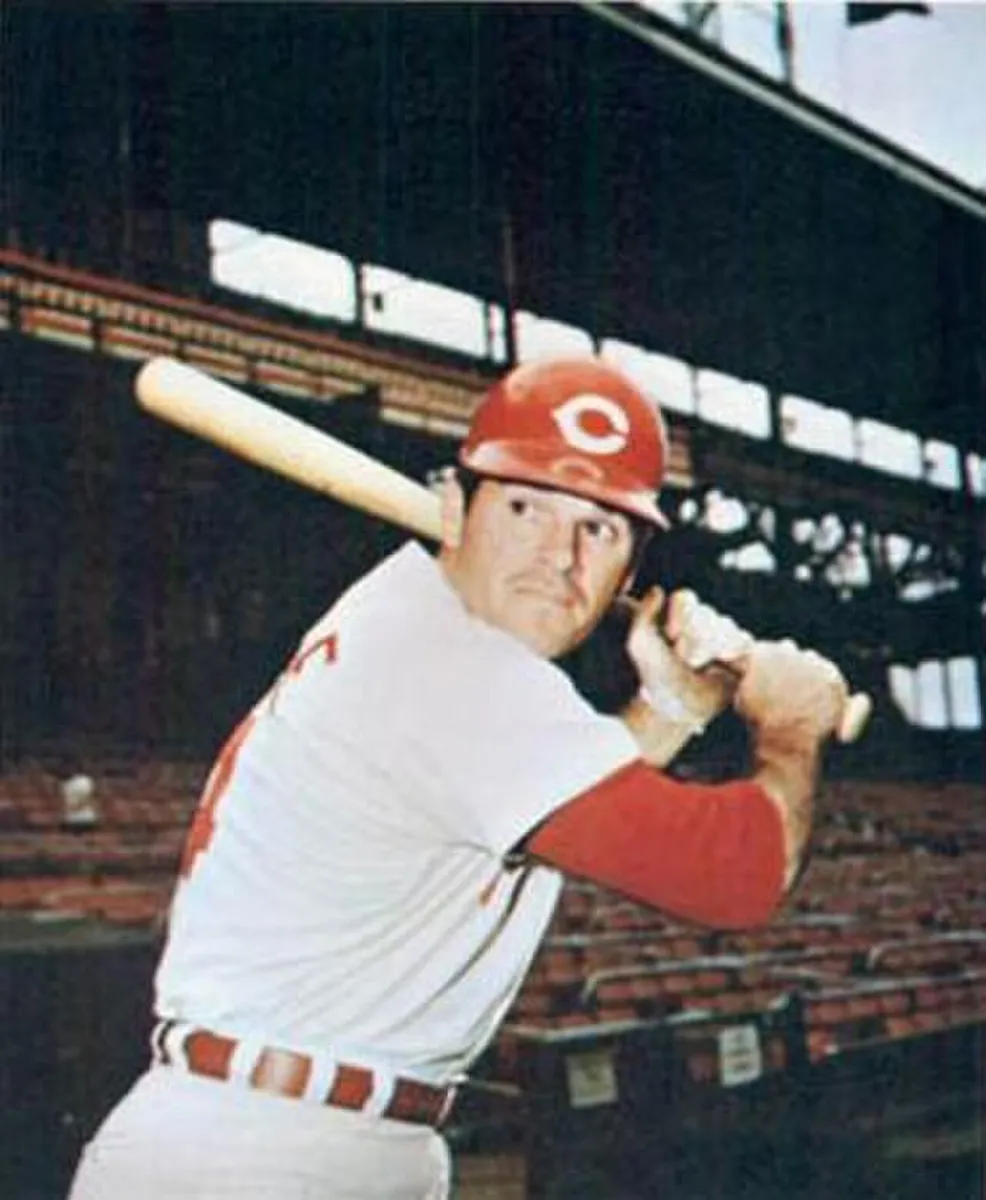
President Donald Trump said on Thursday, November 19, 2026, that he had granted a full posthumous pardon to Pete Rose, the Cincinnati Reds player and manager who holds baseball's career record for hits and who spent the last 35 years of his life banned from the game.
"I have just given a Complete and Total Pardon to the Late, Great Pete Rose, a true Baseball SUPERSTAR & LEGEND," Trump wrote on Truth Social. The post went on to list Rose's career numbers and to say he had been treated terribly by Major League Baseball. It also described his 4,256 hits as a single-season record; the figure is his career total, and no player has come close to it.
Neither the White House nor the Justice Department published a proclamation or a pardon warrant alongside the post, and the announcement did not spell out what the pardon covers.
What a pardon can and cannot reach
Rose's only federal conviction came on April 20, 1990, when he pleaded guilty in Cincinnati to two counts of filing false federal income tax returns. He admitted failing to report $354,968 in income over four years, from memorabilia sales and gambling winnings.
U.S. District Judge S. Arthur Spiegel sentenced him on July 19, 1990, to five months in prison, a $50,000 fine, 1,000 hours of community service and a year of probation. Rose reported to the federal prison camp at Marion, Illinois, on August 10, 1990, and was released on January 7, 1991. He repaid the Internal Revenue Service $366,042.
A presidential pardon runs only to federal offenses. Rose's exclusion from baseball was not one: it came from a settlement he reached with the commissioner's office in August 1989, after the investigator John M. Dowd concluded he had bet repeatedly on the Reds while playing for and managing them between 1985 and 1987. Rose denied the findings for more than a decade before admitting them in his 2004 autobiography, My Prison Without Bars.
"I know I'm not a bad person, but I did make some mistakes," Rose said on his Cincinnati radio show in 1990.
The ban already ended at his death
The more consequential decision for Rose's standing in the game came from Commissioner Rob Manfred in May 2025, eight months after Rose died. Manfred ruled that permanent ineligibility ends when the disciplined person dies, and removed Rose and 16 others from the list — among them Shoeless Joe Jackson, barred after the 1919 World Series.
"A person no longer with us cannot represent a threat to the integrity of the game," Manfred said at the time. In the letter conveying the ruling to Rose's attorney, Jeffrey M. Lenkov, he noted that Rose had never been placed on the list by an act of the commissioner, but as the result of the 1989 settlement.
That ruling, not the pardon, is what opened the door to Cooperstown. A rule the Hall of Fame's board adopted in 1991 bars anyone on the permanently ineligible list from consideration; with Rose off it, the earliest he could be elected and inducted is 2028. The Hall of Fame made no statement on the pardon, and neither did Major League Baseball or Rose's family.
The record
Rose played from 1963 to 1986 and finished with 4,256 hits, passing Ty Cobb's mark of 4,191, which had stood since 1928. He was a 17-time All-Star, the National League Rookie of the Year in 1963, the league's Most Valuable Player in 1973, the World Series MVP in 1975 and a three-time NL batting champion. He managed the Reds from 1985 to 1987.
Reporting from ESPN, the Associated Press and the New York Post.