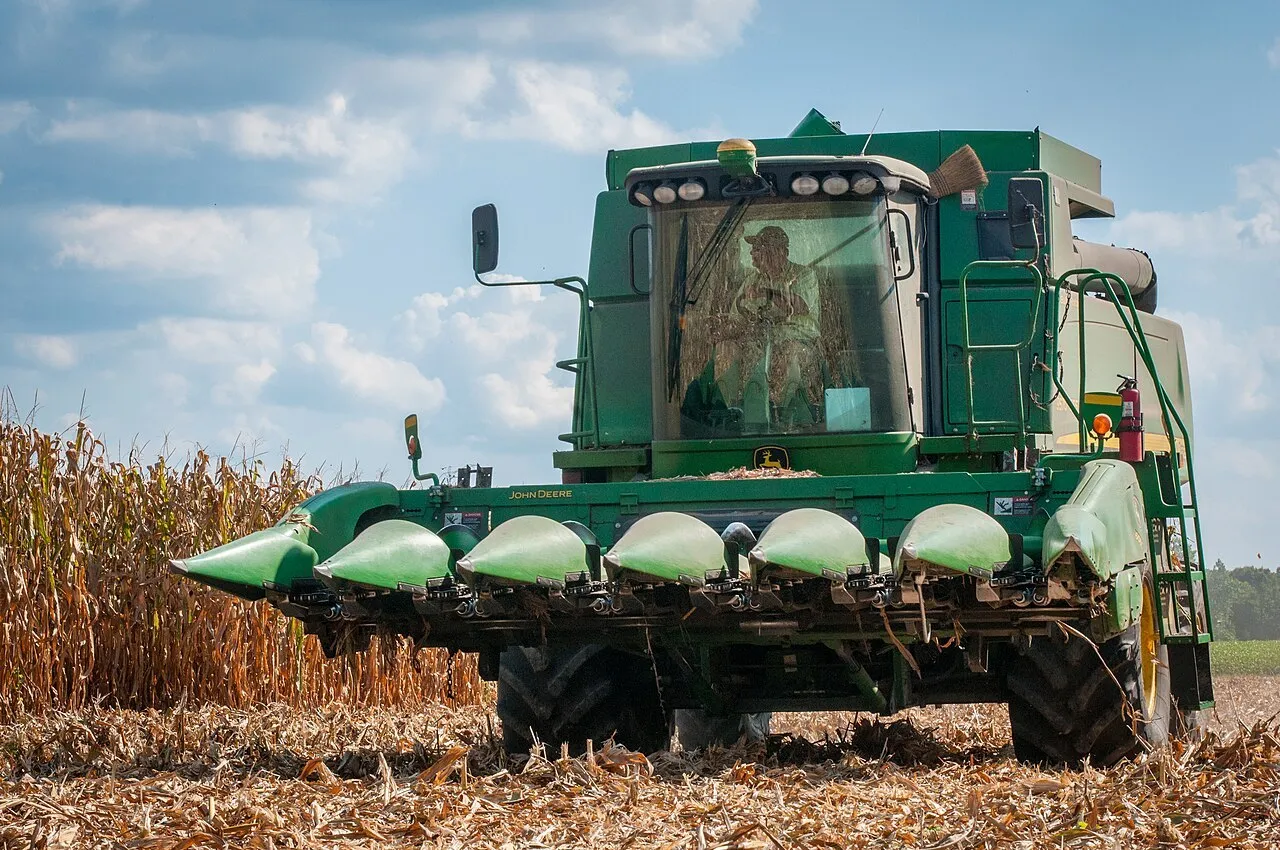
The U.S. Department of Agriculture has promised American farmers, ranchers and fishermen more than $15 billion in payments, loan guarantees and purchases in the weeks leading up to the November 3 midterm elections, the Associated Press reported on Sunday, November 1, 2026. The money lands in a farm economy squeezed from two directions at once: tariffs that raised the price of machinery and fertilizer, and a war in Iran that pushed diesel to levels American growers have not seen before.
President Donald Trump spent Sunday, two days before the vote, campaigning in Iowa and Kansas — two agricultural states where seats Republicans have long held are now rated competitive.
$8 billion for the fuel bill
The largest single item is the Harvest Fuel Relief program, announced on October 19 by Trump and Agriculture Secretary Brooke L. Rollins: $8 billion in one-time payments meant to offset what the department calls temporary market disruptions and higher input costs during this harvest.
Payments are authorized under the Commodity Credit Corporation Charter Act and will be administered by the Farm Service Agency. USDA says it will apply a uniform formula covering part of modeled losses for the 2026 crop year, built on three inputs: planted acres reported to the Farm Service Agency, cost-of-production estimates from the Economic Research Service, and the yields and prices in the World Agricultural Supply and Demand Estimates.
Commodity-specific payment rates for Title I crops are due in November. The application window has not been announced. Growers of crops outside that list, including specialty crop producers and fishermen, have been asked to send the department their own fuel-cost data so it can be weighed when rates are set.
"This $8 billion dollar investment will help bring certainty to our farmers during this harvest," Rollins said in the announcement, which also described Trump as "the most pro-farmer president of my lifetime."
What else is inside the $15 billion
According to the AP tally, the rest is spread across seven further announcements:
- at least $5 billion in guaranteed loans for ranchers and fishermen;
- $1.8 billion for producers and landowners enrolled in conservation programs;
- $573 million for fertilizer manufacturing projects;
- up to $472.5 million in commodity purchases, announced on October 29;
- $86.6 million in grants for specialty crop projects;
- $57 million to expand meat processing capacity.
The October 29 food buy, made by the Agricultural Marketing Service under Section 32 authority, is itemized in the department's own release: $165.5 million of dairy, $41 million of pork, $30 million of almonds, $37 million of split peas, $29 million of lentils, $25 million of raisins, $22 million of hazelnuts, $21 million of rice, $20 million each of chicken, chickpeas and farm-raised catfish, $12 million of Pacific whiting, $10 million each of oranges, grapefruit and dried fruit mix. The food goes to the charitable food network and to federal nutrition assistance programs.
Separately, the department says $13.8 billion in safety-net payments for the 2025 crop year is reaching growers of corn, soybeans, wheat and rice. Earlier in 2026, a $12 billion program called Farmer Bridge Assistance paid more than 560,000 farmers.
The cost side of the ledger
Diesel averaged about $6.32 a gallon nationally in late October, according to AAA, against roughly $3.62 a year earlier — an increase of about 70%, or some $260 more to fill a 100-gallon tank. In Iowa the pump price was near $6.16, up about 80% year over year.
USDA's own September outlook put 2026 farm production expenses $21.2 billion higher than 2025, a 4.5% rise to $492.8 billion, with fuel and oil costs forecast up 28.8%.
That arithmetic is the argument for the payments and, for some economists, the argument against them. Gregg Ibendahl, a farm management specialist at Kansas State University, estimated the money would "more than cover the increase in fuel costs" — while noting that a temporary government payment does nothing about what pushed the costs up.
"It will help, but it won't make farmers whole"
Farm organizations have welcomed the cash and criticized its shape, in nearly identical terms.
Aaron Lehman, president of the Iowa Farmers Union — which has endorsed Democratic candidates this cycle — called it a "Band-Aid response now, two weeks before the election" that "doesn't fix the problem." Rob Larew of the National Farmers Union said one-time payments "can't provide the stability they need to plan for the future." Matt Frostic of the National Corn Growers Association asked instead for "durable, bipartisan, long-term solutions." The American Dairy Coalition put it most plainly: "It will help, but it won't make farmers whole," noting that a dairy's fuel exposure runs year-round rather than peaking at planting and harvest.
John Boyd, founder of the National Black Farmers Association, said the measure "came way too late."
Whether the money moves votes is a separate question from whether it covers a fuel bill. Political scientists quoted by the AP were doubtful: Michael Smith, of Emporia State University, noted that many rural voters like Trump more than they like specific policies, and that "Trump himself isn't on the ballot this year." Alexandra Middlewood, of Wichita State University, said the farmers she hears from are glad to stay in business but read the programs as one-time bailouts, and expects independent voters to decide Tuesday's races.
Reporting from the Associated Press, the U.S. Department of Agriculture and Newsweek.