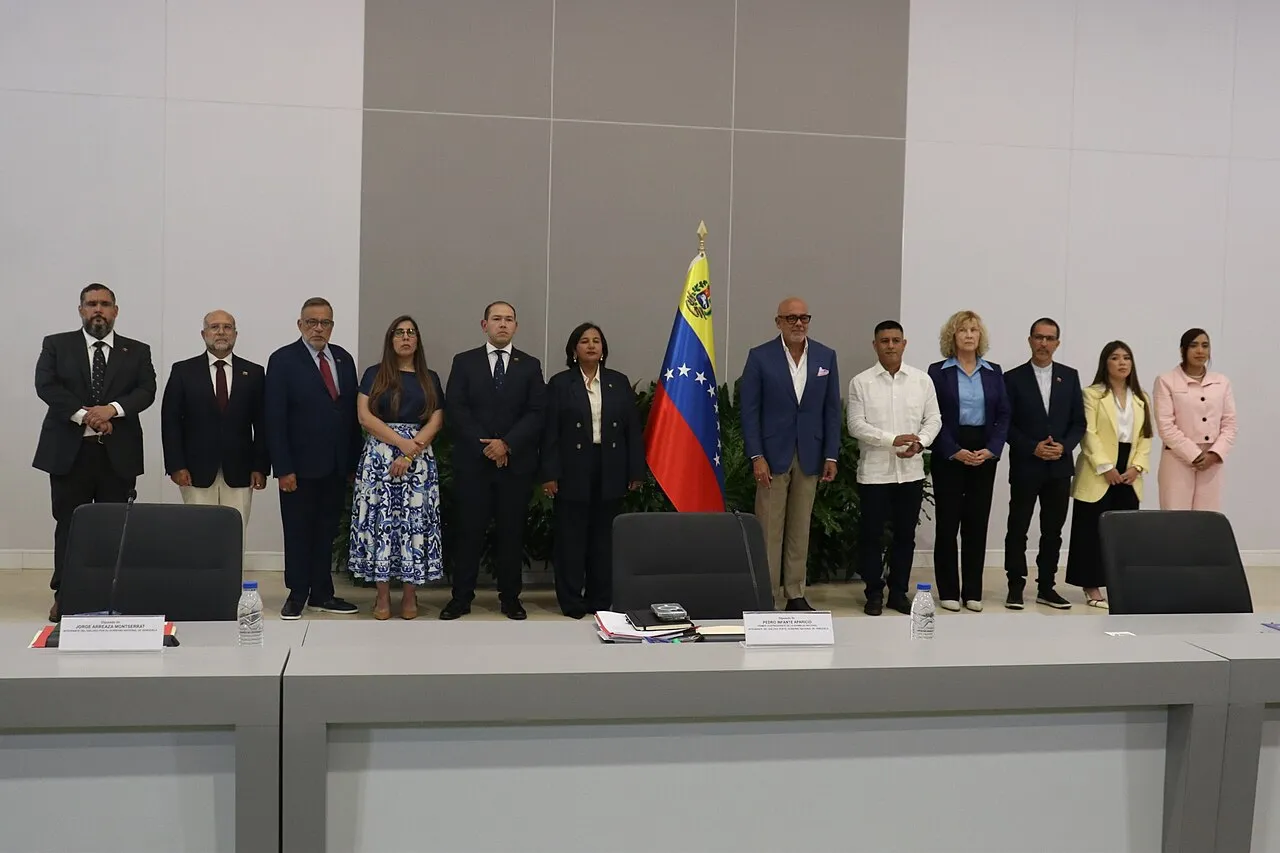
Venezuela's governing chavismo and one wing of the opposition opened the third round of their negotiating table at 3 p.m. on Wednesday, October 14, 2026, at a hotel in Caracas. As in the two earlier cycles, only photographers were allowed in. Sources told the news agency EFE that the talks would run for several days, without a set length.
The opposition delegation is led by Dinorah Figuera. The stated goal of this round is an agreement on political and civil guarantees for a possible electoral process.
The court and the electoral council, carried over from earlier rounds
The delegations had already met in August and in September, in two cycles of about a week each, devoted mainly to overhauling the justice system. The central item was a full renewal of the Tribunal Supremo de Justicia (TSJ, Venezuela's supreme court), which is accused of having acted in the government's service.
The same agenda covered the release of Venezuelan gold held in England and the lifting of restrictions on websites, many of them news outlets, along with other free-expression measures.
The US State Department said there had been progress on selecting the new TSJ justices and on reforming the Consejo Nacional Electoral (CNE, the national electoral council). Beyond that announcement, no details emerged from the first day of this third cycle.
Washington behind the table
The talks are driven by the United States as part of the transition that opened after Nicolás Maduro was captured in Caracas in January. On the Friday before this round began, Figuera met Secretary of State Marco Rubio in Washington; the State Department then announced that the third cycle would start on October 14.
According to that statement, Rubio urged continued progress on political freedoms and electoral reform as the basis for "free, fair and credible" elections. He also praised Figuera's "courageous leadership" and welcomed the "tangible progress" of the first two rounds.
That American prominence is also the table's most exposed flank: criticism is growing of Donald Trump's administration from those who believe Washington is more interested in Venezuelan oil than in the country's democratic transition.
Who is not there
The table does not include María Corina Machado or Edmundo González Urrutia, the two opposition figures who drew international backing during the 2024 electoral cycle. How far any Caracas agreement reaches will therefore depend on how much of the opposition sees itself in the names that sign it.
With information from EFE, Infobae and El Nacional.