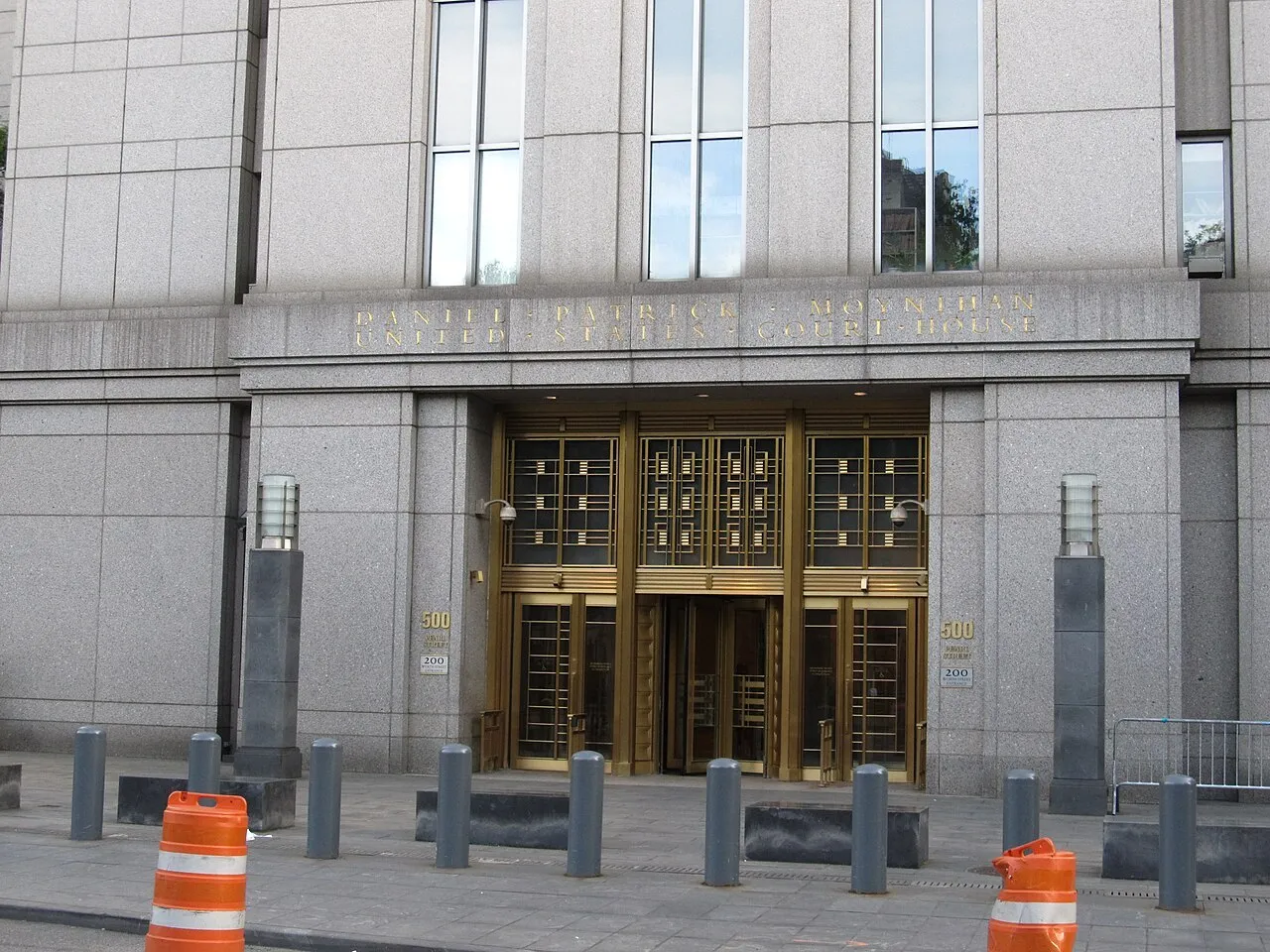
A federal judge in New York ordered the Trump administration on Sunday night to cancel the television advertisements it has been running at taxpayer expense — a campaign of five spots built around President Donald Trump that began airing in late September and was paid for out of a Department of Homeland Security budget line.
U.S. District Judge Jennifer L. Rochon granted a temporary restraining order that took effect at 6:45 p.m. Eastern time and runs for two weeks. It requires the administration to cancel any spots still scheduled, including those set to air that same Sunday night, and bars the defendants from entering into, renewing or expanding any agreement to develop, create, distribute, place or air the contested advertisements.
$20 million budgeted, $21.7 million tracked
Homeland Security set aside $20 million for what the department called a "National Media Campaign" and awarded the advertising contract on September 20 to LMD Agency, based in Maryland. A day earlier, according to CBS News, the White House Office of Management and Budget had released $20 million to Customs and Border Protection under the heading "OBBB Commemorative Events."
By Monday morning the advertising tracker AdImpact had counted $21,705,138 in federal spending on the five commercials — more than the sum set aside for them. AdImpact cautions that its figure may undercount, because the spots were filed as public service announcements, a category bought and reported differently from political advertising.
That classification is the heart of the dispute. One of the commercials features Trump talking about the threat of communism; another replays an advertisement from his last presidential campaign; the most recent is about the administration's capture of Venezuelan leader Nicolás Maduro. None of them points a viewer toward a government programme, benefit or deadline, which is what a conventional public service announcement does.
Who sued
The order came in a case brought by a coalition that includes Common Cause, the nonpartisan watchdog group, represented by the legal organisation Democracy Forward. The plaintiffs argue the spending is an illegal use of appropriated money; in a statement they said there is "no legal justification — and no precedent" for using government funds to influence the outcome of an election. The Democratic National Committee has filed a separate suit over the same campaign.
Legal scholars cited by the Associated Press have pointed to the federal prohibition on using money appropriated by Congress for "publicity or propaganda," and have raised the possibility that other statutes are also in play.
The administration's answer
The Justice Department told the court in a Saturday filing that an order was unnecessary because "the alleged offending conduct will end tomorrow." In a declaration filed the same day, a Homeland Security official, Holly Mehringer, wrote that the money came from funds available for "commemorating efforts and events related to border security."
The White House has defended the commercials as ordinary public service announcements of a kind earlier administrations also ran, and says they "are clearly not political." It pointed to an October 5 social media post in which Trump called the advertisements "rather standard." Amid the criticism Trump said his political fundraising operation would pay for them; a White House official said there are no immediate plans to reimburse the Treasury for what has already gone out.
The objections were not confined to Democrats. Senate Majority Leader John Thune, a South Dakota Republican, said of the campaign: "It shouldn't be paid for with taxpayer dollars."
Three weeks from the vote
Rochon's order covers two weeks, carrying it to roughly October 25. That leaves the final nine days before the November 3 midterm elections — the stretch in which political advertising is heaviest and most expensive — to the next stage of the case, rather than settling it.
Reporting from the Associated Press, PBS NewsHour and CBS News.