
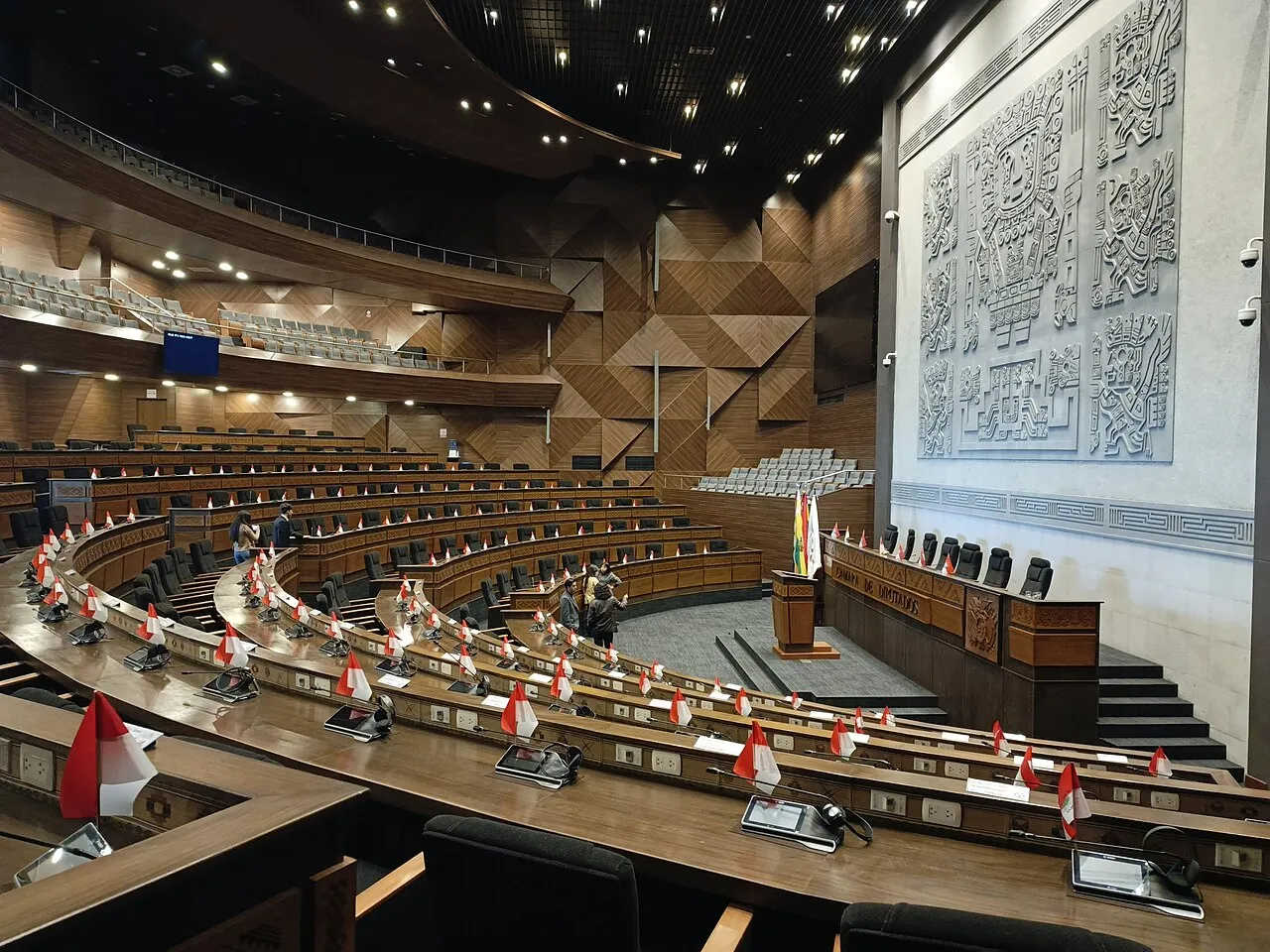
Bolivia's Asamblea Legislativa Plurinacional (Plurinational Legislative Assembly) sits on Friday, 2 October, at 9.30am to take up the arrest of the country's attorney general, Roger Mariaca, detained on Wednesday 30 September in Santa Cruz and accused by the government of heading a criminal organisation lodged inside the prosecution service itself.
The session was moved up by three days. The original date, set by Vice-President Edmand Lara, was 5 October; the president of the Senate, Diego Ávila, brought it forward to Friday citing urgency, while Lara attends parliamentary meetings in Spain. On the agenda: receiving and considering the official reports on the arrest and its constitutional framing.
This is not a formality. The Asamblea is the body that elects the attorney general, and is therefore the only one that can decide what happens to the post.
Fourteen detainees and an ambulance holding $300,000
Mariaca was arrested along with 13 other people. Among them are four prosecutors — including Alberto Zeballos, of the Santa Cruz jurisdiction — and six employees of the Ministerio Público (the prosecution service). Four others were found inside an ambulance with roughly $300,000 in assorted currencies.
The charges are criminal organisation, money laundering and illicit trafficking of controlled substances.
Interior Minister Marco Antonio Oviedo said a criminal organisation embedded in the justice system had been dismantled, and described the institution Mariaca led as a structure built to encourage and protect narco-terrorism. On his account the prosecution service had not failed to pursue drug trafficking: it had gone along with it.
The visa, revoked two days earlier
The arrest came 48 hours after the US State Department revoked Mariaca's visa, on Monday 28 September, alleging "significant corruption" and saying he had solicited and accepted bribes to facilitate drug trafficking.
The same round of revocations reached judges, officials and businesspeople in Bolivia, Colombia, Ecuador and Peru. According to Infobae, Secretary of State Marco Rubio publicly backed the Rodrigo Paz government's measures against organised crime.
Who Mariaca is
Roger Rider Mariaca Montenegro, born in Santa Cruz in 1987, holds a law degree from the Universidad Gabriel René Moreno and a master's in criminal and procedural law. He taught at university level before running the Santa Cruz departmental prosecution office between 2020 and 2024.
In October 2024 the Asamblea, then dominated by the MAS party, elected him attorney general with more than two-thirds of the votes and for a six-year term, despite seven objections raised during the pre-selection stage. He was 36 when he was sworn in.
His name is tied to the case of Uruguayan drug trafficker Sebastián Marset. In 2023, when Mariaca was departmental prosecutor, an operation in Santa Cruz failed to capture him. Marset was arrested in March 2026 by police, with no involvement from prosecutors, and extradited to the United States. A video later circulated in which the trafficker refers to Mariaca as his contact; its authenticity has not been verified.
Two prosecutors, one post
After the arrest, senior prosecutor Luis Montaño Morales took over the prosecution service on an interim basis. The government does not recognise him.
Presidential spokesman José Luis Gálvez said Montaño was illegally and illegitimately usurping the office, and signalled that he too could be detained. The executive insists the succession is a matter for the legislature, not an internal decision by the prosecution service.
Which is why Friday's session matters more than its agenda suggests: until the question is settled, Bolivia has two people claiming to run the prosecution service and one chair.
With information from La Razón, Opinión, Unitel, Infobae and Bolivia's Cámara de Diputados.