An armed group has shut the valve on the pipeline that carries crude from El Sharara, Libya's largest oil field, forcing the state-owned National Oil Corporation (NOC) to admit it may declare force majeure on its export contracts. The corporation announced the blockade late on Monday, 22 September.
According to the NOC statement, the closure caused pressure to build up inside the pipeline and led to "a significant reduction in production" at the field. The company did not identify the group responsible or disclose the demands behind the action.
A third of Libya's oil
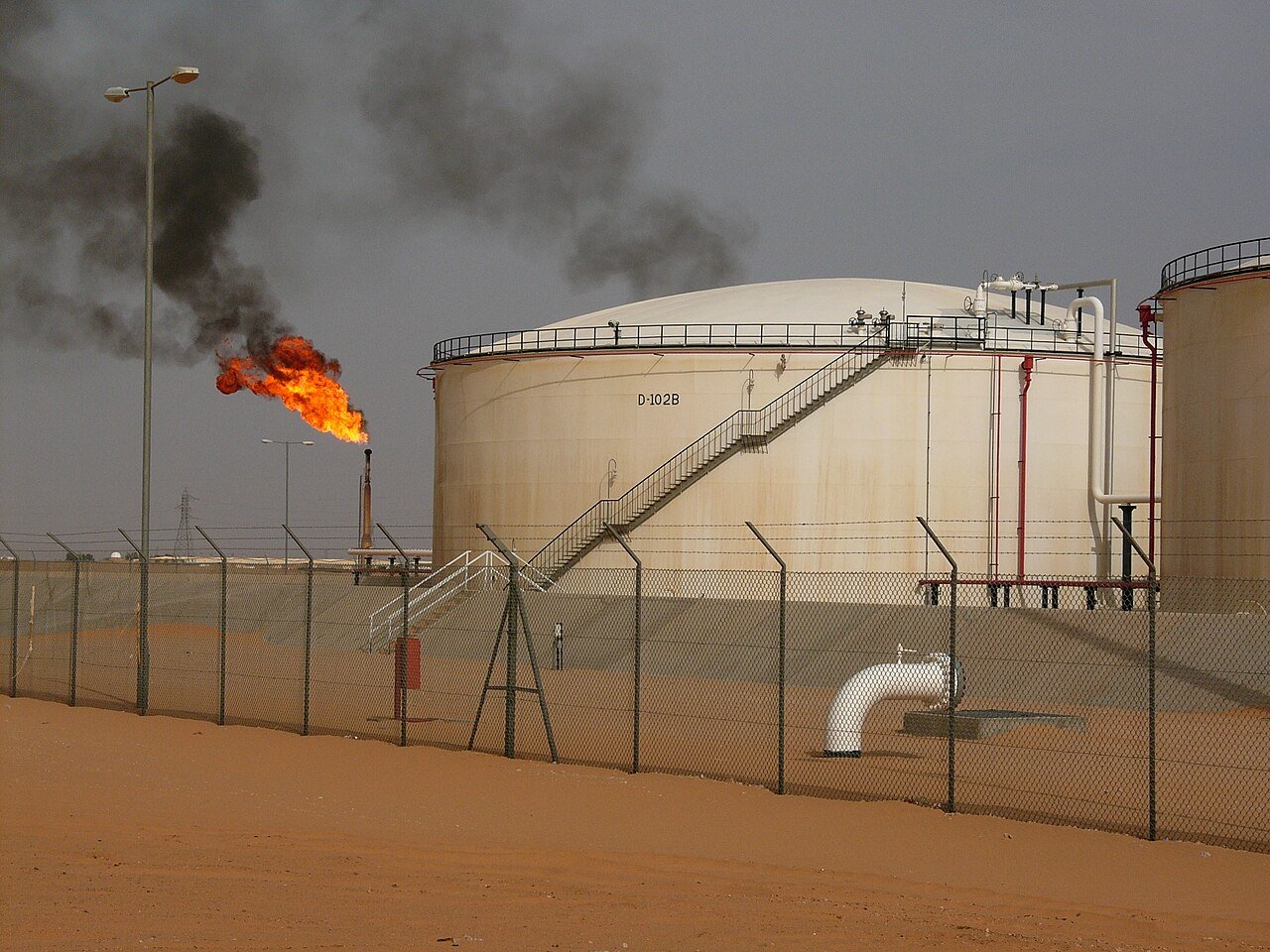
El Sharara lies roughly 700 kilometres south of Tripoli and, at full capacity, pumps close to 350,000 barrels a day — about one third of all Libyan output, according to Euronews. The crude travels by pipeline to Zawiya, a coastal terminal and refinery some 45 kilometres west of the capital.
The NOC warned that the Zawiya refinery itself may be forced to halt operations if supply is not restored. It is the plant that covers much of Libya's domestic fuel market, which turns a stand-off at a desert field into a question of pumps running dry in the cities.
The field is run by Akakus Oil Operations, a joint venture between the NOC and Spain's Repsol, France's TotalEnergies, Austria's OMV and Norway's Equinor.
A familiar script
In Libya, closing a valve is an ordinary form of bargaining: armed groups and protesters routinely target fields, pipelines and export terminals to press for money, jobs or political decisions. El Sharara was already shut for roughly two years, between 2014 and 2016, after blockades of the same kind.
The force majeure clause the NOC is threatening to invoke is not a symbolic gesture. It suspends contractual obligations in circumstances beyond a supplier's control and, in practice, tells buyers that contracted cargoes may not sail. For a country whose public revenue depends almost entirely on oil exports, every week the valve stays shut is money that does not arrive.
With information from Euronews, Arab News and National Oil Corporation statements.