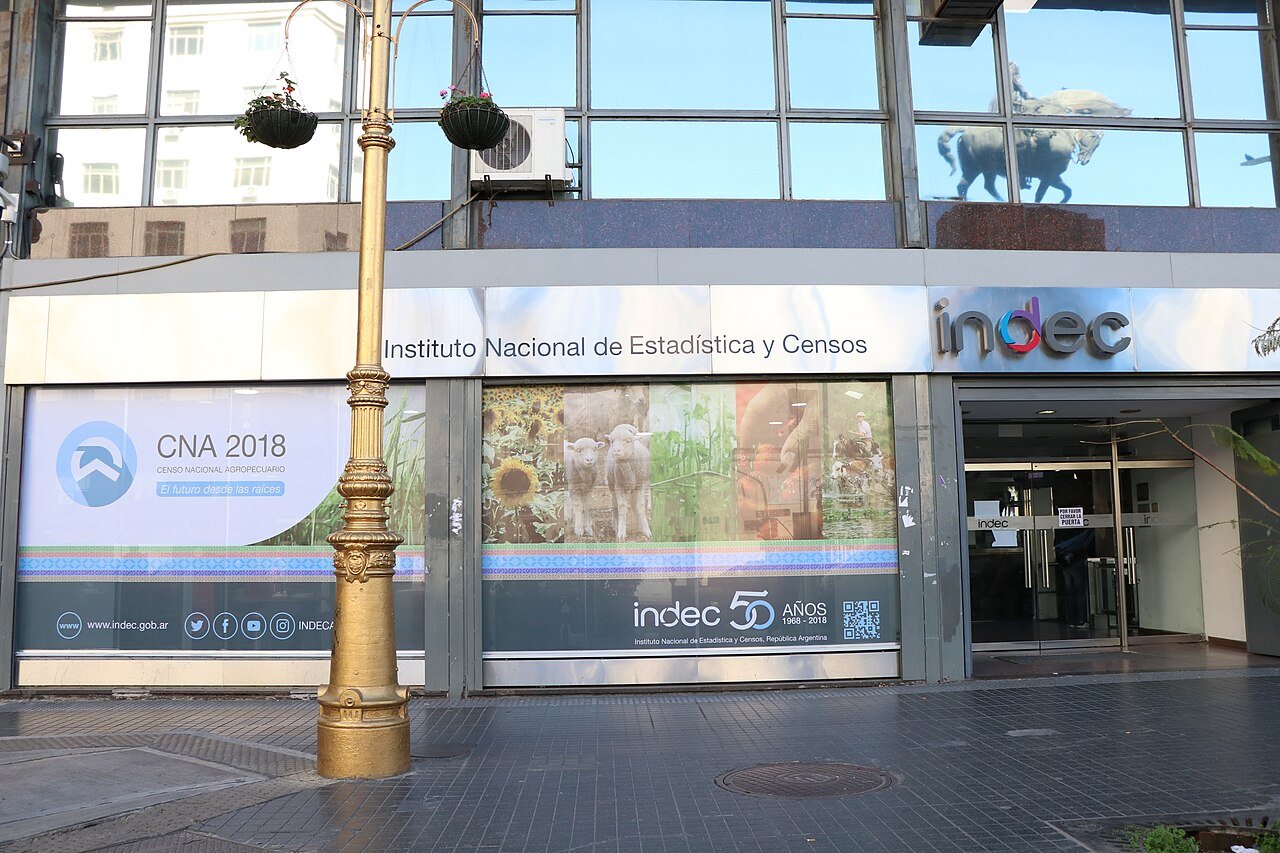
Poverty in Argentina has risen again. According to the poverty and indigence report released by the Instituto Nacional de Estadística y Censos (INDEC, the national statistics institute) on 24 September 2026, 32.3% of people living in the 31 urban areas it surveys fell below the poverty line in the first half of the year: 9.73 million people.
That is a jump of 4.1 percentage points from the second half of 2025, when the figure was 28.2%. Measured by household, poverty went from 21.0% to 24.4%, or 2.498 million homes.
Indigence — households whose income does not cover even the basic food basket — rose from 6.3% to 7.5% of people, about 2.249 million, and from 4.8% to 5.6% of households, roughly 575,000.
Children hit hardest
The age breakdown is the harshest part of the report. Among people aged 0 to 14, 44.5% live in households below the poverty line: close to one child in two. At the other end, among those over 65 the rate is 14.8%, three times lower.
By region, Argentina's Northeast leads with 41.5% of people in poverty, followed by Cuyo at 36.7%. Patagonia records the lowest incidence, 28.4%. Among individual urban areas, Concordia, in Entre Ríos province, is the worst hit at 56.2%, according to the area-by-area figures carried by Argentine newspapers.
Income lost the race against the basket
The arithmetic behind the reversal is in the report itself. Average total family income in poor households was ARS 922,755, while the basic total basket (CBT) those same households would have needed to clear the line reached ARS 1,440,395. The distance between the two — the poverty gap — was 35.9%.
Over the six months, household incomes grew 11.5%, far behind the basic food basket (21.4%) and the basic total basket (19.6%). When the cost of the basket runs at twice the speed of income, the line moves faster than wages, and households that had been sitting just above it fall to the other side.
Economist Leopoldo Tornarolli, of Cedlas, attributed the increase to the pickup in inflation between May 2025 and March 2026 and to weak momentum in formal employment, in remarks to La Nación. Agustín Salvia, of the Universidad Católica Argentina's social debt observatory, pointed in the same paper to a persistent structural core of chronic poverty that neither series — the one going up or the one going down — reaches.
The official reading
Economy Minister Luis Caputo framed the rise as a passing move and reached for a longer comparison: against the first half of 2024, when the reading was 52.9%, poverty has fallen by more than twenty points. Both numbers come from the same agency and the same series; the difference lies in the starting point each reading picks.
What this number actually measures
The INDEC figure is not a snapshot of the whole country. It comes from the Encuesta Permanente de Hogares (Argentina's continuous household survey), which covers 31 urban agglomerations — around two-thirds of the population — and leaves out small towns and rural areas. That is why the institute reports 9.73 million poor people, while projections to the national total published by the Argentine press put the figure at around 15.5 million.
The next reading, covering the second half of 2026, is due around March 2027.
With information from INDEC ("Incidencia de la pobreza y la indigencia en 31 aglomerados urbanos", first half of 2026), La Nación and Infobae.