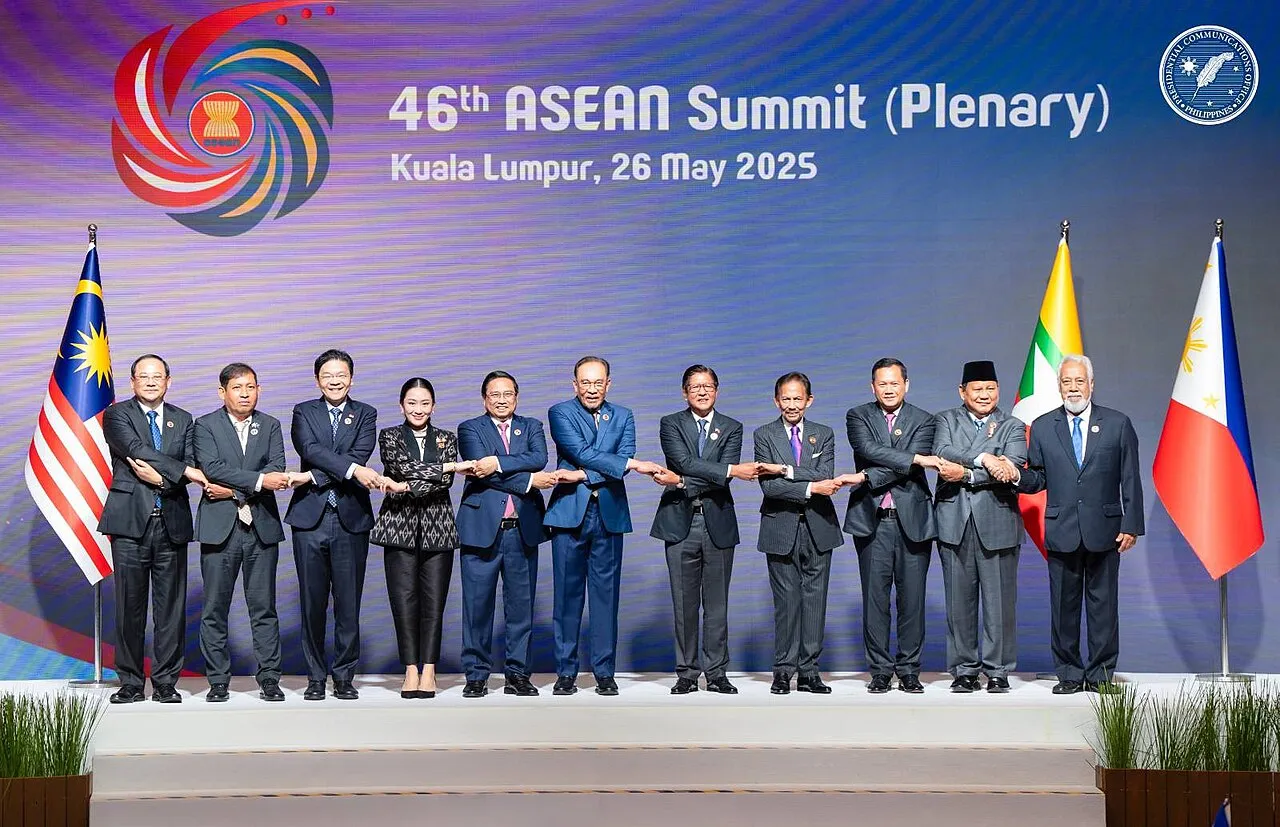
The 49th Summit of the Association of Southeast Asian Nations (ASEAN) opens on Sunday, 15 November, in Manila, and runs through Tuesday. The Philippines holds the bloc's rotating chair in 2026 and will hand it to Singapore next year. For the week of meetings, the Philippine government has deployed around 20,000 police across the capital region.
The announced agenda brings together trade, security, the energy crisis tied to the war in Iran — including shortages and possible fuel-sharing schemes —, haze from fires in Indonesia, the code of conduct for the South China Sea and the question of Myanmar.
What is actually likely to be signed
The most likely concrete outcome of the summit is the signing of the bloc's digital economy framework agreement, launched in 2023 and designed to ease cross-border data transfers and electronic payments. ASEAN presents the text as a step toward a $2 trillion regional digital economy by 2030.
The code of conduct for the South China Sea, under negotiation with Beijing for years, is not expected to advance. Philippine Foreign Secretary Theresa Lazaro said the talks are "80 percent" complete, but a Southeast Asian diplomat who spoke to AFP did not expect a signing at the summit. "If it happens, then it's a small miracle," said Siew Mun Tang, former head of the ASEAN Studies Centre at Singapore's ISEAS institute.
China claims most of those waters despite an international ruling against its case, and its coast guard has been involved in repeated clashes with Philippine vessels. At last month's meeting of ASEAN defence chiefs, Beijing sent only an embassy defence attaché.
The trade numbers
Trade is the central theme, and the data explain why. US imports of ASEAN goods grew more than 29% in 2025, reaching $453.6bn, and the US trade deficit with the bloc rose to $327.4bn.
In July, the US administration imposed tariffs of 10% to 12.5% on 60 trading partners, citing a failure to curb forced labour, according to the Office of the US Trade Representative. Other trade investigations, on national security and on excess industrial capacity, could produce further tariffs.
For Deborah Elms of the Hinrich Foundation, the bloc has had "mixed success" in navigating US tariffs: export growth comes mainly from electronics, largely exempt and driven by the build-out of artificial intelligence infrastructure.
One figure measures the bloc's limits as a common market: trade among ASEAN countries themselves accounts for about 23% of the total, against 67% in the European Union, according to Phar Kim Beng of the International Islamic University Malaysia. He does not expect meaningful measures at this summit to lift that share.
Who is in Manila
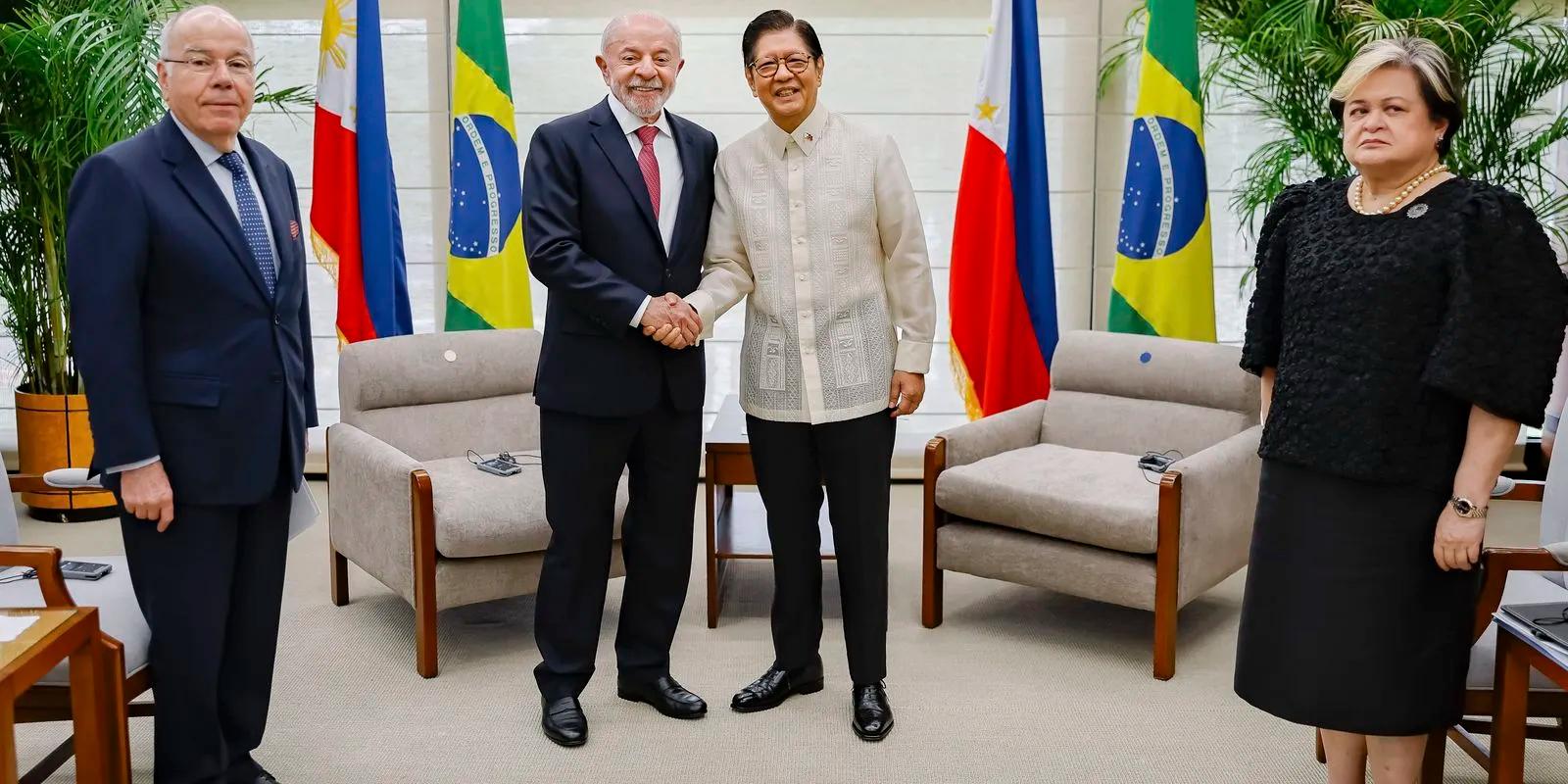
Brazilian President Luiz Inácio Lula da Silva takes part in a plenary session on Sunday. Australian Prime Minister Anthony Albanese is expected to sign a new defence pact with the Philippines. Canada's Mark Carney, among the first to arrive, announced on Saturday the conclusion of trade negotiations with the host country. UN Secretary-General António Guterres landed before the opening.
US President Donald Trump arrives on Tuesday, near the end of the gathering, for a sideline meeting with the Quad — India, Japan and Australia — the first of his second term. From Manila he travels on to the APEC summit in Shenzhen, China. Philippine progressive groups are preparing a march against the visit on Tuesday, aimed above all at the American Pax Silica programme on semiconductor and rare earth supply chains, whose flagship project in the country is a 1,620-hectare artificial intelligence manufacturing hub north of Manila.
Myanmar
Myanmar has been excluded from ASEAN's high-level meetings since the 2021 military coup, which opened a civil war still under way. Thailand has argued for the return of the country's foreign minister to the meetings, but Lazaro said there is "no easing" in the approach to the case. An international ruling due this week is expected to say whether Myanmar committed genocide against the Rohingya minority.
With information from Al Jazeera and AFP (via Arab News).