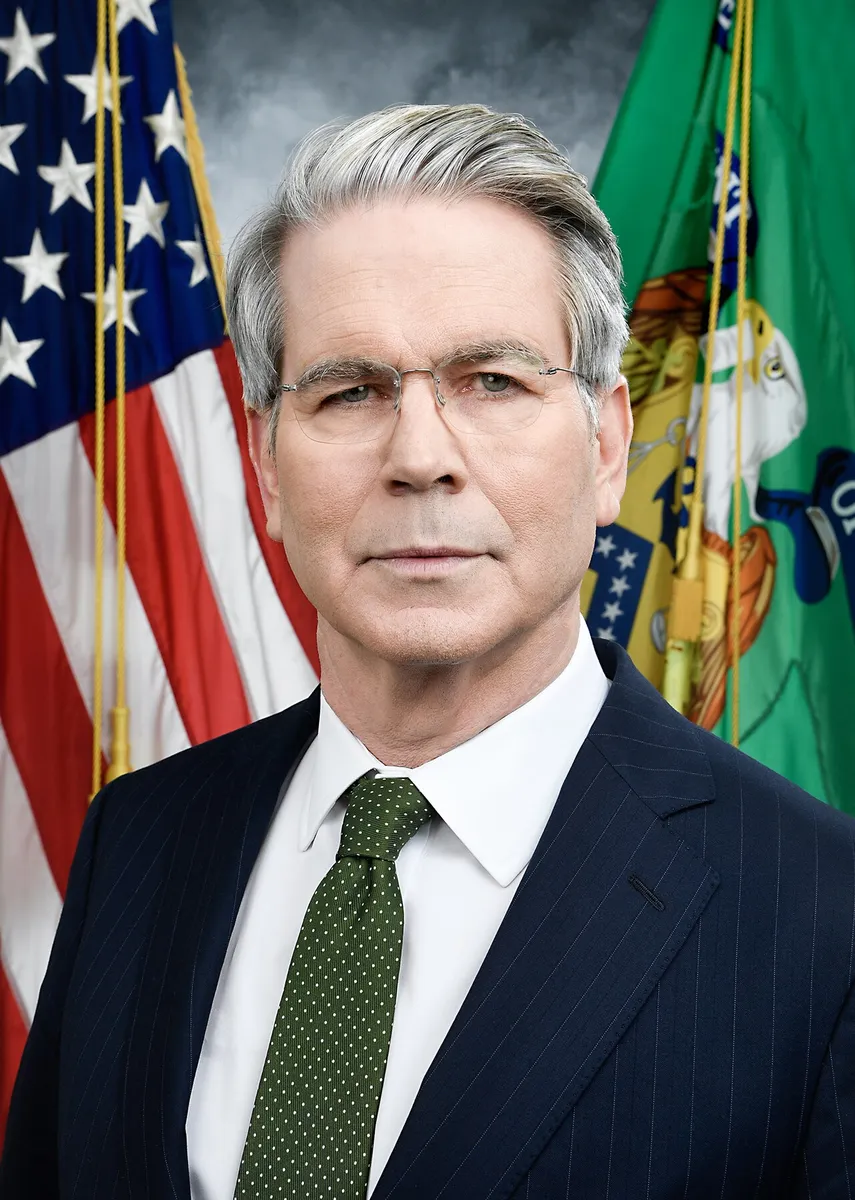
Treasury Secretary Scott Bessent said four federal agencies had spent months pressing for a Singapore-based Nvidia customer to be added to the United States' export blacklist, and that the Commerce Department, which controls that list, has not acted.
Speaking on CNBC's "Squawk Box" on Friday, November 13, 2026, Bessent said the Treasury, Defense and State departments and the Office of the US Trade Representative "were in favor of putting Megaspeed on the entity list for months." Asked why it had not happened, he pointed across the cabinet: Commerce "has the pen," he said, and "you will have to ask them about their internal processes."
The Entity List, maintained by Commerce's Bureau of Industry and Security, subjects a named company to additional licensing requirements, which in practice cuts off its access to controlled American technology. Megaspeed is not on it.
A $4 billion customer and a halted investigation
Megaspeed secured more than $4 billion worth of Nvidia processors, according to reporting by The New York Times. US investigators suspected some of those chips were smuggled into China, in breach of the export rules that bar Beijing from Nvidia's most capable accelerators.
The company denies diverting anything and says it cooperated with American inspections. Nvidia barred all sales and shipments to Megaspeed in June 2025, a company spokesman told The Wall Street Journal. The New York Times reported that Commerce halted its own Megaspeed inquiry in 2025 after a lawyer for Nvidia contacted its agents.
Bessent would not confirm specific shipments, saying only that "there is a lot of leakage in the system" and that the government is working to close it. He framed the stakes in competitive terms: "I am frustrated when President Trump made it very clear that China should not receive any Nvidia chips above H100s," he said, adding that "any leakage is very frustrating" because it costs American companies ground in the artificial intelligence race.
On whether Nvidia itself bears responsibility, he said the question is whether the company knew its client and made a "robust effort" to prevent diversion, including sales through shell companies. "I think it's important that anyone at the company there be held accountable for that," he said.
The dispute inside the cabinet
Axios reported that Bessent confronted Commerce Secretary Howard Lutnick over the designation during a White House Situation Room meeting the previous week, and that Lutnick has repeatedly resisted moves against companies suspected of routing chips to China. Bessent declined to discuss it: "We don't repeat conversations in the Situation Room."
A Commerce spokeswoman, Kristen Eichamer, denied on Wednesday that any such conversation took place. Commerce did not respond to CNBC's request for comment on Bessent's remarks, and told Semafor that "Treasury and Commerce have a great working relationship."
What Congress has scheduled
The fight became a congressional matter this week. Senate Banking Committee chairman Tim Scott said on Thursday that the panel had asked Lutnick and former Nvidia chief executive Jensen Huang to testify next month; Eichamer said on Friday that Lutnick had agreed to appear voluntarily.
Three House committees — on China, intelligence and foreign affairs — requested a closed-door briefing with Huang on December 1 and an interview with Nvidia general counsel Tim Teter on December 2. House Foreign Affairs chairman Brian Mast asked Commerce Undersecretary Jeff Kessler to testify on December 3, at a hearing meant to examine chip smuggling, adversaries' military use of advanced processors, and alleged private-sector interference in export policy and investigations.
Huang resigned as Nvidia's chief executive on Thursday, November 12, after acknowledging an affair with Alice Huang, a former Megaspeed executive whom US officials have reportedly assessed to be working for Chinese intelligence — a characterization Beijing rejects. Megaspeed also denies the espionage allegations.
The policy line Bessent invoked has itself moved. In December 2025, Trump said Nvidia could sell its H200 processors to approved Chinese buyers, with the US government taking a share of the proceeds, leaving the H100 generation as the stated ceiling for what China may legitimately buy.
Reporting from CNBC, Axios, Semafor and Yahoo News, which cite The New York Times and The Wall Street Journal.