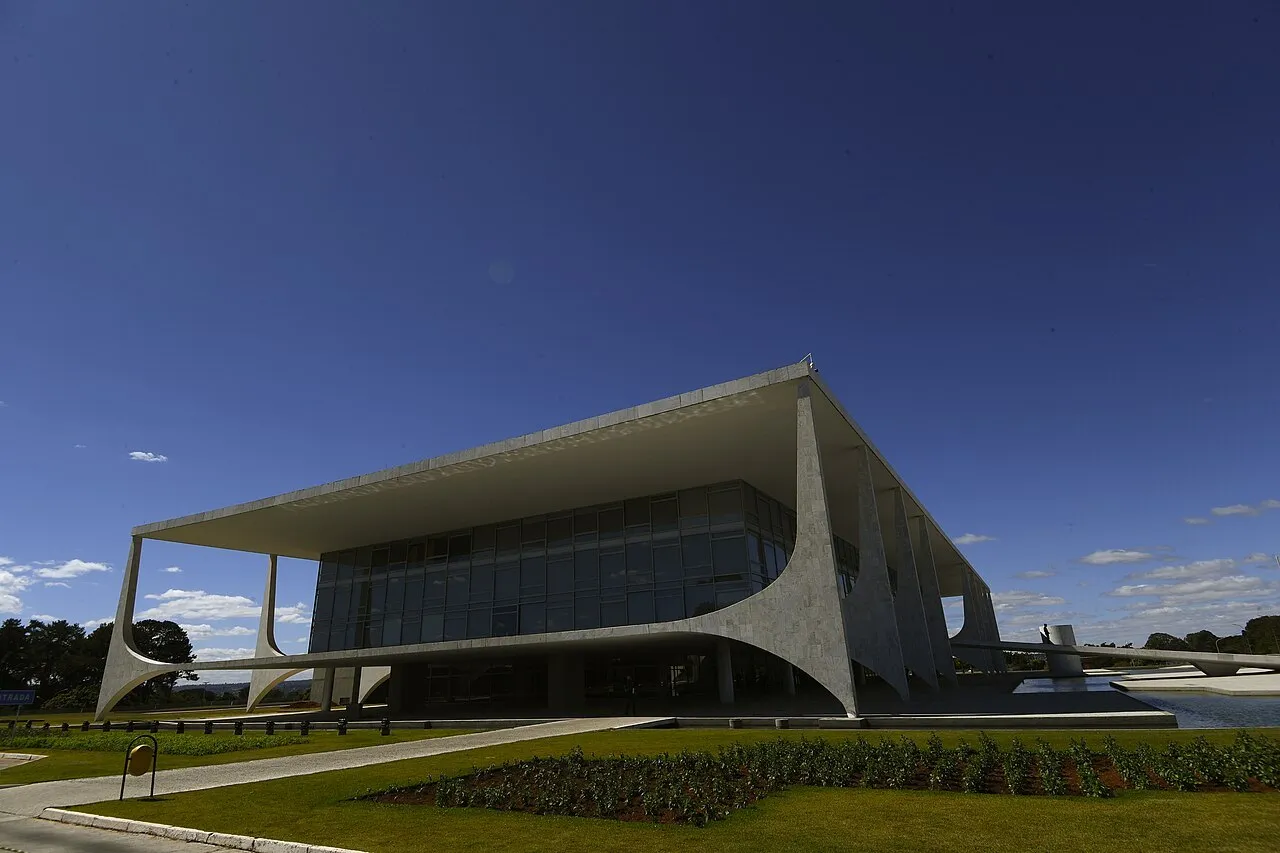
Brazil's federal government has settled on the minerals it will treat as a matter of state priority. At the first meeting of the Conselho Nacional para a Industrialização de Minerais Críticos e Estratégicos (CIMCE, the National Council for the Industrialisation of Critical and Strategic Minerals), held on Thursday at the Palácio do Planalto, 27 minerals were approved and sorted into three priority tiers. The list is the practical instrument that decides who stands first in line for the public financing and tax incentives created by Law 15.506, signed on 16 September.
The council is coordinated by the Casa Civil (the presidential chief of staff's office) and brings together 13 ministries, along with representatives of states, municipalities, universities and industry. President Luiz Inácio Lula da Silva attended the inaugural session.
The three classes
Class 1 — high priority (9): rare earths, graphite, lithium, nickel, cobalt, copper, manganese, silicon and uranium.
Class 2 — medium priority (8): tungsten, chromium, vanadium, tantalum, titanium, phosphate, potassium and sulphur.
Class 3 — low priority (10): niobium, tin, iron, zinc, gold, magnesium, molybdenum, thorium, aluminium and the platinum group metals.
What the tier measures — and what it does not
The ranking does not order the minerals by how much of each Brazil holds. It orders them by exposure: the calculation took in geopolitical risk, the geographic concentration of world output, the scope for substituting one input for another, Brazil's place in the supply chain and its reliance on imports.
That is where the list's apparent inversion comes from. Niobium, of which Brazil accounts for most of global production, sits in the lowest tier — precisely because the country already commands that chain and needs little state action in it. Copper and lithium, by contrast, are at the top: Brazil has reserves but little processing capacity and plenty of foreign competition for the same input.
In practice, the classification is how money and forgone tax revenue get allocated. "It was necessary to classify these 27 in order to decide which will have funding priority," said Casa Civil Minister Miriam Belchior, according to the Minera Brasil news site. She added that the list is not final: it "may be revised by the council, should that be necessary," as Metrópoles reported.
Uranium and thorium take a separate route
Two of the 27 will not be handled by the council. Uranium and thorium, Belchior said, "are a Union monopoly, and will not be directed by the Council" — they remain under the nuclear regime, outside the funding design that applies to the rest.
The target is processing, not raw ore
The policy points at the middle of the chain: financing and tax relief for whoever builds the processing and refining stages inside Brazil, so that exports stop being predominantly raw ore and start to include higher-value goods such as batteries and permanent magnets. It is the part of the chain where the country is today almost absent, even in the minerals where it holds significant reserves.
Speaking about attracting investment at the meeting, Lula tied the subject to fiscal management: "Nobody is going to want to invest in a completely disorderly economy," he said, according to Minera Brasil.
The list arrives at a moment when Brazilian rare earths and lithium are the object of commercial pressure from large economies, and it gives the government a written criterion with which to answer those approaches — which mineral is a priority, and with which instrument.
With information from Metrópoles, the Minera Brasil news site and the text of Law 15.506 of 16 September 2026, published by the Senado Federal.