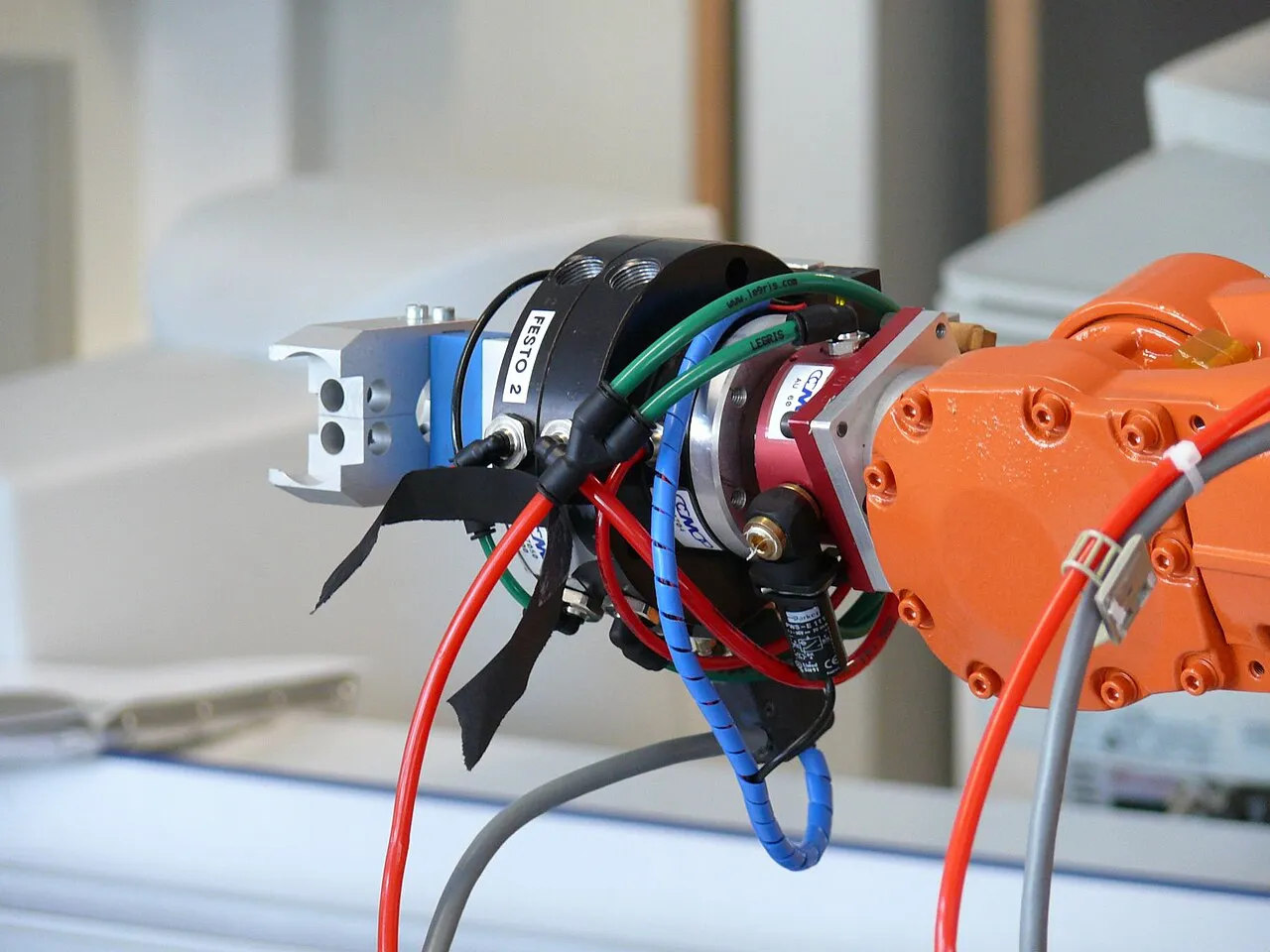
ABB said on 5 November that SoftBank had informed it of a decision by the Chinese government: the purchase of the Swiss company's robotics business in China is prohibited. The decision came from the Office of the Working Mechanism for Foreign Investment Security Review, the body that screens foreign acquisitions in the country on national security grounds.
ABB's statement does not treat the decision as the end of the contract. "ABB and SoftBank are in close dialogue and are working constructively on the transaction," the company said, adding that the deal remains subject to regulatory approvals and customary closing conditions, and that SoftBank manages the approval process. Neither company has detailed the reasons for the refusal.
A $5.375 billion contract
The deal was announced on 8 October 2025, with an enterprise value of $5.375 billion. It replaced an earlier ABB plan to separate the robotics unit and list it as a standalone public company.
According to the figures ABB released at the time:
- the robotics division has about 7,000 employees;
- it posted $2.3 billion in revenue in 2024, roughly 7% of group revenue;
- the sale is expected to produce a pre-tax book gain of about $2.4 billion, recognised at closing;
- completion was expected in mid-to-late 2026.
"SoftBank will be an excellent new home for the business and its employees," ABB chief executive Morten Wierod said when the deal was announced. SoftBank chairman Masayoshi Son summed up the purchase in a sentence: "SoftBank's next frontier is Physical AI."
Why China is the sensitive point
China is not just another market for ABB's robotics arm — it is the largest one. About 90% of the machines delivered to Chinese customers are made locally, and the division's global headquarters sits in Shanghai, where ABB also runs a research, development and production centre. Barring the acquisition of precisely that operation hits the industrial core of the business, not a peripheral subsidiary.
The data argument
The Financial Times reported that the refusal is tied to concern that robotics data generated in China could leave the country and be used to train foreign artificial intelligence models — among them those of OpenAI, in which SoftBank is an investor. Before the decision, the National Development and Reform Commission (NDRC), China's state planning agency, had already examined the transaction. This is the regulatory reasoning reported by the press, not a finding that ABB or SoftBank improperly exported data.
The case shows where the decisive filter now sits for a cross-border acquisition in strategic technology: not merger control, which weighs price and competition, but security review, which weighs where the data goes. For SoftBank, which built its investment case around industrial robots as the gateway to "physical AI", the veto leaves out the market where those robots do the most work.
With information from ABB's statements of 8 October 2025 and 5 November 2026 and from Eurasia Business News, citing reporting by the Financial Times.