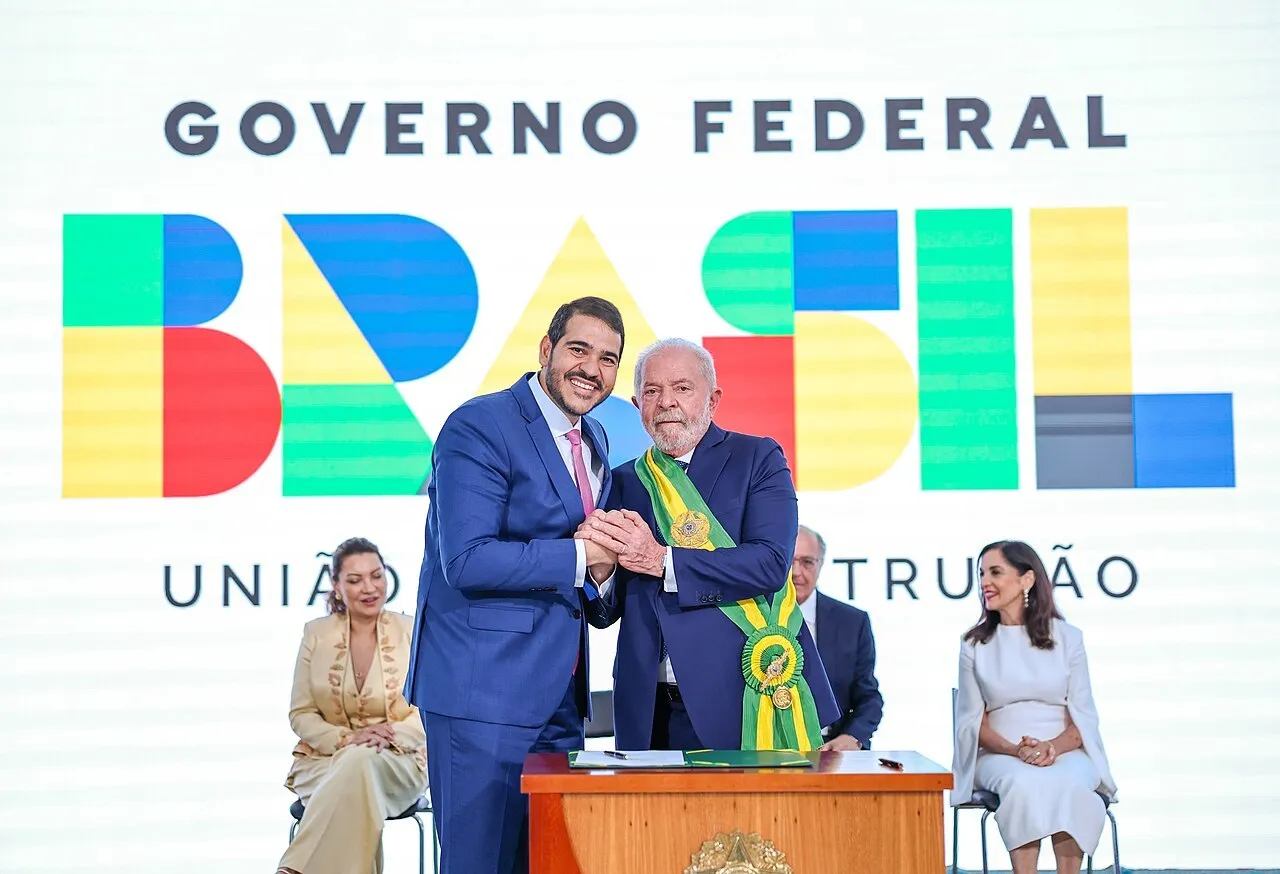
Brazil's top government lawyer asked federal investigators on Thursday, October 1, 2026, to find out who in Brazil was lined up to receive $1 million from a United States State Department fund under a grant whose stated purpose is to counter the work of the country's Supreme Court.
Jorge Messias, who heads the Advocacia-Geral da União (Office of the Attorney General), petitioned two of the people who would run such an inquiry: Andrei Rodrigues, director-general of the Polícia Federal (Federal Police), and Paulo Gonet Branco, the prosecutor-general. He asked them to identify who was responsible for the funding, who the intended recipients were, and whether the money had been used to shape Brazil's political and institutional debate.
The timing is the point of the request. Brazil holds the first round of its presidential election on October 4, three days after the petition was filed.
"The information is especially serious in light of Brazil's electoral process and the recent episodes of external pressure on our institutions," Messias said.
What the grant is
The award at issue carries the title "Countering Lawfare and Censorship in Brazil" and is worth $1 million. It is drawn from the Human Rights and Democracy Fund, a pool Congress appropriates for democracy and rights work abroad, administered by the State Department.
The programme was reported by The Guardian on September 30, 2026, as part of a wider account of the department moving money from that fund toward right-wing causes in several countries. The Brazilian grant, by that reporting, sits among 43 awards from the same fund totalling roughly $177 million. A Democratic congressional aide told The Guardian that Secretary of State Marco Rubio personally signed a memo lifting holds that had been placed on some of the grants — including the Brazilian one. That account rests on a single source and has not been independently confirmed. Senator Jeanne Shaheen had placed holds on $22 million in grants across several countries.
The State Department has said the programmes remain in "active deliberation", pending vetting and federal grant compliance reviews. No recipient organisation has been identified, and no payment has been confirmed.
Why "lawfare and censorship" is the contested phrase
The grant's title repeats the two words Brazilian conservative groups and some U.S. officials use for the Supremo Tribunal Federal (Federal Supreme Court) and its rulings against online disinformation and against those convicted over the January 8, 2023 attack on Brasília's government buildings. The same framing has run through a year of friction between Washington and Brasília, including U.S. tariffs and visa measures aimed at Brazilian officials.
Brazil's government treats the phrase as a description of a political campaign rather than a legal finding — which is why Messias's petition asks not whether the court was criticised, but whether foreign public money was routed into a domestic political fight during an election.
What the inquiry can realistically establish in the near term is narrow: the Polícia Federal can trace money that moved, and so far the State Department's own position is that none has. Should an inquiry confirm a transfer, Brazilian law on foreign funding of political activity would come into play.
The election is a tight race between the incumbent, Luiz Inácio Lula da Silva, and Flávio Bolsonaro, son of former president Jair Bolsonaro.
Reporting from Al Jazeera, Xinhua, The Rio Times and The Guardian.