Brazil will present two roadmaps on 3 November as its main contribution to preparations for COP31, the United Nations climate conference that Türkiye hosts this year. One addresses the global energy transition towards cleaner sources; the other sets out measures against deforestation and forest degradation.
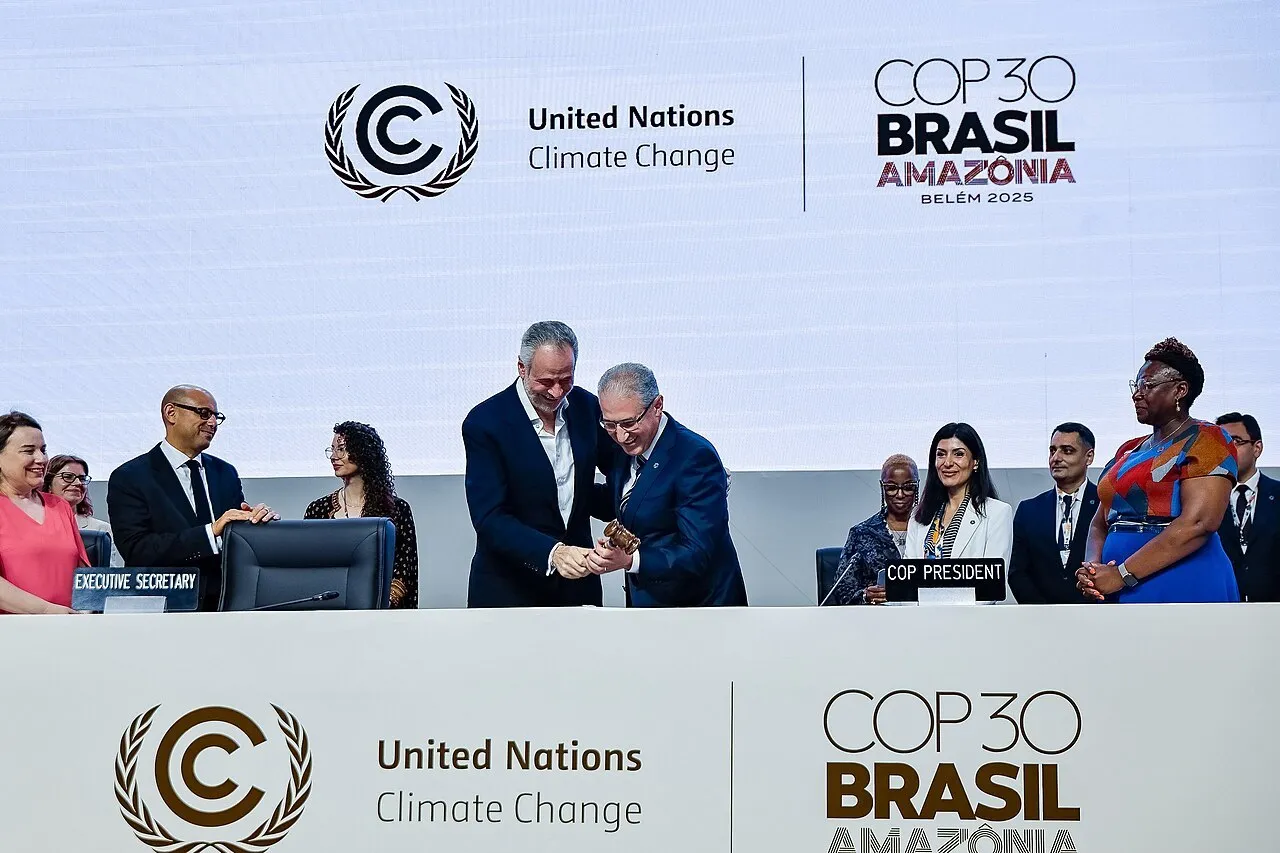
The delivery marks the handover. Brazil held the presidency of COP30, held in November 2025 in Belém, in the state of Pará, and now passes the conduct of international climate diplomacy to Türkiye.
When and where
According to the United Nations Framework Convention on Climate Change (UNFCCC), COP31 takes place in Antalya, in southern Türkiye, from 9 to 20 November. The conference presidency is held jointly by Türkiye and Australia. President Luiz Inácio Lula da Silva is scheduled to attend on 11 and 12 November.
What the roadmaps contain
The Ministério do Meio Ambiente (Ministry of the Environment) said the technical studies underpinning the roadmap are being finalised and that the document is being drawn up in coordination across areas of the federal executive.
The energy transition theme was backed by about 80 countries during COP30 but was left out of the conference's final document. Brazil kept the subject on the international agenda and is preparing its own national energy transition plan, with a gradual reduction in dependence on fossil fuels and an expansion of renewables and low-emission technologies.
The tension inside the policy
Petrobras's business plan for 2026 to 2030 earmarks US$13 billion for low-carbon energy, bioproducts, operational decarbonisation and research, development and innovation, and keeps a target of net-zero operational emissions by 2050. At the same time, on oil exploration in the Equatorial Margin, the Ministério de Minas e Energia (Ministry of Mines and Energy) says federal action is aimed at securing energy supply and fiscal stability in the short and medium term.
For Marcio Astrini, executive secretary of the Observatório do Clima (Climate Observatory), expanding oil exploration into new areas creates challenges for the coherence of Brazil's environmental policy. André Castro, technical director of the LACLIMA institute, argues for stronger institutional coordination of climate policy and says a national climate authority could open room for progress both at home and abroad.
With information from the Xinhua news agency, published by Brasil 247, and from the United Nations Framework Convention on Climate Change.