Brazil's federal government began rolling out this week the brand it will use to present the 2027 FIFA Women's World Cup to the public — the first edition of the tournament to be played in South America. The visual identity and the campaign, gathered under the slogan "A Copa Mais Brasileira do Mundo" ("The Most Brazilian World Cup in the World"), were pre-launched on the evening of 24 November, at the closing of the first National Meeting on the 2027 FIFA Women's World Cup, in Brasília, and began circulating on official channels the following day.
What the campaign includes
The push involves changing the avatars of the government's and ministries' official social media profiles, airing an advertising film and a jingle, running material on institutional channels and an interactive feature with the Alexa voice assistant. According to the Secretaria de Comunicação Social da Presidência da República (Secom, the presidency's communications office), the brand uses green, yellow and blue, bold typography and illustrations that place women at the centre.
The jingle is a reworking of "Futebol Feminino", a song Mariah Marini wrote in 2019 and released on the eve of the 2023 World Cup, now with musical production by Ruriá Duprat. The campaign was created by the agency Fields, coordinated by the Ministério do Esporte's (Ministry of Sport) special communications office.
Those present at the pre-launch included Sports Minister Paulo Henrique Cordeiro, Minister for Women Márcia Lopes, the government's special World Cup secretary, Juliana Agatte, and the former player Formiga, now director of football policy and women's football promotion at the Ministério do Esporte. Agatte said the aim is to "strengthen the social, cultural and sporting legacy" of the competition.
32 teams, 64 matches, eight cities
The tenth edition of the women's tournament runs from 24 June to 25 July 2027, with 32 teams and 64 matches. The host cities are Belo Horizonte, Brasília, Fortaleza, Porto Alegre, Recife, Rio de Janeiro, Salvador and São Paulo.
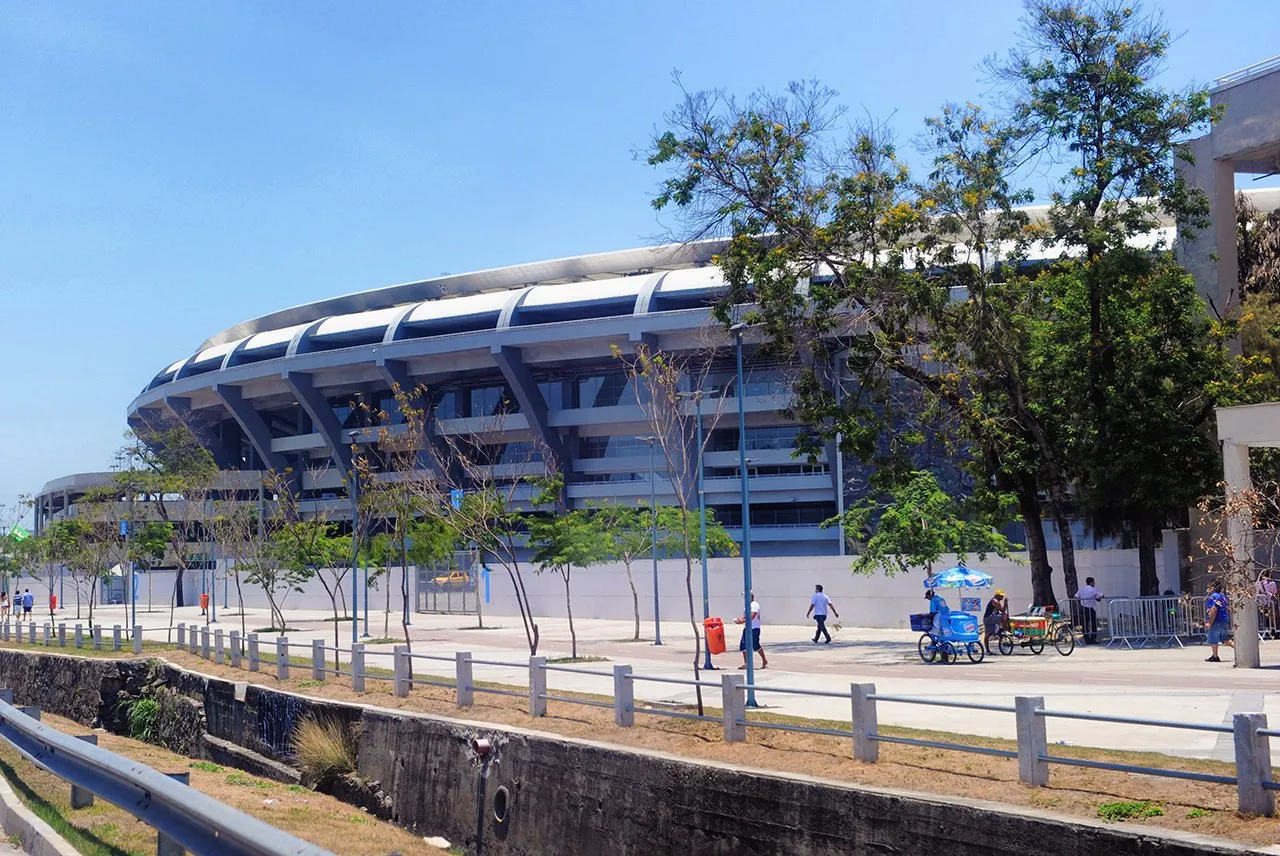
Brazil play their first match on 24 June at the Maracanã, in Rio de Janeiro. The government's announcement does not name the stadiums in the other seven host cities.
R$ 8.8 billion, according to the projection
A study by the Fundação Getulio Vargas (FGV) commissioned by Embratur, Brazil's tourism promotion agency, estimates the World Cup will generate R$ 8.8 billion in economic activity in the country, add R$ 3.8 billion to gross domestic product and create 73,700 direct and indirect jobs. All three figures are projections made before the tournament, not measured results.
The government says women's football already has some 58 million fans in Brazil, and that digital engagement with the women's Brasileirão league grew 88% between January and October 2026 compared with the same period of 2025.
Running alongside
Embratur is preparing a documentary web series on the host cities aimed at nine countries, among them Argentina, the United States, China and Germany. The Agência Nacional de Telecomunicações (Anatel), the telecoms regulator, will monitor camera and microphone frequencies inside the stadiums and track the capacity of 4G and 5G networks for supporters. The eight host cities presented projects to widen girls' and women's access to football after the tournament, and the Ministério do Turismo (Ministry of Tourism) is working with the Ministério do Esporte to make the safety of women travellers part of the competition's legacy.
With information from the Secretaria de Comunicação Social da Presidência da República and Agência Gov.