The free trade agreement between Mercosur and the European Free Trade Association (EFTA) came into force on Sunday, 1 November 2026, though for now only in Uruguay's bilateral relationship with Norway and Iceland. The European bloc's other two members, Switzerland and Liechtenstein, are still working through their domestic approval.
The treaty was signed on 16 September 2025 in Rio de Janeiro, after almost eight years of talks and fourteen negotiating rounds. Entry into force is staggered: each country activates it once its own procedures are complete, and the agreement starts applying among those that have done so.
What the deal covers
The new terms reach about 97% of tariff lines in trade with those countries. Beyond tariffs, the text deals with trade in goods and services, trade facilitation, sanitary and phytosanitary measures, investment, intellectual property and government procurement. The Cancillería (Uruguay's foreign ministry) adds rules of origin, trade defence, technical barriers to trade and a sustainable development chapter.
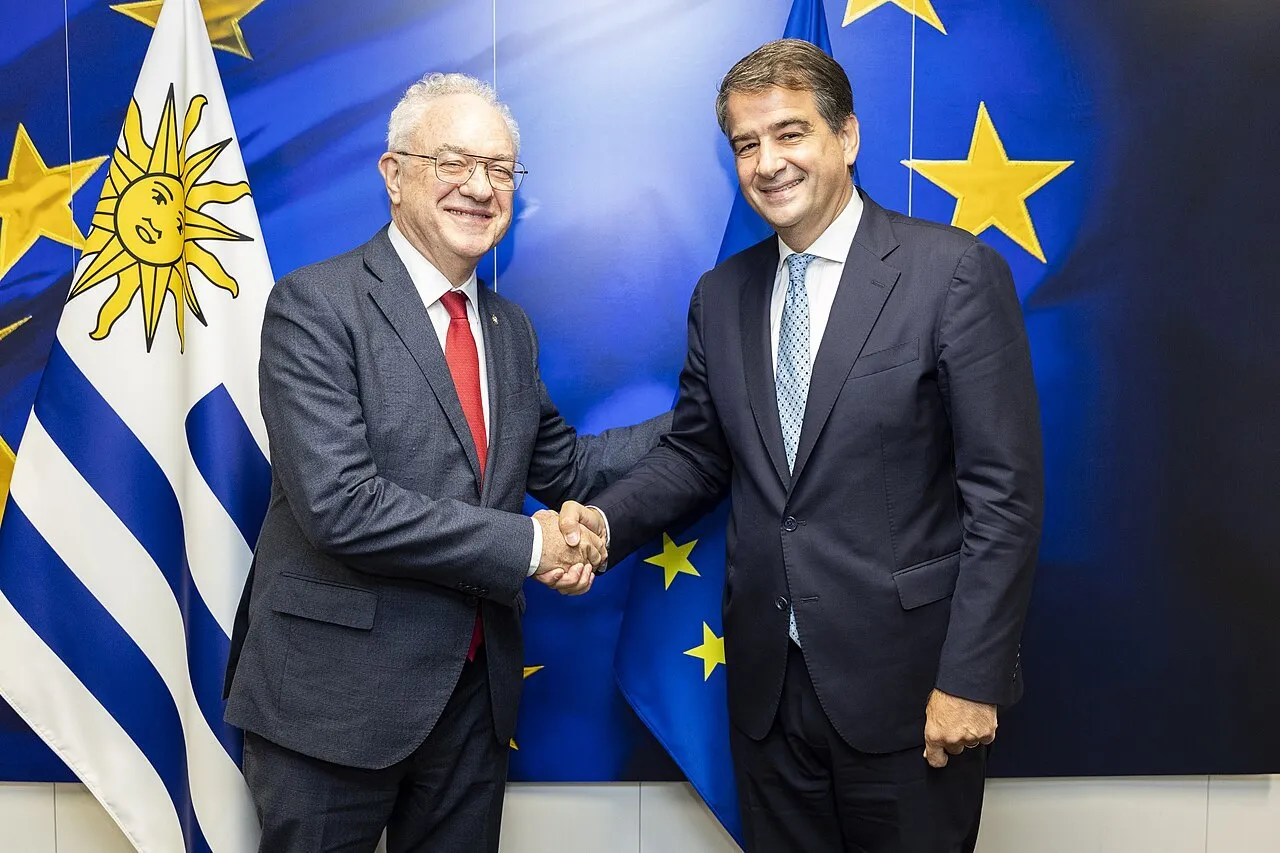
Uruguay's foreign minister, Mario Lubetkin, summed up the agreement's demographic reach in one figure: "If we put the populations together we are talking about 309 million people." On the start of the deal he said that "today a new partnership between the countries is born", and said Bolivia would join later.
A small, wealthy market
EFTA is a bloc with a small population and high purchasing power. Its four members have close to 15 million inhabitants and a combined gross domestic product of around 1.4 trillion dollars. GDP per capita ranges from about 82,000 dollars in Iceland to more than 200,000 in Liechtenstein.
Uruguay's current trade with the bloc is modest. In 2024 the country exported just over 54 million dollars to the four partners — mostly beef, soybean oil, rice, caviar, vegetables and honey — and imported close to 60 million. Mercosur as a whole sells them more than 3 billion dollars a year.
Among the products with room to grow, the foreign ministry lists citrus, apples, vegetables, pulses, wheat and nuts, as well as the fishing sector. Switzerland committed to absorbing 50,000 litres of Uruguayan wine immediately once the agreement applies to it.
Switzerland, not before mid-2027
The Swiss parliament has already approved the treaty, but the domestic process may include a referendum. Lubetkin therefore estimated that Switzerland's accession will not arrive before mid-2027, a window in which Liechtenstein could also join. Uruguay's own ratification, in turn, allows for a citizens' referendum.
One negotiation remains open: quotas. Until Mercosur agrees on a common split, Lubetkin described the operating rule in a phrase: "whoever gets there first applies with their products." He said there is "strong alignment" among Brazil, Argentina and Uruguay on the possible solutions.
The European precedent
The EFTA deal arrives six months after the interim trade agreement between Mercosur and the European Union, in force since May. According to Lubetkin, Uruguayan exporters gained or saved more than 40 million dollars in its first five months, a figure that could pass 100 million by the end of the year.
Together, the two treaties extend Mercosur's preferential access to 31 European countries, accounting for roughly 90% of the continent's GDP. The number deserves care: preferential access opens the door, but taking advantage of it depends on having exportable supply in the lines actually liberalised — and current trade flows with EFTA are in the tens of millions of dollars.
With information from Uruguay's Cancillería, El Observador, Subrayado and la diaria.