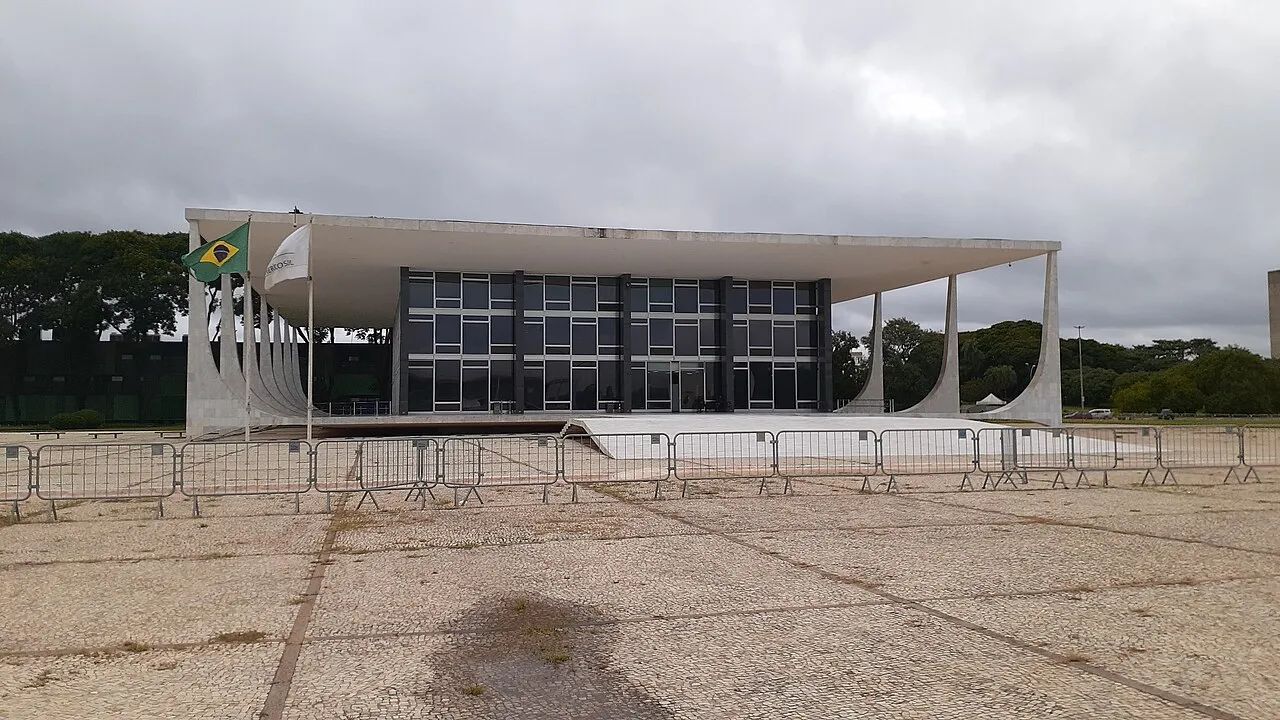
Brazil's Supremo Tribunal Federal (STF, Supreme Federal Court) hears representatives of 34 organisations on Tuesday on the executive decree that banned fixed-odds betting in the country. The public hearing opens at 10 a.m. in the Second Panel's session room and is broadcast on TV Justiça, Rádio Justiça and the court's YouTube channel.
The session was called by Justice Luiz Fux, who is rapporteur of the direct action of unconstitutionality (ADI) 8027, filed by the Associação Nacional de Jogos e Loterias (ANJL, National Association of Games and Lotteries). The association wants the measure suspended immediately and, on the merits, declared unconstitutional — and it wants the court to confirm that the laws regulating the sector are valid. The same decree is challenged in three other cases, ADIs 8024, 8028 and 8035.
What the decree does
MP 1.394/2026 — a medida provisória, a decree with immediate force of law that Congress must later confirm — bans fixed-odds betting and provides for cancelling the authorisations already granted to companies in the sector. On the reading set out in the pending cases, the ban reaches the operation, the offering, the brokering and the advertising of online betting in Brazil.
The measure keeps producing effects while the court has not ruled on the injunction requests and Congress has not finished examining the text. Tuesday's hearing is a fact-finding stage: it gathers data and arguments, and does not end in a vote.
From 26 participants to 34
Fux's first order listed 26 institutions. The Advocacia-Geral da União (AGU, the federal government's legal office) asked for that list to be widened, arguing it was lopsided — by the AGU's count, 17 of the 26 invited were football clubs or representatives of betting companies, groups that want the ban lifted.
Fux granted the request and added the ministries of Health and of Justice and Public Security, the Brazilian supermarket association Abras, the Brazilian Paralympic Committee, the professional footballers' federation Fenapaf and the club Grêmio. He had already brought in the Brazilian Olympic Committee and the Ministry of Sport.
The list also includes the ANJL, the Instituto Brasileiro de Jogo Responsável (Brazilian Responsible Gaming Institute), the national confederations of commerce and of industry, the Ministério da Fazenda (Ministry of Finance), the AGU, the Procuradoria-Geral da República (PGR, the prosecutor general's office) and the football confederation CBF. The clubs taking part include Flamengo, Fluminense, Botafogo, Cruzeiro, São Paulo, Corinthians, Ponte Preta, Vitória, Guarani and Portuguesa.
How the session works
Each organisation gets ten minutes and may bring up to two representatives. Flamengo opens the presentations at 10:10 a.m.; the AGU speaks at 2 p.m., the PGR at 2:10 p.m. and Abras at 3:10 p.m. The times may shift as the list is adjusted.
In ruling on who would be heard, Fux noted that the court already knows the other side of the argument. "The social harms of betting are already known to this Court," he wrote, recalling that in November 2024 the STF heard health, consumer-protection and social-welfare groups in two hearings on the subject — groups that were not called this time.
Why it matters
The court's decision will settle whether a market that was regulated by statute, and that went on to finance clubs, broadcasts and advertising campaigns, can be dismantled by decree. That is why clubs, operators, sports confederations, retailers and government ministries are in the same room at once: the ban touches sponsorship revenue, tax collection and public health policy at the same time.
With information from the Supremo Tribunal Federal, Sou Brasília and Focus GN.