October should start hot and end uneven. The monthly outlook from the Instituto Nacional de Meteorologia (Inmet, Brazil's national meteorology institute) points to temperatures above the historical average across much of the country, with rainfall distributed very differently from one region to the next — in some cases, within a single state.
Where the heat bites hardest
The largest thermal anomaly sits in the Centre-West and the Southeast. In parts of Goiás, the Federal District and Minas Gerais, the monthly average may run up to 2°C above normal for the season.
The month also arrives on the heels of a heat wave forecast for late September, with readings possibly above 40°C in areas of several states.
The rain does not fall evenly
The precipitation map is anything but uniform:
- above average: parts of the South, Mato Grosso do Sul, São Paulo and south-eastern Minas Gerais;
- near average: Rio de Janeiro;
- below average: areas of the North, the Northeast and the Centre-West;
- irregular distribution: Minas Gerais and Espírito Santo, where volumes may vary sharply between neighbouring municipalities.
What it means in the fields
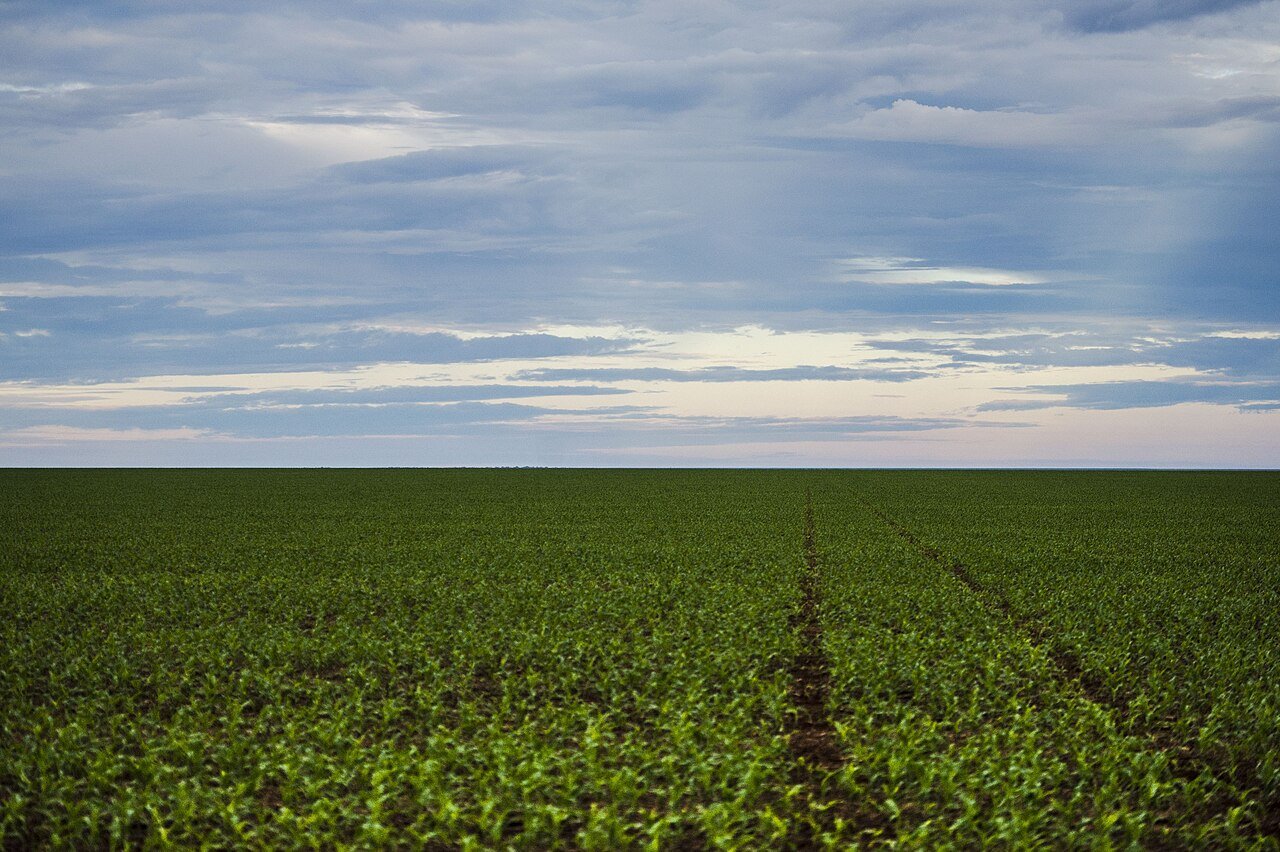
It is in the Centre-West that the two factors combine worst. In Mato Grosso and Goiás, high heat with scarce and poorly spread rain may hamper the recovery of soil moisture and stall the advance of summer crop planting, which usually opens in October.
The contrast sits next door: in Mato Grosso do Sul, the forecast of more frequent rain should favour soil recovery and sowing.
The usual caveat applies to monthly outlooks: they describe an average trend, not what falls on a given day. A monthly average within the normal range can hide two dry weeks followed by a downpour — and it is that irregularity, more than the total, that the grower feels.
With information from Agência Brasil and Exame magazine, drawing on the Inmet outlook.