The 31st Conference of the Parties to the United Nations Framework Convention on Climate Change (COP31) closed on Sunday, 22 November, in Antalya, Türkiye, without the nearly 200 countries gathered there adopting the central decision of the meeting. The text, put forward by the Turkish presidency under the name Antalya Pact, fell at the closing plenary in the face of formal objections from the European Union, the United Kingdom, Panama, Norway, the Marshall Islands and Vanuatu, among others.
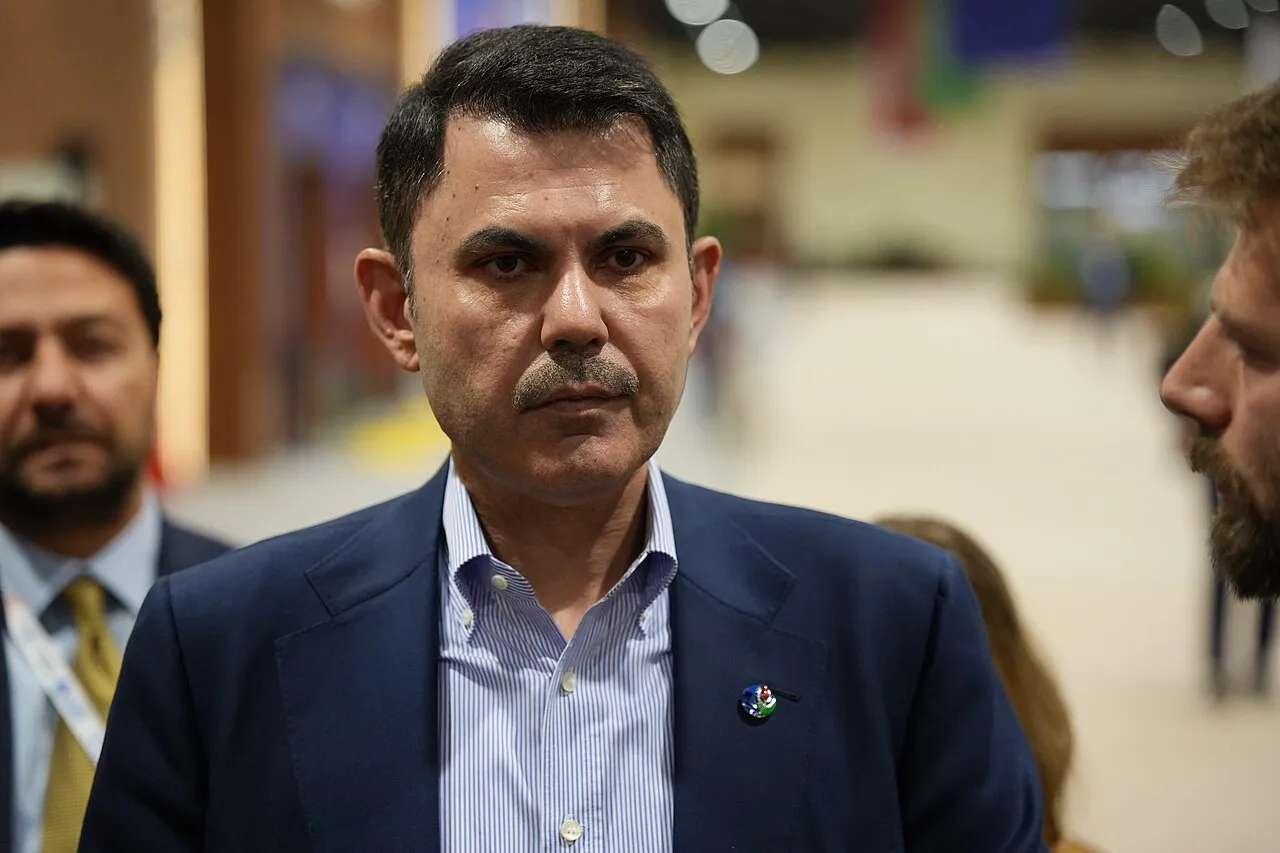
"I understand that there is no agreement on this text. For that reason, these decisions have not been adopted," said the conference president, Murat Kurum, who is Türkiye's Minister of Environment, Urbanisation and Climate Change, before striking the gavel that closed COP31 and the parallel meetings of the Kyoto Protocol (CMP21) and the Paris Agreement (CMA8).
The conference had been scheduled for 9 to 20 November at the Antalya Expo Center, and finished two days late. The overrun ran to roughly 44 hours, a count attributed to Irish minister Darragh O'Brien, who negotiated on behalf of the rotating presidency of the Council of the European Union, and repeated by the outlets covering the close. According to UN News, it was the longest UN climate conference on record.
The deadlock: the words that stayed out of the text
The central dispute was the mention of fossil fuels. The final version of the text recalled the language agreed at COP28 in Dubai without naming fossil fuels or the transition away from them — and that is what led the European bloc to refuse adoption.
"We will not endorse a cover decision, or an Antalya Pact, that does not even mention fossil fuels," O'Brien said. He added that the European Union would not accept "negotiating backwards in time" and that the text did not respond to the science.
For the United Kingdom, lead negotiator Kate Hughes said the proposal "moves us backwards on the science when we must accelerate implementation," and described the outcome as a "lowest common denominator." Panama lodged a formal objection, its delegation telling the plenary that "the atmosphere doesn't negotiate, science doesn't negotiate, and the planet can't wait any longer." Norway's climate minister, Sigrun Gjerløw Aasland, said "the draft at hand takes us backwards from agreements that we have previously made." The Marshall Islands said they had been "let down on all sides" and would not compromise their future "to benefit fossil fuel interests."
On the other side of the table were the countries that blocked any fossil-fuel language. Russian delegate Sergei Kononuchenko was blunt: "For that reason, we cannot agree to any formulation on fossil fuel." Saudi Arabia, speaking also for the League of Arab States, argued that "climate change requires all solutions on the table," a position associated with carbon capture and storage.
The mechanics of the impasse were described by Australia's Chris Bowen, COP31 President of Negotiations: "Other parties insisted that if it was mentioned, they would veto."
The adaptation target that vanished along the way
The first version of the text, dated 16 November, carried a commitment to raise annual adaptation finance to at least US$120 billion by 2035. The figure disappeared from later versions. The last draft, dated 22 November, referred only to tripling adaptation finance, with no amount, no baseline and no delivery plan, according to reporting by Down To Earth and Health Policy Watch.
Because the cover decision was not adopted, not even that weakened wording took effect. One number helps measure the distance involved: the United Nations Environment Programme's Adaptation Gap Report 2026 estimated international public adaptation finance for developing countries at between US$28.2 billion and US$31.7 billion in 2024, against projected annual needs of US$305 billion by 2035.
Also left out of the negotiated outcome were the electrification target known as "35 by 35" — bringing electricity to 35% of global final energy consumption by 2035, from about 21% today — and references to gigatonne-scale carbon capture.
What survived
The conference did not end entirely empty-handed. UN Climate Change Executive Secretary Simon Stiell told the closing plenary that "key negotiating decisions" had been agreed, among them one on the just transition work programme. The mechanism that accompanies it, named the Belém-Antalya Mechanism, remains inside the UN process, but its structure and further development were deferred to COP32.
The distinction is worth recording, because organisations such as the World Resources Institute (WRI) summed up the meeting by saying that "nothing was adopted." That phrase describes the fall of the central decision rather than the conference's formal record: technical decisions on adaptation, carbon markets, transparency and the Adaptation Fund did advance.
Away from the negotiating table, the Turkish presidency launched the COP31 Electrification Delivery Package on 19 November, part of the voluntary climate action agenda. The number of signatories varies by source: Inter Press Service and Health Policy Watch put it at more than 90 countries; the WRI at more than 70; UN Climate Change itself released no count. The ocean agenda followed the same path — the Antalya Ocean and Seas Compact was a presidency initiative, not a text approved by the parties.
"There is no ambiguity in the science"
UN Secretary-General António Guterres issued a statement the same day. "I am deeply disappointed that COP31 has ended without consensus on an overarching outcome," he said, adding that he shared "the very profound frustration of all those who expected governments to rise to the moment the climate crisis demands."
Elsewhere in the statement, Guterres marked the gap the conference left open: "There may be no consensus in the negotiating room. There is no ambiguity in the science." He was speaking from Bridgetown, Barbados, not from Antalya.
Kurum, closing the session, attributed the outcome to a lack of flexibility on the part of some participants. "Unfortunately, some countries failed to demonstrate the effort and flexibility required by this historic responsibility," he said, in remarks reported by Turkish state broadcaster TRT World. "The gavel I am about to strike will close this session, but our struggle will continue."
Brazil's position and the next meeting
Brazil did not block the text, but did register an objection in plenary. Brazil's chief negotiator, Liliam Chagas, said the cover decision needed room "to address overshoot, to enhance science, the tripling of adaptation finance," as well as more ambition on regional climate finance. Two issues Brazil has carried since COP30 in Belém — roadmaps for ending deforestation and for gradually reducing global dependence on fossil fuels — were left out of the outcome.
The items unresolved in Antalya now move to COP32, scheduled for Addis Ababa, Ethiopia, from 8 to 19 November 2027, under the decision on dates and venues approved in Belém. Stiell called the Ethiopian meeting "a vital stepping stone" and said the second Global Stocktake "must build on the first," rather than step back.
With information from UN Climate Change, UN News, Al Jazeera, Reuters, Inter Press Service, Health Policy Watch, Down To Earth, Daily Sabah, TRT World, the World Resources Institute and the United Nations Environment Programme.