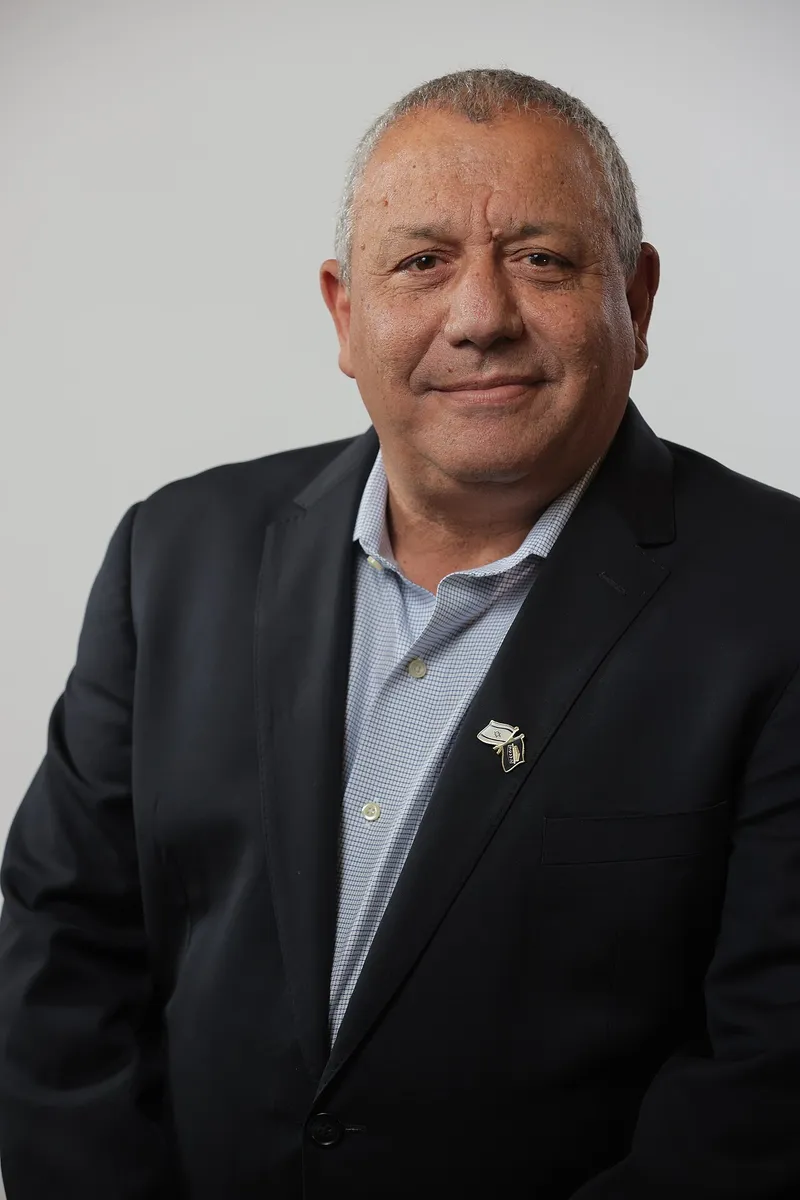
Israeli President Isaac Herzog concluded on Thursday, 5 November, his round of consultations with the factions elected to the 26th Knesset, and the result produced a front-runner without breaking the deadlock: 67 of the 120 members recommended Gadi Eisenkot, of Yashar, to try to form the next government, against 46 recommendations for Benjamin Netanyahu, of Likud. Herzog said he will announce on Sunday who receives the mandate.
A tally that does not settle the deadlock
The 67 names are, arithmetically, more than the 61 needed for a Knesset majority. But a recommendation is not a coalition. Herzog said plainly that the tally "does not resolve who can form a government", citing the mutual vetoes between the blocs and within them.
The phrase describes a concrete problem. The 67 recommendations for Eisenkot include the 19 seats of the two Arab-led parties — the Joint List, with 11, and Ra'am, with 8 — which have never sat in a full Israeli coalition cabinet. Without them, support for Eisenkot drops to 48.
The day before, Netanyahu, in his first public appearance since the election, had warned against an Arab-Jewish coalition. On the other side, lawmakers in Eisenkot's bloc publicly ruled out a unity government with Likud. "You don't do business with scorpions," said MK Meirav Cohen. Her colleague Ram Ben-Barak took the same line: "No unity with people who hold fascist worldviews." For Likud, Ofir Katz replied that "the change bloc wants change in support of terror".
How the Knesset came out
The 27 October election drew a turnout of 77.98%, the highest since 1999, and produced the following distribution of the 120 seats:
- Likud (Netanyahu): 27 — still the country's largest party
- Yashar (Eisenkot): 21
- B'Yachad ("Together"): 12
- Joint List: 11
- The Democrats: 8
- Ra'am: 8
- Otzma Yehudit: 7
- Yisrael Beytenu: 7
- United Torah Judaism: 7
- Shas: 6
- Religious Zionism–Zehut: 6
Added together, Netanyahu's bloc holds 53 seats and Eisenkot's 48. The Arab-led parties hold the remaining 19 — the largest contingent they have ever elected. Neither bloc reaches 61 on its own.
In the consultations, Netanyahu was recommended by Likud, Religious Zionism–Zehut, Shas and Otzma Yehudit. Eisenkot was backed by his own Yashar, by B'Yachad, The Democrats, Yisrael Beytenu, Ra'am and the Joint List. United Torah Judaism, with 7 seats, chose not to recommend anyone — a decision driven by the Degel HaTorah faction, which holds 4 of those seats.
What happens from Sunday
Under Israel's Basic Law: The Government, the member chosen by Herzog has 28 days to assemble a coalition, extendable by up to 14 days. If that fails, the president has three days to decide whether to hand the task to another member of the Knesset, who then has 28 days with no extension.
Once both attempts are exhausted, a 21-day window opens in which 61 members may jointly request a third name, who then has 14 days to finish the job. If none of that works, the Knesset dissolves and Israel goes to another election — in practice, early next year. Until a new cabinet is sworn in, Netanyahu's government stays on in a caretaker role.
That calendar explains Herzog's appeal as he closed the consultations. "The elections are over. Now is the time to face reality," he told reporters, asking both camps for "originality and creativity" and noting that "not every commitment and promise can be fulfilled" — a message that one side will have to give ground if the country is to avoid repeating the vote.
A challenge without evidence
Herzog accepted the certified results before opening the consultations on 4 November. Netanyahu has publicly claimed the election was "stolen", possibly with foreign help, without producing evidence: the elections commission found no sign of irregularity capable of affecting the integrity or the result of the vote, and the attorney general rejected a request to question elected officials in the absence of supporting material.
The president also condemned "the coarseness and racist expressions" recently directed at Palestinian voters with Israeli citizenship, and said he backed the investigation into the suspected interference.
With information from Al Jazeera, The Jerusalem Post, JNS, Israel National News and Haaretz.