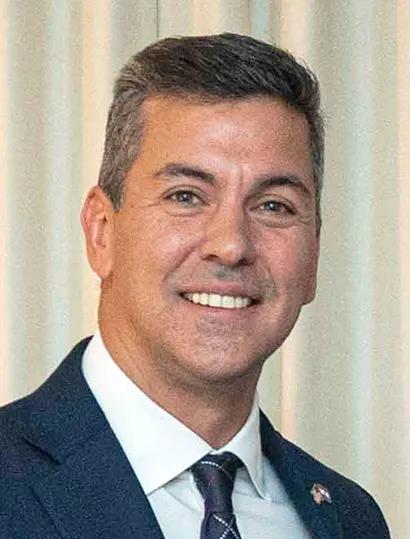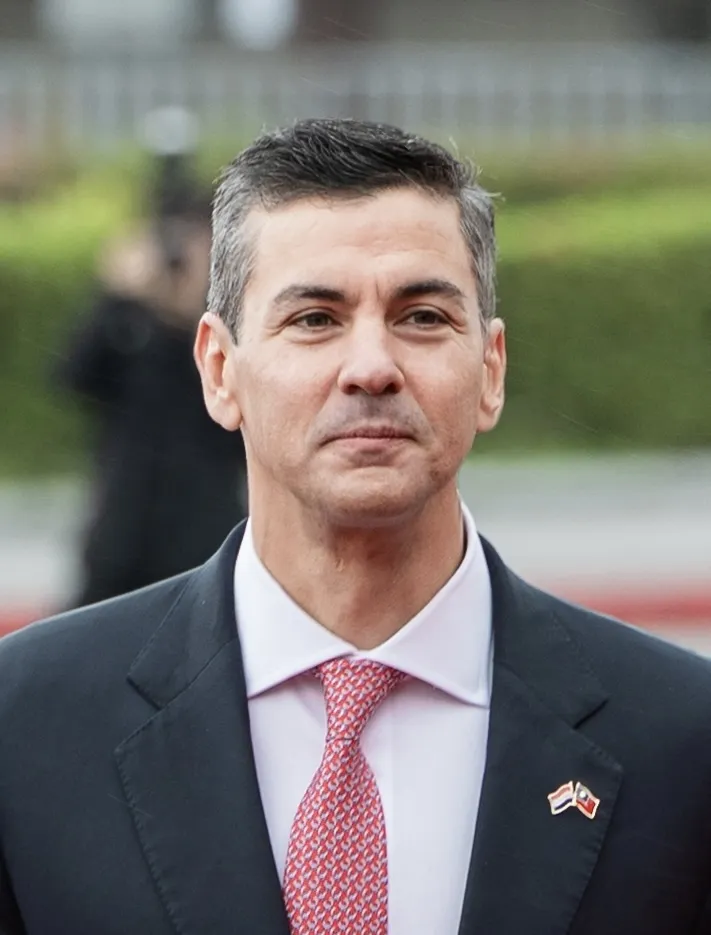
Paraguay's Senate has constituted itself as a court to try President Santiago Peña, and its members were due to be sworn in on Friday, November 6 — the same day the president said he would appear to defend himself. The process is moving forward even though Peña announced his resignation on Thursday: the session meant to accept it collapsed for lack of quorum and, with no vacancy declared, he formally remains in office.
The trigger is the collapse of ueno bank, seized and wound up this week by the Banco Central del Paraguay (BCP, the country's central bank) after its solvency ratio fell below half the required minimum.
The resignation that never took effect
At midday on Thursday, while deputies were debating the charges against him, Peña posted a video on his X account announcing that he was stepping down. "I have taken the decision to submit my resignation from the presidency of the Republic," he said, adding that "my personal fate does not come before Paraguay."
The exit never happened. The joint session that was to accept the resignation lost quorum when Colorado Party legislators walked out of the chamber. With no vacancy declared, the constitutional succession mechanism was never triggered.
The distinction is not a formality. An accepted resignation closes the political file; removal through impeachment strips him of parliamentary immunity and shuts off the lifetime Senate seat Paraguay's constitution reserves for former presidents, besides clearing the way for possible criminal proceedings.
The trial in the Senate
The accusation reached the Cámara de Diputados (Chamber of Deputies) on Wednesday with 35 signatures, filed against Peña and Vice President Pedro Alliana under Article 225 of the constitution, which allows impeachment for "poor performance of duties." The text alleges a "grave and systematic poor performance" and points to conflicts of interest in the ueno bank case. Peña sold his stake in ueno Holding in March 2025.
Sending the accusation to the Senate required two-thirds of the 80 deputies, or 53 votes. The chamber approved it unanimously among those present, with 78 votes in favor, despite the resignation announced hours earlier.
Senate president Basilio Núñez immediately called an extraordinary session for Thursday night. The deputies were recognized as prosecuting counsel and the upper house constituted itself as a court. Finding the president guilty and removing him requires two-thirds of the 45 senators: 30 votes.
Peña confirmed in writing that he would appear. "Given that the impeachment is going ahead, I will appear and exercise my right to a defense," he wrote, saying he would present evidence without specifying what.
If the Senate removes him, Peña will be the second Paraguayan president ousted this way in recent history, after Fernando Lugo in 2012.
The collapse of ueno bank
The lender was one of the largest in Paraguay's financial system: as of September, roughly two in three Paraguayans were customers — some 2.9 million people — and they lost access to their money when the BCP ordered the seizure.
The public money at stake explains the political scale of the case. The bank held around USD 850 million in state funds, of which some USD 380 million belonged to the Instituto de Previsión Social (IPS, Paraguay's social security institute). The Labor Ministry estimates that about 7,000 direct and indirect jobs were affected.
The BCP announced a first payment to savers of up to 10 million guaraníes (roughly USD 1,675), while the deposit guarantee fund covers a maximum equivalent to 75 minimum salaries per person. An emergency law signed by Peña allows advances of up to 40 monthly minimum salaries — close to USD 19,787 — within five business days.
On the judicial front, prosecutors charged 27 people and requested pretrial detention for founder and majority shareholder Miguel Vásquez, and house arrest for other executives. Eight executives were detained, among them the bank's president, Juan Manuel Gustale, and chief executive Federico Miguel Vázquez, a former business partner of Peña. Prosecutor General Emiliano Rolón Fernández opened three criminal investigations tied to the crisis.
The central bank's leadership also changed: Carlos Carvallo — Peña's appointee, who had run ueno's predecessor institution — resigned, and Raúl Vera Bogado was named in his place, pending Senate approval.
The party stepped away
What made the process irreversible was the stance of the Colorado Party, which controls both chambers. Former president Horacio Cartes, head of the Asociación Nacional Republicana (ANR, the Colorado Party's formal name) and the political sponsor of Peña's 2023 candidacy, announced that the caucus would back the impeachment and that the party would not side with the "plunder" of public, private and pensioners' funds.
On Thursday afternoon, Cartes met Alliana to arrange the presidential succession. The vice president, however, is also named in the accusation, so his own tenure depends on a second case still in progress.
With information from ABC Color, Infobae, El Tribuno and El Financiero.