The European Parliament's environment committee (ENVI) approved on Wednesday, by 48 votes to 30 with two abstentions, a text that dismantles part of the end of combustion engines set for 2035 in the European Union.
Under the rules in force, new cars sold in the bloc from that year would have had to cut 100% of their CO2 emissions relative to 2021 — in practice, the end of sales of new petrol and diesel vehicles. The deal approved lowers that target to 87.5%, less ambitious even than the 90% the European Commission itself had proposed.
What changes in the text
- Cars: the 2035 target falls from 100% to 87.5%. Carmakers may still offset the remaining 7.5% with credits tied to low-carbon steel produced in the EU, reaching an overall threshold of 95%.
- Light commercial vehicles: the 2035 target falls from 90% to 80%, and the 2030 target goes from 50% under current rules — and 40% in the Commission's text — to 35%.
- Zero-emission definition: it is broadened to include vehicles running exclusively on fuels that meet the criteria of the renewable energy directive.
- Super-credits: small electric cars (up to 4.2 metres) built in the EU count as 1.4 vehicles in the fleet calculation; energy-efficient EVs made in the EU count as 1.2, with an extra 0.1 for social leasing. EU-built electric vans count as 1.2 until the end of 2034 and 1.4 from 2035.
The deal is a compromise stitched together between three groups: the centre-right European People's Party (EPP), the Socialists and Democrats (S&D) and the liberal Renew Europe.
A "turning point" for some, a "signal of uncertainty" for others
The text's rapporteur, Italy's Massimiliano Salini of the EPP, said the agreement "marks a turning point for the European automotive industry" and stressed that under it "it will still be possible to register cars with internal combustion engines without any offsetting requirements".
Peter Liese, the EPP's climate spokesperson, defended the decision in terms of technology neutrality: "We want climate neutrality, but with the rules we have now agreed on, we are also ensuring technology neutrality." According to him, plug-in hybrids and range-extender vehicles should keep a role in 2035 and beyond.
On the other side, Germany's Michael Bloss, of the Greens, called the vote a bad deal for the industry itself: "While sales of electric cars are skyrocketing, the majority of the European Parliament is sending a signal of uncertainty."
Industry bodies received the text as an insufficient step forward. Italy's Confindustria and Germany's BDI treated it as a positive move but are calling for an unconditional 90% fleet-wide target, greater technology neutrality and no mandatory quotas for company fleets.
What comes next
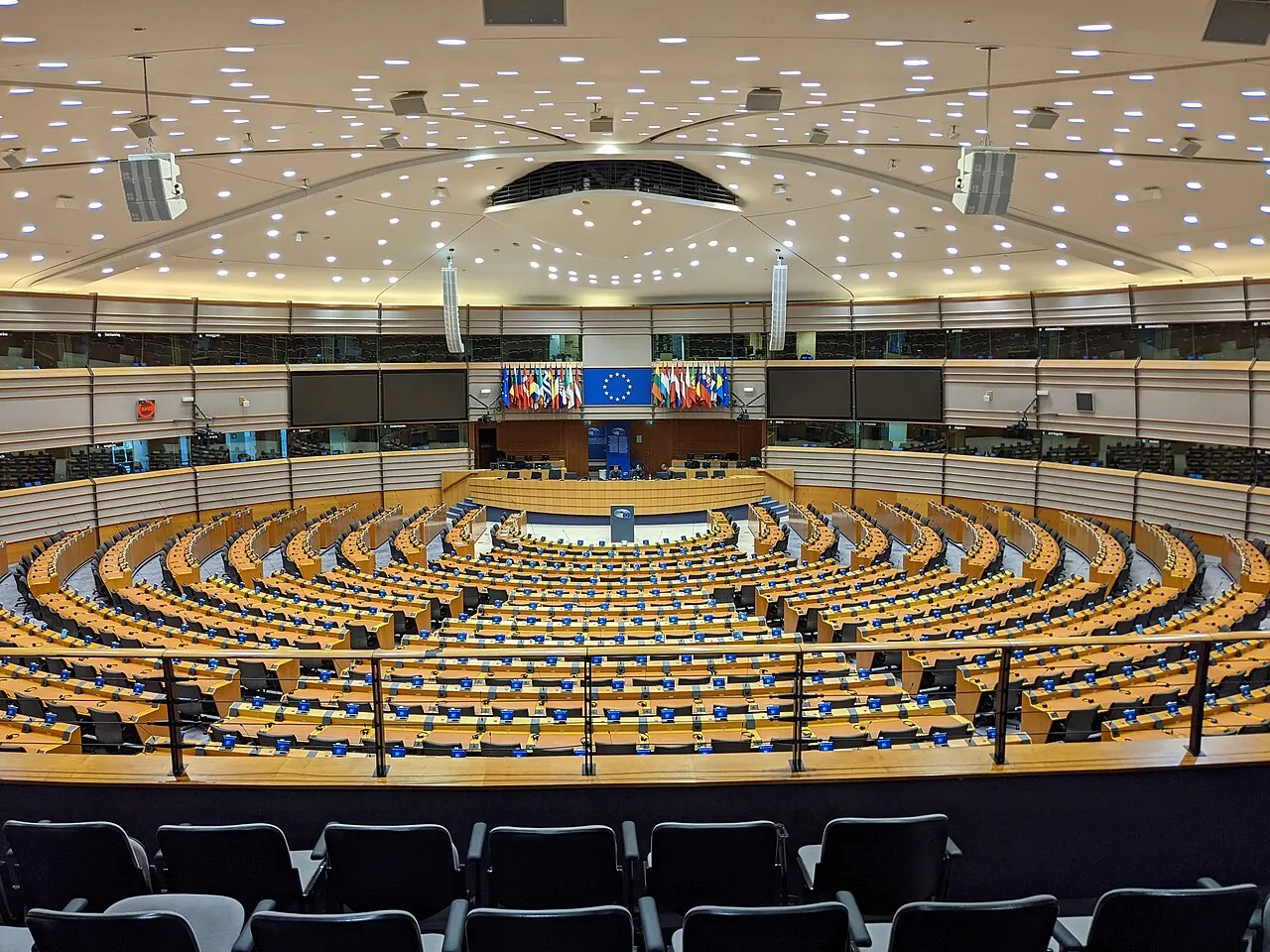
The text is not law. It goes to the European Parliament's plenary in December, which will decide whether to endorse it. If approved there, MEPs gain a mandate to negotiate the final version with the Council of the EU, where the 27 national governments sit — and it is at that stage that the 87.5% figure could rise or fall again.
The vote is the second recent setback for the European Green Deal on a transport file, a sector where emissions are falling more slowly than in electricity.
With information from Euronews and Eunews.