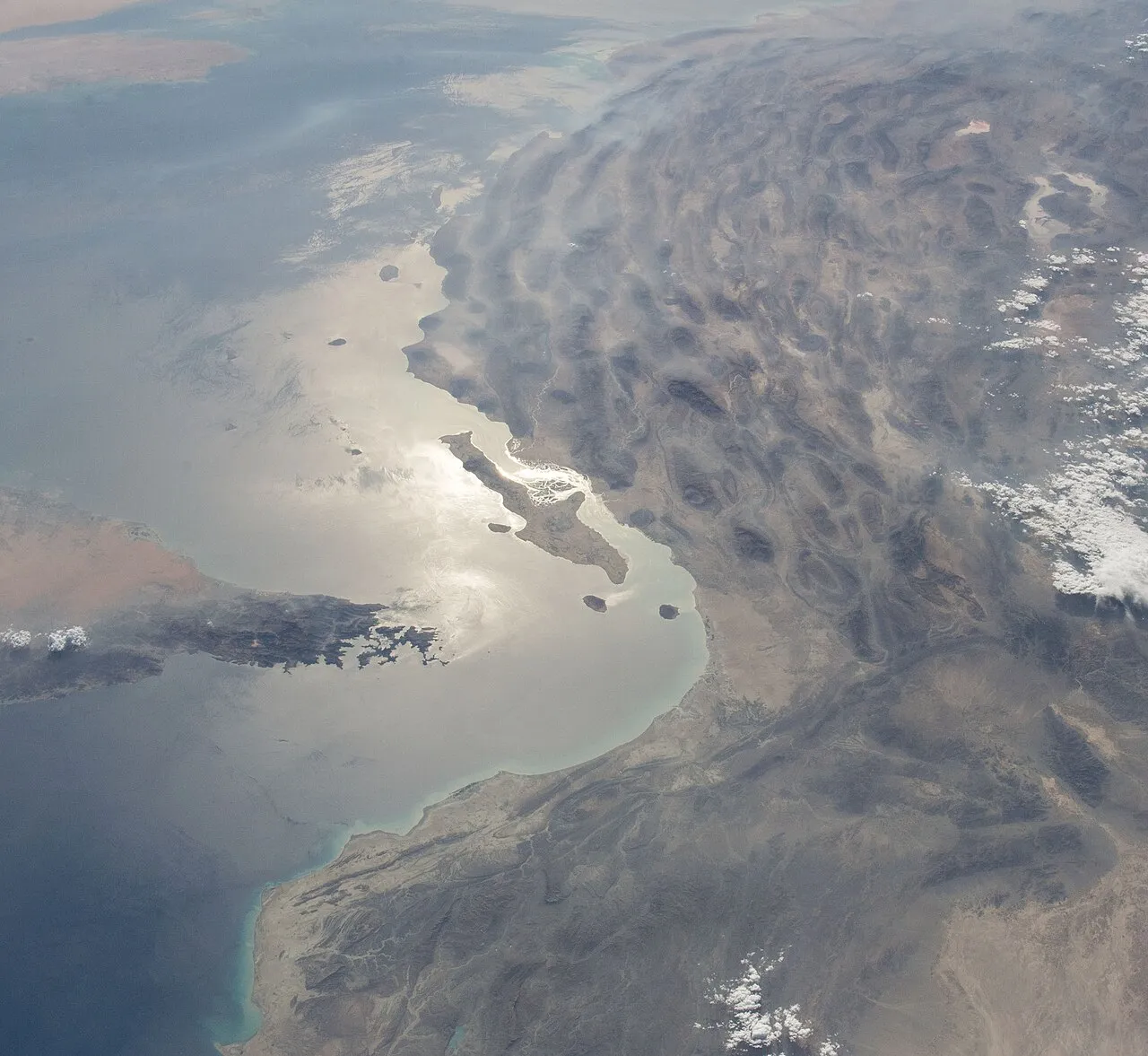
Iran said on Thursday that four oil tankers had been hit by explosions in the Strait of Hormuz over the space of two days. Tehran's account and the logs kept by international maritime authorities do not line up — and Reuters said it could not independently verify the Iranian version.
According to the Revolutionary Guards Navy, two supertankers carrying more than 4 million barrels of oil between them exploded and caught fire on Wednesday night. The force said the vessels were following a "southern route" that Tehran does not authorise and considers unsafe, despite repeated warnings from its Hormuz traffic control centre, and that the ships "stopped after a very strong explosion" and were still burning. The Guards blamed the fires on "the blind trust placed in the aggressive American military" and warned that any ship switching off its navigation systems and cooperating with US forces on that route would meet the same fate.
On Thursday, the Iranian army said two further tankers had struck naval mines in the eastern part of the strait after disabling their radar and entering a restricted area. State television aired footage of the incidents. US military officials said recently that all mines had been cleared from the waterway. Neither account has been independently confirmed, and the vessels' names were not released.
What maritime authorities logged
The Iranian account overlaps with, but does not match, what maritime monitoring agencies recorded between November 10 and 11 — four ships struck by unidentified projectiles:
- Dominica Prosperity, a Liberia-flagged crude tanker, hit at around 1800 UTC on November 11 about 14 nautical miles northwest of Ras Al Khaimah in the United Arab Emirates. The engine room was struck and a fire broke out. Reuters identified South Korea's Sinokor Maritime as the operator; the consultancy Ambrey said the vessel was hit near its stern as it was leaving the strait. All 22 crew were taken off by the UAE coast guard with no injuries — 19 of them are Indian nationals, according to Indian minister Sarbananda Sonowal.
- Fujairah Energy, struck on November 10 in the Arabian Gulf. Several crew members were injured and taken ashore for treatment.
- NCC Fajr, struck at around 0200 UTC on November 11 north of Khasab, Oman. The UK Maritime Trade Operations agency (UKMTO) first logged the case without confirming an attack, then reclassified it as one. The crew is safe.
- A fourth, unidentified tanker, struck on November 10 about 19 nautical miles northeast of Lima, Oman, also with no casualties.
The Joint Maritime Information Center (JMIC), which brings together naval forces and the private sector, recorded the four attacks in its November 12 advisory and said they bring the total of maritime security incidents logged since March 1 to 181. The centre attributes the persistent threat to Iranian attacks and harassment, but notes that the perpetrators of each of the four recent cases have not been individually established. In a November 8 advisory it had rated the region at a severe threat level.
211 idle ships and a fifth of the world's oil
The strait, which in normal conditions carries about one-fifth of the oil shipped by sea worldwide, has been closed since July 12, when Iran shut it again after the United States resumed its attacks on July 8. Tehran requires ships to follow routes it approves and threatens vessels using other paths; the United States maintains a naval blockade of Iranian ports and escorts part of the traffic — US Naval Cooperation and Guidance for Shipping (NCAGS) logged about 34 assisted transits a day over a 96-hour window.
The bottleneck is visible at the anchorages: the JMIC estimates 211 commercial vessels sitting east of Hormuz, at Fujairah, Khor Fakkan, Sohar and Musandam.
The pace of the attacks has not slowed. The Washington Institute for Near East Policy counted 37 attacks in October, the highest monthly figure since the war began in late February, and 10 in the first ten days of November.
The price caught between a truce and the attacks
The market is torn between the two storylines. On Wednesday, Brent rose 0.78% to US$92.20 a barrel and WTI gained 0.57% to US$86.53, recovering part of the losses that had taken the contracts to a two-month low the day before — a drop driven by signals from US officials that further strikes on Iran would not be needed, then partly reversed after an Iranian security official said no talks were under way.
Analysts at LSEG noted that even with a deal, any increase in flows depends on clearing the mines, the cost of insurance and shipowners' willingness to take the risk — three variables a ceasefire does not settle overnight.
With information from Reuters, TASS, gCaptain, Türkiye Today, Business Standard and The Arabian Post.