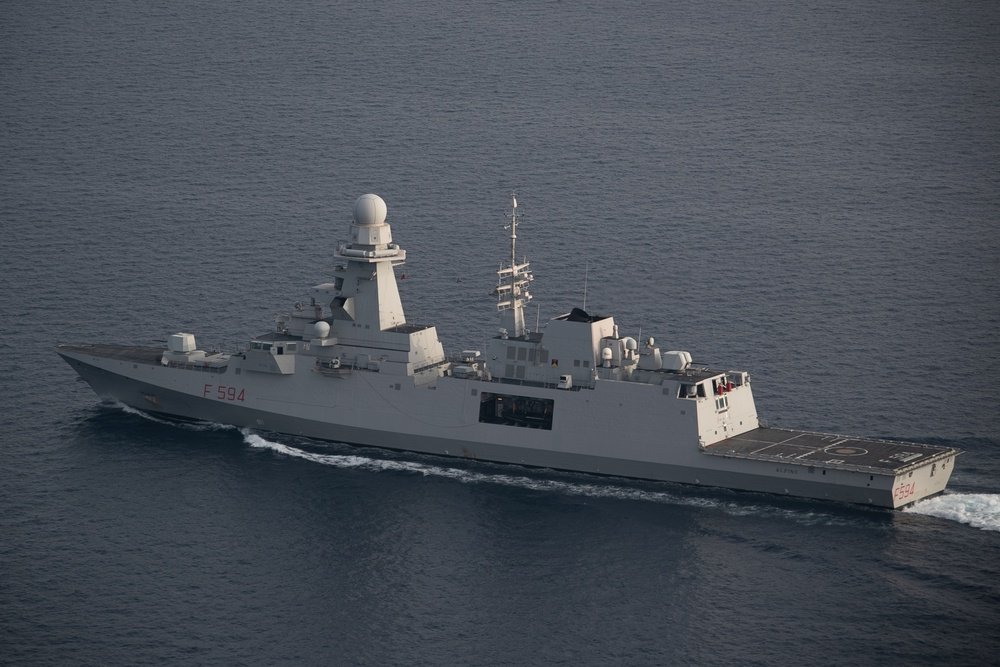
Italy has decided to send warships to the Bab al-Mandeb strait to escort commercial shipping, and will not wait for the European Union to reach a common position. The announcement came from Defence Minister Guido Crosetto on Friday.
"We have the capabilities to protect the passage," the minister said, according to Al Jazeera. Crosetto justified acting alone by saying the present situation cannot absorb the delay of bureaucratic decisions, and warned of "severe economic consequences" if the waterway becomes impassable.
The Italian government has not said how many ships will be deployed, or which ones.
Why this strait
Bab al-Mandeb links the Red Sea to the Gulf of Aden and is the southern door to the Suez Canal. It is between 26 and 30 kilometres wide at its narrowest point, and carries on the order of 12% of world seaborne trade and about 10% of the oil trade, according to figures cited by Al Jazeera and Marine Insight.
For Italy the calculation is direct: the country lives off Mediterranean ports — Gioia Tauro, Trieste, Genoa — that depend on Suez traffic. A closed Bab al-Mandeb forces the detour around the Cape of Good Hope, which adds roughly ten days to an Asia-Europe voyage and shifts cargo towards northern European ports.
What changed in Yemen
The announcement follows a rapid offensive by the Houthis, who now control the entire Yemeni Red Sea coast, including the port of Mocha and a cluster of islands. Among them is Perim, in the middle of the strait, which splits the passage into two channels — a position that gives the group reach over both sides of the route.
The Iran-aligned group has a record of attacks on vessels linked to the United States and its regional allies. This week tens of thousands took to the streets of Sanaa in support of the Houthis, while Yemeni government forces say they are attacking the group in the west of the country.
The European Union and the United States already run shipping protection missions in the area, but have been struggling as the fighting intensifies. Italy's decision to act outside that arrangement is, in practice, an acknowledgement that the collective response has not kept pace with the problem.
The move compounds the squeeze at the other end of the oil route: with the Strait of Hormuz closed, the two main chokepoints between the Gulf and Europe are compromised at the same time.
With information from Al Jazeera and Marine Insight.