The man who opened fire on a crowd in Krakow's main square on Saturday died early on Monday in the hospital where he was being held under police guard. The announcement came from the Lesser Poland (Małopolska) police force, which wrote on its account on the social network X that "the perpetrator of the tragic events died this morning in hospital".
He was identified as Michał Oksiński, 24, a Polish citizen from Ostrowiec Świętokrzyski, in the south-east of the country. Oksiński had been shot several times in the exchange of fire with the two officers who detained him, about 20 minutes after the attack began.
With his death, the weekend's toll stands at nine: the six people killed in the square, plus the gunman's father, mother and sister, found dead in the family's flat. The motive is still unexplained — and, without the perpetrator himself, investigators are left relying on seized material and the accounts of those who knew him.
What happened on Saturday
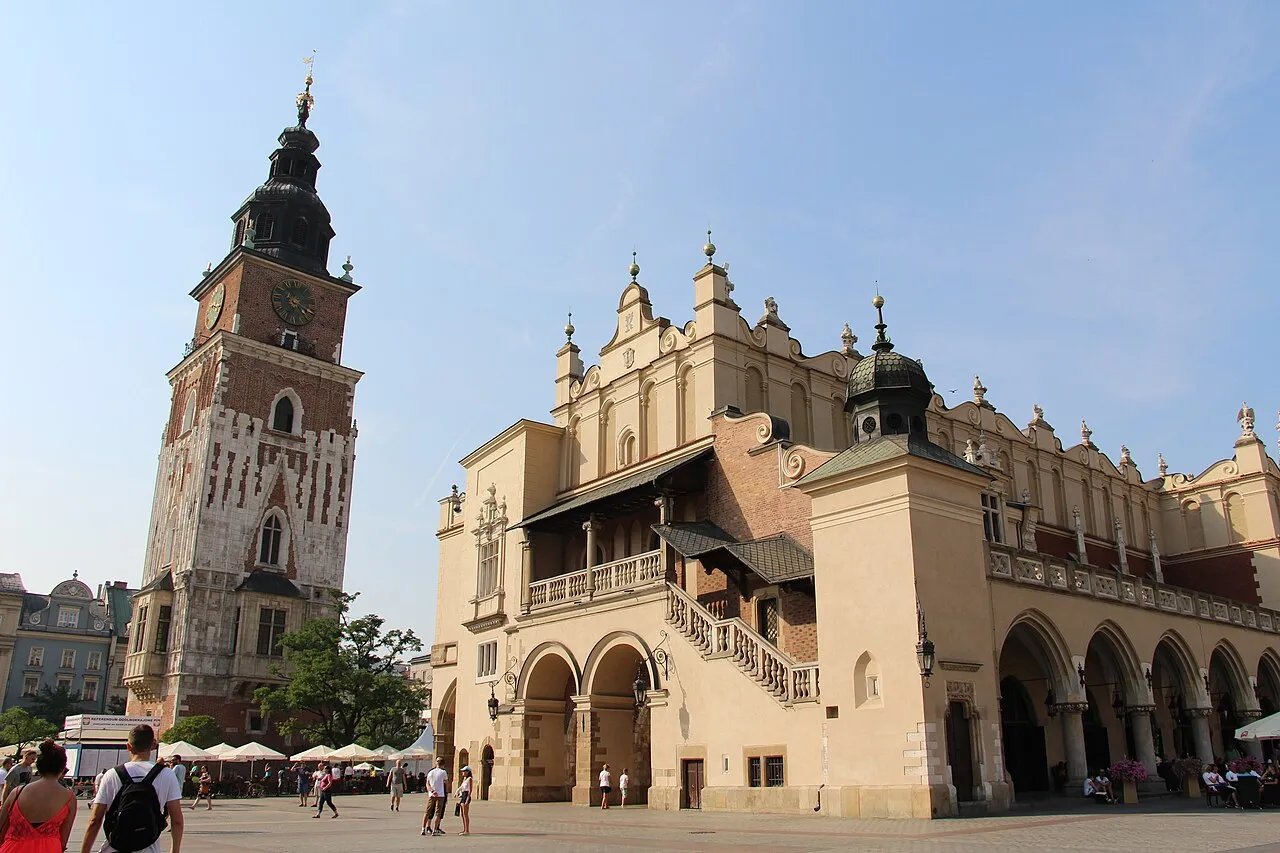
At around 3pm on Saturday, a car drove onto the Rynek Główny, Krakow's market square and one of the busiest spots in the city. The driver, masked and in military clothing, fired on people from inside the vehicle as the crowd ran or took cover. The shooting went on for more than a minute.
He moved on across the square, fired at a tram — shattering the driver's window, with no one on board hurt — and fled southwards. He was detained about a kilometre from the square, at around 3.20pm, after exchanging fire with two officers who were both shot in the chest.
Six people were killed in the square: four women and two men. Four were Polish; the other two were a 32-year-old British man and a 51-year-old Austrian woman. Sixteen were injured, including the two police officers. According to the Interior Ministry, citizens of the United Kingdom, Austria, Germany, Portugal and Russia were among the dead and injured.
Prime Minister Donald Tusk identified the officers who detained him as senior constables Jakub Kulik and Artur Morański, and called them heroes. Both came out of comas on Sunday. Karolina Gałecka, spokeswoman for the Interior Ministry, described Kulik's condition as "serious but stable".
Three bodies at the family home
In Ostrowiec Świętokrzyski, police found the bodies of Oksiński's 53-year-old father, his 52-year-old mother and his 21-year-old sister. All three had gunshot wounds. Prosecutors are working on the hypothesis that he killed them before driving to Krakow.
The weapons and the sports licence
Oksiński had no previous convictions and no police record, and he held a firearms licence for sport shooting. He trained at a shooting club in Starachowice, the same one his father attended; his father had eleven firearms registered in his name.
In the attack he used a semi-automatic rifle resembling an AR-15, fitted with an optical sight, and a pistol. Police seized more weapons and a large quantity of ammunition from the car. Deputy Prime Minister and Defence Minister Władysław Kosiniak-Kamysz denied reports that he was a soldier: there was no connection to the armed forces.
"Initial hypotheses" about the motive
The National Prosecutor's Office classified the case as a terrorist offence on Sunday and opened an investigation. Tusk had also called the attack an act of terrorism.
On Saturday, Interior Minister Marcin Kierwiński said the suspect held "very, very radical views" and "may have been fascinated by far-right ideologies". On Sunday, in an interview with the broadcaster TVN, Kierwiński declined to provide evidence for that assessment and said his words referred to "initial hypotheses".
Two days of mourning
President Karol Nawrocki and Tusk signed the decree for national mourning, which began at midnight on Sunday and ran for two days, with flags at half-mast and entertainment events cancelled. Krakow's mayor, Łukasz Gibała, declared mourning in the city until 11 November. A public vigil was scheduled for 8pm on Monday in the city.
With information from the Lesser Poland police, Notes from Poland and Euronews.