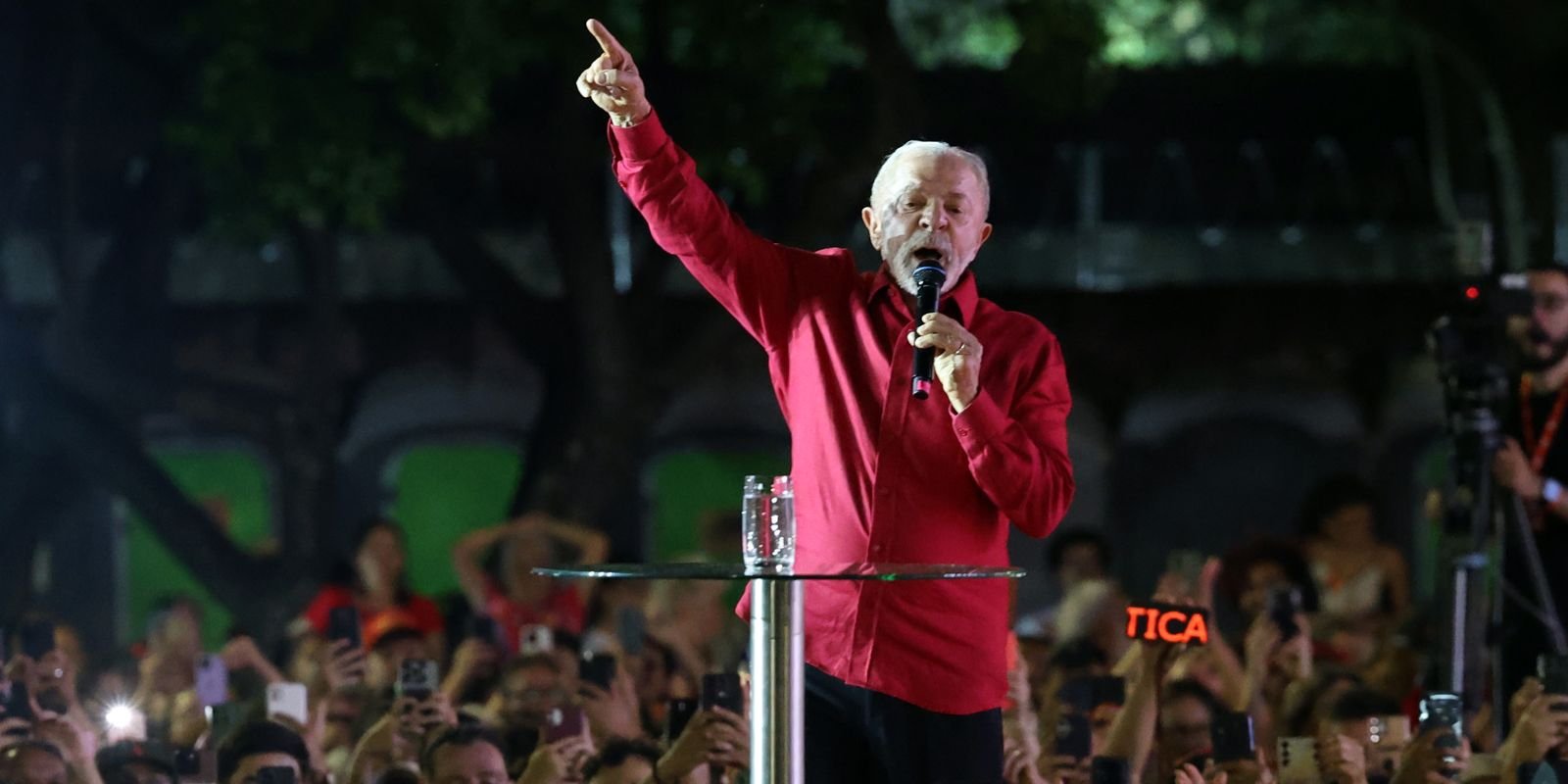
President Luiz Inácio Lula da Silva (PT) released on Friday the government programme he is running for re-election on. The document groups its promises around public security, the cost of living, health and education — and arrives two weeks before the first round, set for 4 October.
A ministry for security alone
The headline proposal is the creation of a Ministério da Segurança Pública (Ministry of Public Security), tasked with coordinating national policy across the federal government, the states and the municipalities. CartaCapital describes the measure as the recreation of a ministry that has existed before in the federal executive.
The programme also promises to reinforce the Programa Brasil Contra o Crime Organizado (Brazil Against Organised Crime programme), launched in May this year, on three declared fronts: the arms trade, the financial blocking of criminal organisations and prison security.
The emphasis is not incidental. The manifesto of his main rival in the race, Flávio Bolsonaro (PL), released days earlier, proposes classifying criminal gangs as "narco-terrorists", cutting ten ministries and abolishing re-election — putting public security at the centre of the contest on both sides, with contrasting prescriptions: more federal coordination on one hand, tougher sentencing and a smaller state on the other.
Minimum wage above inflation, staples without tax
On the economy, the text promises to keep adjusting the minimum wage always above inflation and to maintain the tax exemption for items in the cesta básica, the officially defined basket of staple foods. The programme also speaks of "neo-industrialisation", prioritising innovation and artificial intelligence.
These are promises of continuity rather than change: both measures are already policy in the current term, and the plan presents them as commitments to keep them — which means the inflation rate over the next four years, not the text, determines how much the wage floor actually rises.
Health: cancer care and Farmácia Popular
On health, the document promises to build what it calls the world's largest public cancer care network and to widen Farmácia Popular, the government's subsidised medicine scheme, to cover laboratory tests and the monitoring of chronic illness — today the programme hands out medicines, not services.
Education, defence and foreign policy
On education, the plan foresees expanding the federal technical institutes, with priority for the interior and the urban peripheries, more nursery places and investment in full-time schooling.
On defence, it promises to strengthen the sector's industrial and technological base. On foreign policy, the axis is South American integration, with Mercosur presented as the main regional economic platform.
With information from Agência Brasil and CartaCapital.