The German government said at least 100 police officers were injured over the weekend after demonstrations called by the youth movement "Gen Z regelt" — roughly "Gen Z takes charge" — ended in clashes and looting in several cities on Saturday night.
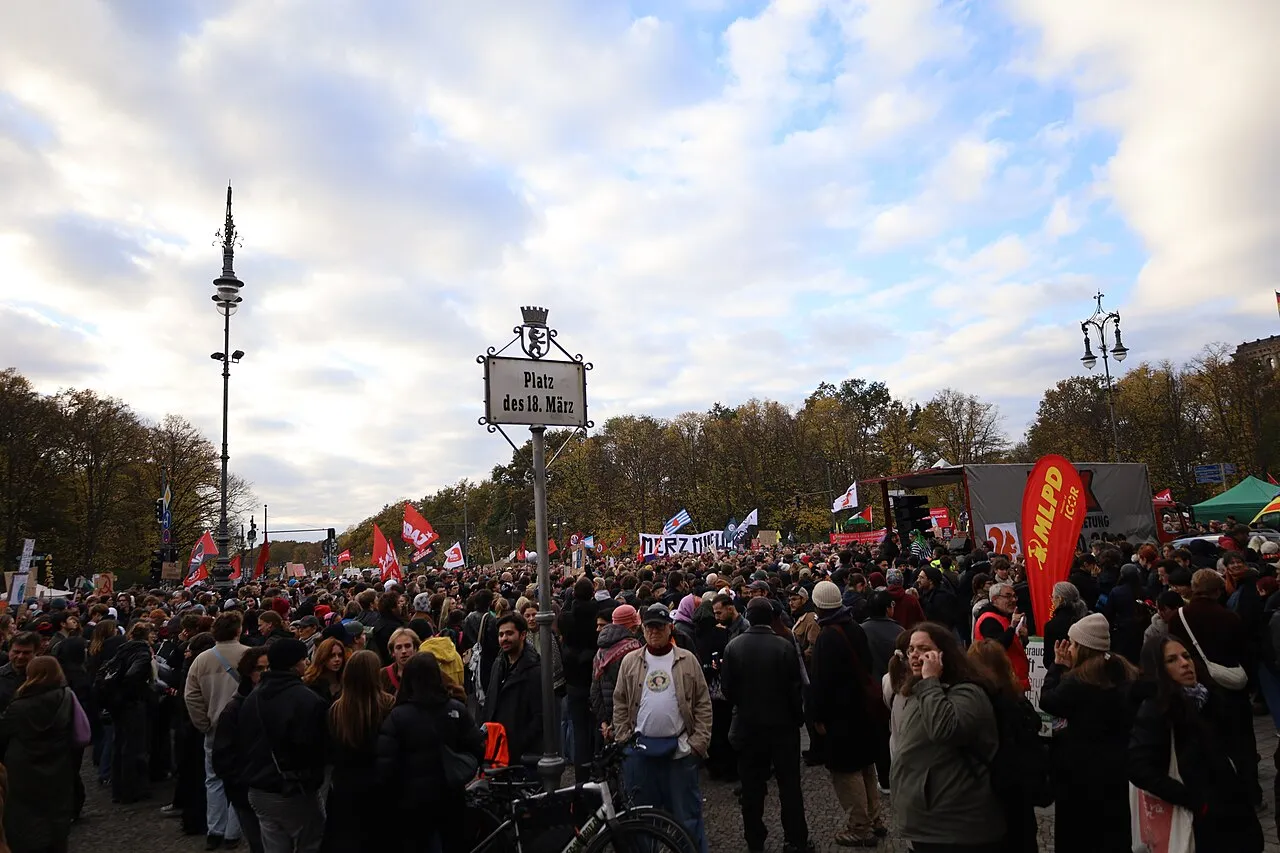
The rallies began peacefully in the afternoon. Tens of thousands of people took to the streets in dozens of German cities to demand more investment in education, an end to compulsory military service and action on the rising cost of living. The turn came after dark.
Frankfurt: 17 shops damaged, five looted
In Frankfurt, around 8,000 people joined the demonstration, according to Euronews, and the organisers distanced themselves from the violence that followed. Hooded groups smashed shop windows on the Zeil, the city's main shopping street, and attacked a gun shop — police seized two weapons. Molotov cocktails, rocks and bottles were thrown at emergency services.
Police counted 17 shops damaged, five of them looted, and 54 people detained, aged between 13 and 29. Some 1,300 officers were deployed, with special units, water cannon, armoured vehicles and a helicopter. The situation only calmed in the early hours of Sunday, and property damage was considerable.
The interior minister of the state of Hesse, Roman Poseck, said more than 100 officers were hurt in the clashes and estimated that between 1,000 and 1,500 people were involved in the violence. "Things cannot go on like this," he said. Most of those detained, he added, were German nationals. Hesse's premier, Boris Rhein, condemned the violence and said those responsible would face consequences.
Berlin, Hamburg and Cologne
In Berlin, police estimated about 3,500 people on a youth march that set off from Rosenthaler Platz towards Prenzlauer Berg, joined by pro-Palestinian and anti-fascist demonstrators. Flares and firecrackers were set off, 27 officers sustained minor injuries and almost 60 people were arrested.
In Hamburg, groups built burning blockades and attacked officers with stones, bottles and fireworks. About 120 people were temporarily detained, and 1,300 officers were deployed. Police said violent groups had mixed in with peaceful demonstrators to provoke and commit offences.
In Cologne, the rally was wound up at around 4pm after some participants covered their faces and began setting off fireworks. Police used water cannon; one officer injured a hand and had to leave duty. Several criminal proceedings were opened.
How the federal government reads it
Federal Interior Minister Alexander Dobrindt said he expects "severe penalties" and that those responsible would be identified. He attributed the violence to far-left groups acting alongside "troublemakers from an immigrant background" — without presenting evidence or naming the organisations, according to Australia's ABC. Dobrindt also said border controls had been tightened, on the argument that extremist groups from abroad could exploit the protests.
Tying the violence to the protesters' background is the contested point: Poseck said most of those detained were German and at the same time described those involved as "predominantly from an immigrant background," citing a police assessment. Neither official produced consolidated data on the profile of those arrested.
A month of youth protests in Europe
The German wave follows similar mobilisations in other European countries. In France, protests reached a third consecutive weekend, largely peaceful, after the October 17 demonstrations that ended in looting and damage to shops and public buildings. Part of Saturday's march in Berlin was called in solidarity with the French protesters.
With information from Euronews, ABC News (Australia), Reuters and ANI.