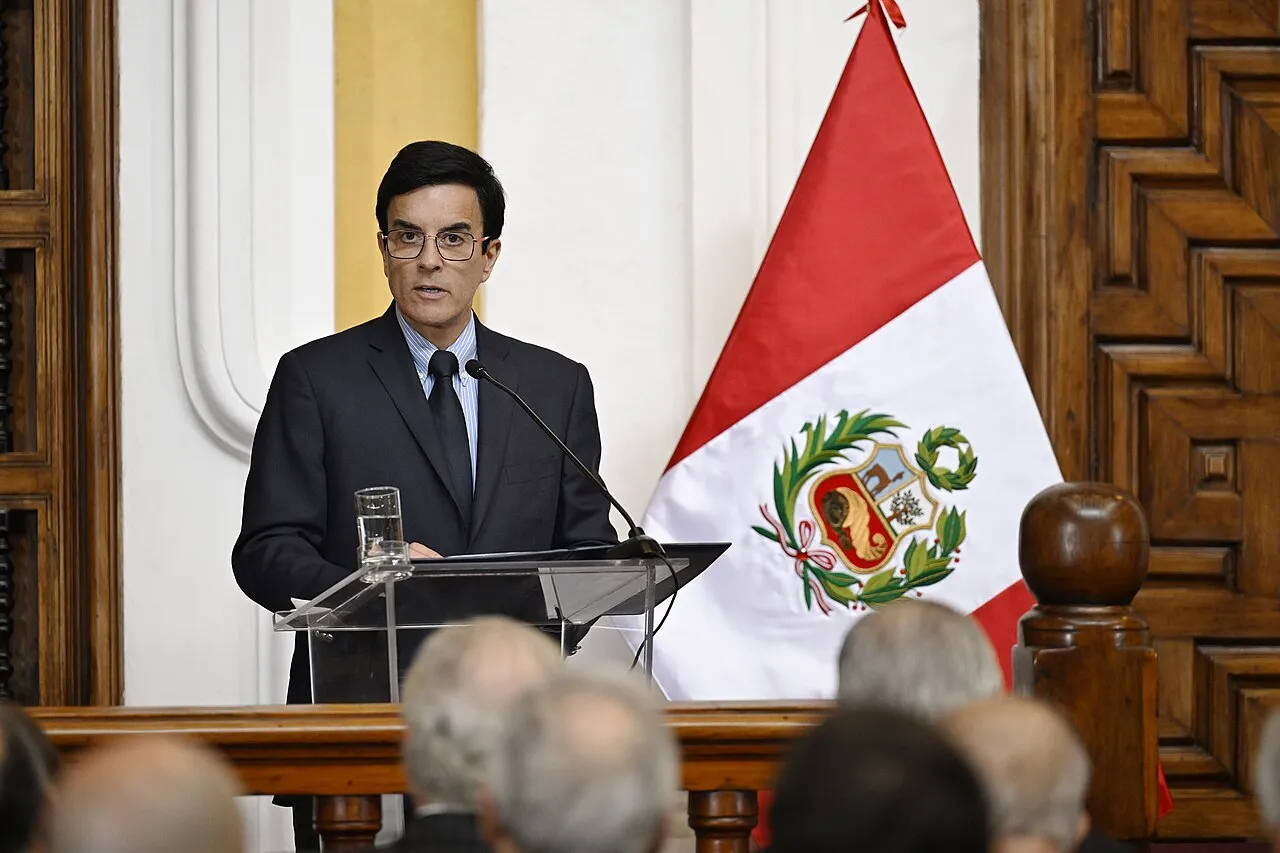
Peru's foreign minister, Carlos Espá, met Russia's foreign minister, Sergey Lavrov, in Moscow on Monday, 9 November 2026, and asked him for "the greatest possible amount of verifiable information" on the whereabouts and condition of 459 Peruvian citizens enlisted in the Russian armed forces fighting in Ukraine. It was the first visit by a Peruvian foreign minister to Russia in twelve years.
Espá gave the figure of 459 at a joint press conference with Lavrov and described the matter as a "maximum priority" for the Peruvian government. He called the meeting "a very frank conversation."
The numbers Lima acknowledges
According to an August 2026 report, the Ministerio de Relaciones Exteriores (Peru's foreign ministry) has confirmed 11 dead and 114 missing among the enlisted Peruvians. At least three were captured by Ukrainian forces. For the rest — the gap between those records and the 459 known cases — Lima has no official information on whether the men are alive, wounded, dead or held as prisoners of war.
That gap between the total and the confirmed is, in practice, the point of the visit: the Peruvian government is not negotiating the return of combatants, but trying to establish how many of its nationals are still alive.
What Peru asked for, and what Russia answered
Peru's requests included stable channels of communication with Russian authorities, verifiable information on the condition and whereabouts of those recruited, access to the wounded, and progress on identifying and repatriating the remains of the dead. The two ministers also agreed that enlistment contracts should not renew automatically.
Lavrov said Moscow had already provided "detailed explanations" and that Russia's defence ministry, his own ministry and the Peruvian embassy in Moscow were all working on the matter. He mentioned a visit made to facilities in Rostov-on-Don and undertook to speed up responses to families' requests when they arrive through official channels and the agreed bilateral mechanisms. In return, he asked Lima to submit individual requests about specific people.
The Russian minister maintained the position his country has held since April: that the Peruvians signed military service contracts voluntarily. He also described Peru as "a very important partner" in Latin America.
Job offers that ended in a contract written in Russian
The families tell a different story. According to their complaints, those recruited accepted civilian job offers — cook, security guard, carer, cleaner — were taken to military facilities and were then asked to sign contracts drafted in Russian. The incentives on offer included a monthly salary of US$2,300, a US$20,000 bonus after one year, and the possibility of obtaining Russian citizenship.
Peru's public prosecutor's office opened a human trafficking investigation in May after receiving hundreds of complaints from families who lost contact with relatives once they had accepted work in Russia. In mid-October, the specialised anti-trafficking prosecutor's office in Lima Norte secured 14 months of pretrial detention for an alleged recruiter known as "Pocho Pinto," accused of recruiting Peruvians for labour exploitation in Russia; that case involves four nationals, among them Julio Salazar, who died.
Not only Peru
The pattern repeats across the region and beyond it. Bolivia, Cuba and Colombia have also reported cases of nationals being recruited. An Amnesty International report published in September concluded that Russia had recruited thousands of people through deception in countries including Brazil, Colombia, Cuba, Sri Lanka and South Africa.
Helicopters and university degrees
The bilateral agenda was not limited to the recruits. Peru raised the maintenance and repair of its Mi-8 and Mi-17 helicopters — which it considers necessary for its response to El Niño — and asked for restrictions on spare parts to be lifted on humanitarian grounds. The two countries also agreed to mutually recognise academic degrees and qualifications.
Espá closed his remarks with a warning to his compatriots: not to be tempted by job offers promising high wages in Russia.
With information from Infobae Perú, El Tiempo, RPP Noticias, France 24 and Peru's Ministerio de Relaciones Exteriores.