Russia and Ukraine spent about four hours at the table in Abu Dhabi on Tuesday, in the first US-mediated trilateral round since February. The delegations meet again on Wednesday in the United Arab Emirates.
The session dealt mainly with humanitarian points — prisoner exchanges and the return of civilians and children taken to Russia — and with security guarantees. Territory, the knot of the negotiation, did not move: according to a US official quoted by Al Jazeera, any territorial agreement is likely to come only at the end of the process, once the other issues are settled.
Who was at the table
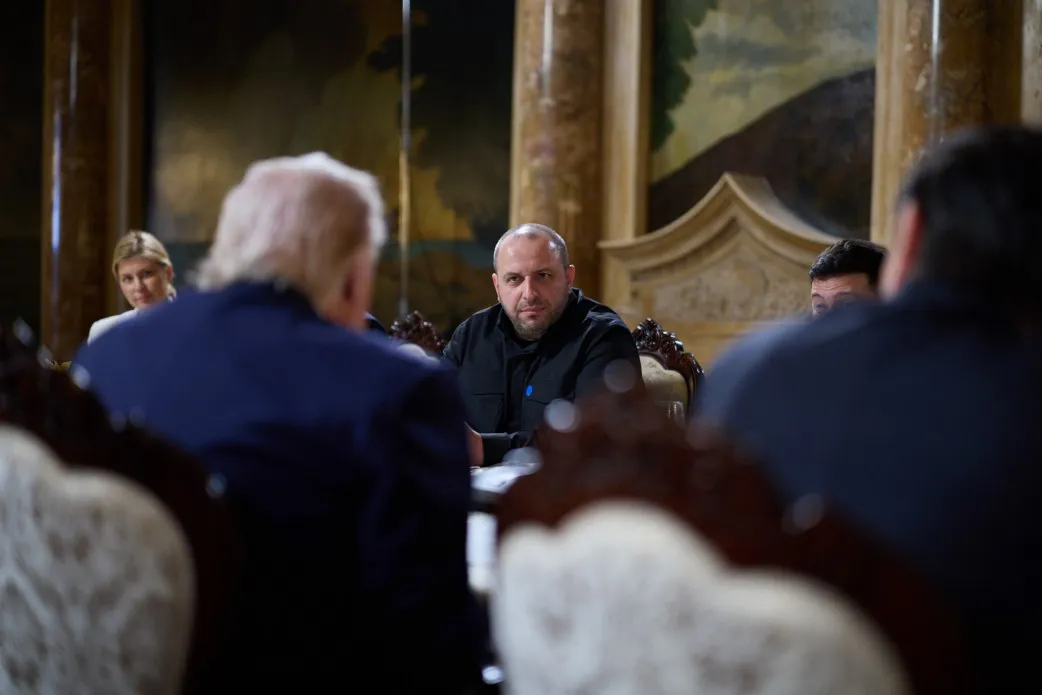
The Russian delegation was led by Vladimir Medinsky, an aide to President Vladimir Putin, and included deputy foreign ministers Sergei Ryabkov and Mikhail Galuzin and military intelligence chief Igor Kostyukov. The Ukrainian side was led by Rustem Umerov, who heads the country's Foreign Intelligence Service.
The United States was represented by Jared Kushner and envoy Steve Witkoff, joined by NATO's military commander, Gen. Alexus Grynkewich. Neither US Secretary of State Marco Rubio nor Ukrainian President Volodymyr Zelenskyy took part: Rubio was at the G7 meeting in Paris, and Zelenskyy was in Denmark.
What each side said afterwards
Rubio described the conversation as "very productive" but urged patience, saying a solution is not imminent. Zelenskyy called the session "constructive and quite substantive". Kushner said "some good ideas how to bridge" the differences had emerged, and described the goal as a new framework for peace. Medinsky said he hoped the meeting would advance the path to peace, and Umerov thanked the United States for its efforts.
A senior Ukrainian official said the two sides discussed a large-scale prisoner swap, with details to be announced in the coming days.
Territory remains stuck
This is where the negotiation did not advance. Putin wants Ukraine to withdraw from the four regions Moscow annexed in September 2022 and does not fully control, demands that Kyiv drop its NATO bid and accept limits on its own army, and rejects a general ceasefire before a comprehensive deal. Zelenskyy refuses to cede territory voluntarily and rejects any limit on Ukraine's armed forces or on its security arrangements with the West, which Kyiv regards as the only guarantee against another invasion.
Russia currently occupies about 20% of Ukrainian territory, including Crimea and parts of the eastern Donbas — an occupation the international community does not recognise. Kyiv argues for an immediate ceasefire and a direct Putin-Zelenskyy meeting to settle the territorial question; Putin rejects both.
Among the security-guarantee topics, according to the US official quoted by Al Jazeera, is a defence commitment modelled on Article 5 of NATO's founding treaty — the provision that treats an attack on one member as an attack on all.
Europe stayed in the corridor
On Tuesday morning, before the trilateral round, Ukraine met with the US envoys and with representatives of the United Kingdom, France, Germany, Italy, NATO and the European Commission. Russia objected to a European presence at the three-way table but allowed that European Union representatives could join later. Kushner said a lasting settlement would require direct engagement between Russia and European partners on the broader security arrangement.
The fighting did not stop during the negotiation: both sides kept up long-range strikes. Earlier rounds in Abu Dhabi, in January and February, and a meeting in Geneva on 18 February ended without significant progress.
With information from Al Jazeera, the Associated Press (via PBS NewsHour) and Euronews.