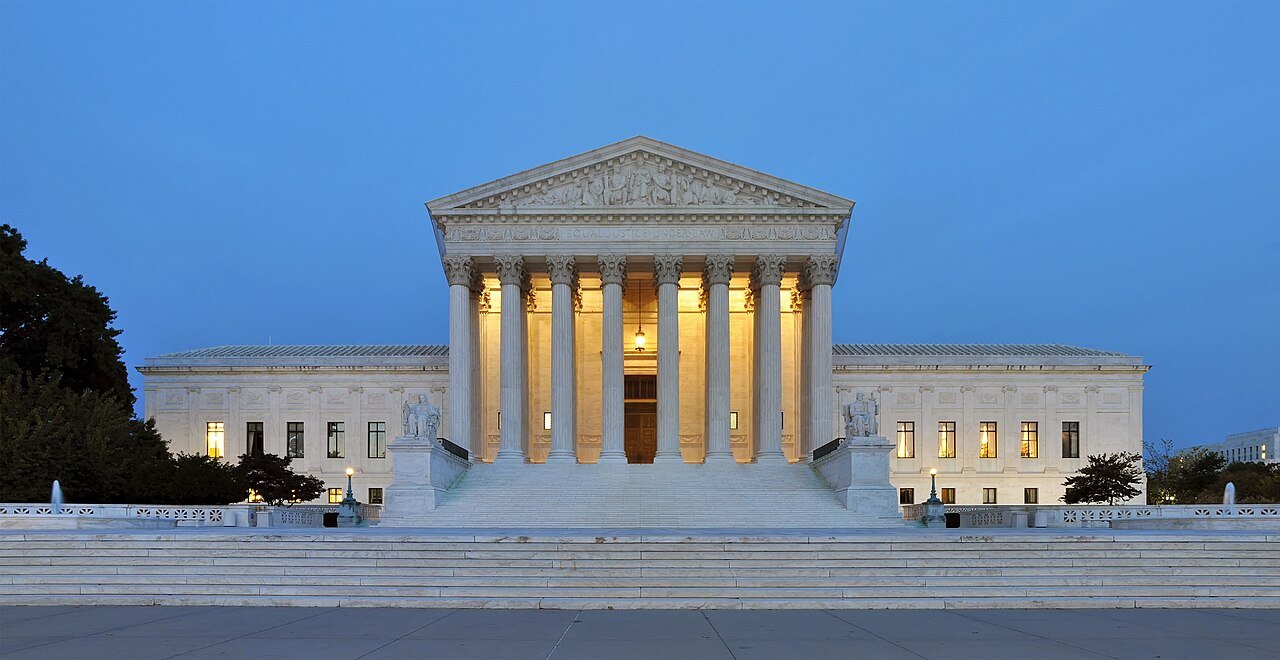
The Supreme Court on Tuesday allowed the federal government to resume deporting immigrants to countries other than their own, freezing a district judge's order while the justices take up the dispute in full.
The order, issued September 29, 2026, granted the administration's application for a stay in Department of Homeland Security v. D.V.D., No. 26-426, halting the February 25, 2026 order and judgment of the U.S. District Court for the District of Massachusetts. In the same order, the Court granted certiorari and set the case for argument in December.
Three justices — Sonia Sotomayor, Elena Kagan and Ketanji Brown Jackson — would have denied the application. None of them wrote separately, so the order carries no stated reasoning on either side.
The ruling that was put on hold
Judge Brian Murphy had concluded that the government's guidance on what are known as third-country removals gave people no meaningful chance to argue that they would face torture or persecution in the country they were about to be sent to. His order required notice and an opportunity to be heard before such a removal went ahead. That requirement is now suspended.
The case reached the justices after weeks of back-and-forth on the emergency docket. The administration urged the Court to lift the limits on September 24, and lawyers for the immigrants asked on September 28 that the lower-court ruling be left in place. The stay resolves that exchange in the government's favor, for now.
What the Court agreed to decide
The order list sets out the questions the justices will consider in December:
- whether the district court had jurisdiction over the claims at all;
- whether it could issue class-wide declaratory relief and vacatur under the Administrative Procedure Act;
- whether the government's guidance on third-country removals violated applicable immigration law, constitutional protections or international agreements.
The first two are about the power of a single federal judge to halt a national policy — a question the Court has returned to repeatedly during this administration. Only the third reaches the policy itself.
The practice at issue
A third-country removal sends someone to a state that is neither their country of citizenship nor, in most cases, anywhere they have lived. It is used when a home country will not accept a deportee back. According to Roll Call, people have already been removed under the policy to destinations including El Salvador, Libya and South Sudan.
Federal law bars sending a person to a country where they are likely to be tortured. The government's position is that a categorical assurance from the receiving state satisfies that bar. The challengers argue that a blanket promise given in the abstract cannot answer an individual's specific claim about what would happen to them on arrival — which is why, they say, a hearing is required.
What happens next
A stay is not a decision on the merits. It reflects the Court's judgment about who should bear the risk of being wrong while the case is pending, and here that judgment went against the immigrants covered by the district court's class. The practice can restart immediately; a ruling is likely by the end of the term in June 2027.
Reporting from the Supreme Court of the United States order list of September 29, 2026, Roll Call and SCOTUSblog.