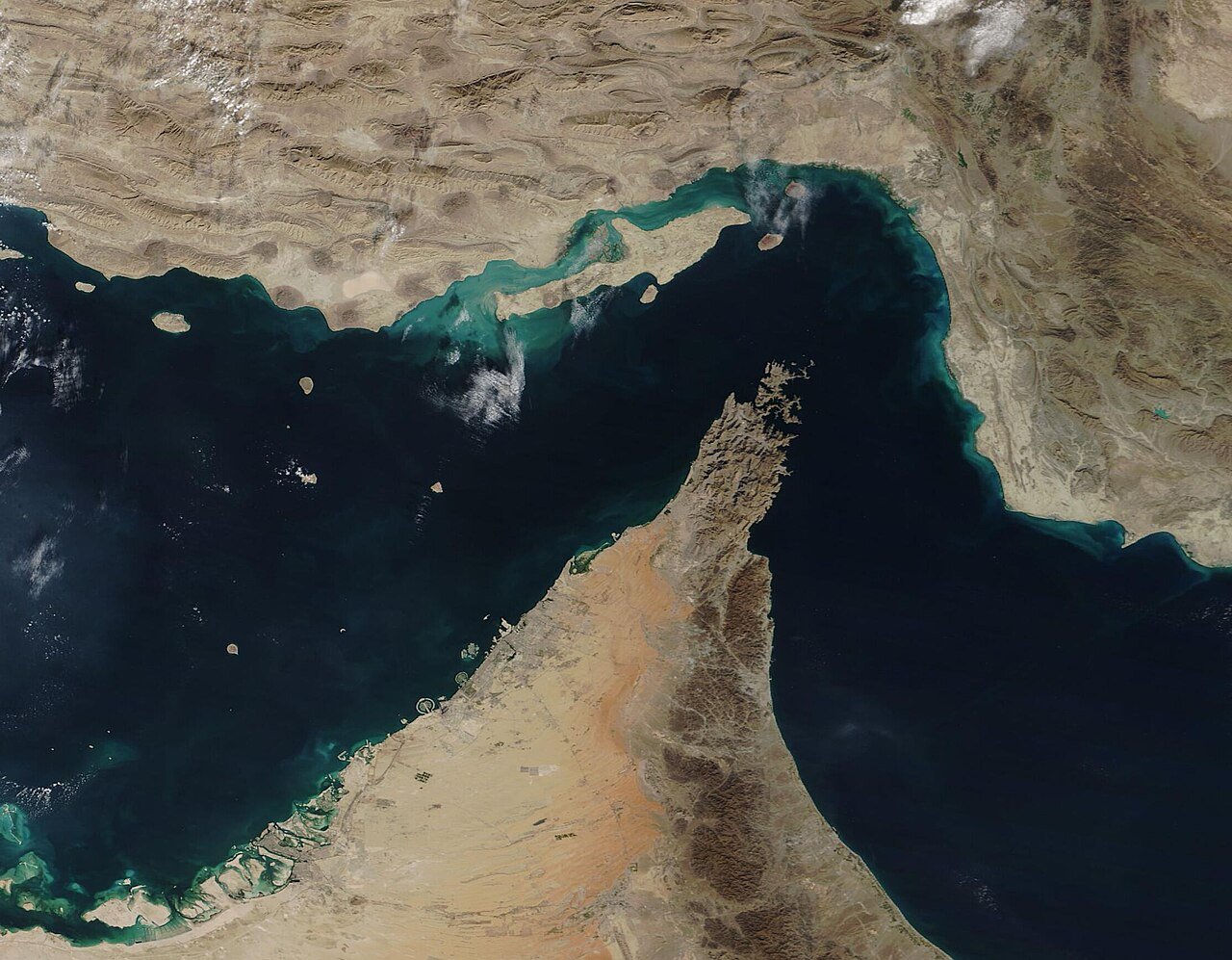
US President Donald Trump on Saturday rejected Iran's offer to reopen the Strait of Hormuz within seven days, a plan presented the day before by Foreign Minister Abbas Araghchi at the United Nations General Assembly in New York. "That deal would not be acceptable," Trump said, adding in the same remarks that the United States now has "total control" of the passage.
The refusal keeps shut, for a seventh month, a sea corridor that used to carry roughly a quarter of the world's seaborne oil trade and a fifth of its liquefied natural gas. The strait was closed on 28 February, after the United States and Israel began air strikes on Iran; on 4 March, Tehran declared full control of the waterway. The US naval blockade of Iranian ports began on 13 April.
What Tehran asked for
The plan Araghchi took to the UN ties the reopening to a set of steps, in this order:
- an immediate ceasefire on all fronts, including Lebanon;
- suspension of the US naval blockade of Iranian ports;
- repeal of sanctions on Iranian oil and the release of frozen assets abroad;
- opening of the strait at the end of the seventh day;
- the start of talks on the nuclear programme only after that.
"If certain conditions are met, the Strait of Hormuz would be open on the end of the seventh day," Araghchi said, according to Al Jazeera.
The sequence is the heart of the dispute. The memorandum signed in Islamabad on 17 June, which did not hold, treated the nuclear programme and the reopening of the strait as parts of a single package. The current proposal inverts the order: Iran wants economic relief and an end to the blockade first, and the nuclear table only afterwards. Washington insists the nuclear question be on the table from the start.
Iran's response
Tehran said it is waiting for a definitive US position before withdrawing the offer. Iranian President Masoud Pezeshkian told Al Jazeera that "we no longer have faith in Washington after the attacks and sanctions," while maintaining that the country accepts "dialogue and diplomacy."
Qatar and Pakistan remain the mediators. According to Al Jazeera, Qatari diplomacy enabled indirect contact between Iranian officials and US envoys Steve Witkoff and Jared Kushner during the General Assembly week. Secretary of State Marco Rubio urged caution and said the talks should not be described as a breakthrough.
Why the timing matters
The rejection lands at a moment of double pressure. On one side, the closure of the strait has pushed fuel prices up worldwide — a barrel of oil passed $100 in March for the first time in four years and touched $126 at the peak of the crisis. On the other, the Wall Street Journal reported that Trump told aides privately he expects to resume bombing Iran after the November midterm elections.
Araghchi is expected to stay in New York through Wednesday, according to the Times of Israel.
On the same Saturday, US Treasury Secretary Scott Bessent announced new sanctions on Iranian airlines and banks. Turkey and Oman suspended Mahan Air flights, and the United Arab Emirates halted operations by all Iranian carriers on its territory.
With information from Al Jazeera, Euronews, Newsweek and the Times of Israel.