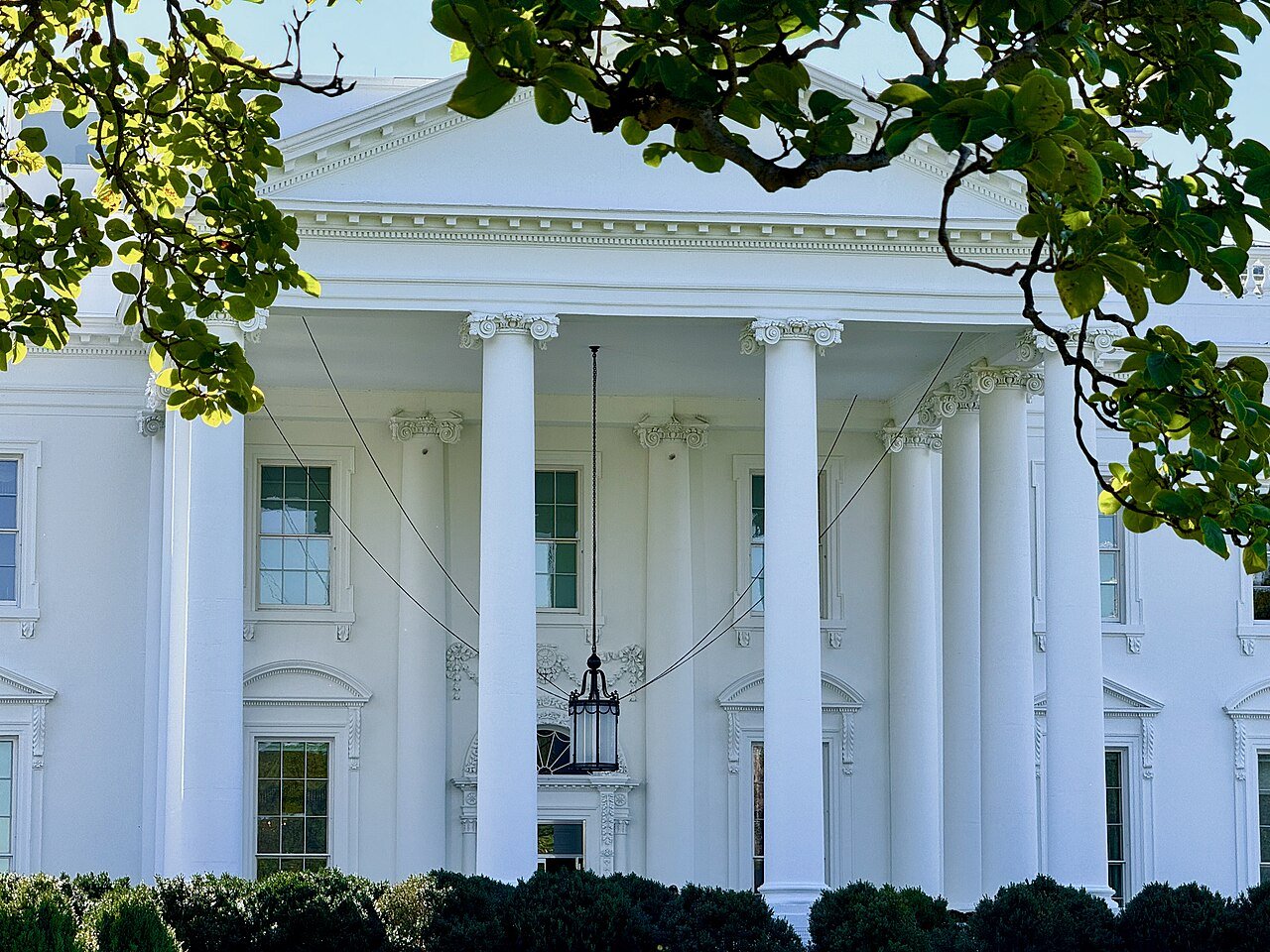
President Donald Trump signed an executive order on September 29, 2026 that orders every federal department and agency to stop writing "artificial intelligence" in official correspondence, public communications and policy documents, and to write "super intelligence," or SI, instead. Hours earlier, at a meeting in the White House, six companies that train frontier models signed a voluntary accord on safety oversight that the president said was "morally binding."
Neither document creates an obligation a court could enforce. Together they are the clearest statement yet of how this administration intends to handle the fastest-moving industry in the country: by naming it, and by asking it to police itself.
What the order actually does
The order changes vocabulary, not programs. It directs agencies to substitute the new term in what they write, and tasks the Assistant to the President for Science and Technology with proposing a federal definition of "super intelligence." A White House fact sheet published the same day frames the switch as a matter of accuracy, arguing that the technology should be described as unlocking "new forms of human creativity" rather than "simply imitating or automating human intelligence."
That is a smaller change than it sounds, and a larger one. No grant, contract or rule is altered by the renaming. But in a policy area where Congress has passed no statute, the words the executive branch uses are most of what exists — and every rule, funding notice and procurement document written from here on will carry them. The fact sheet also points back to the administration's existing commitments in the field, including more than $5 billion for the Genesis Mission and an AI action plan with more than 90 federal actions.
Six companies, four layers, no statute
The accord was signed by Google, Anthropic, Meta, OpenAI, xAI and Nvidia — represented by Sundar Pichai, Dario Amodei, Mark Zuckerberg, Greg Brockman, Elon Musk and Jensen Huang. Also in the room, according to CBS News, were Microsoft's Satya Nadella, AMD's Lisa Su, Nikesh Arora of Palo Alto Networks, White House AI adviser David Sacks and House Speaker Mike Johnson.
It sets out four layers of oversight: internal controls that monitor what a model can do during training and deployment; designated internal teams responsible for those controls; partnerships with independent outside auditors; and independent committees that review what the internal and external auditors report. Signatories also agreed to meet regularly to set standards and share practices. The text leaves the door open to something firmer, allowing that "over time, it may make sense to codify these steps into laws or regulations."
Asked whether the accord binds the companies, Trump said: "I think it's morally binding," and added that he was seeing "tremendous self-policing, and they understand that they have to self-police." He also called the document "almost like a constitution, in a way."
Musk was blunter about the mechanism. "We agreed to a number of things that include joint monitoring, board special committees, just generally grading each other's homework," he said.
The administration's argument, and the objection
Vice President JD Vance put the reasoning plainly at the meeting: "The solution to some of the AI risks is for you guys to take the risk seriously, not to come to the government for a regulatory regime."
Senator Mark Warner, a Democrat, drew the opposite conclusion from the same facts. "The companies building the most powerful AI systems are warning us that the technology is advancing faster than our safeguards," he said. "The president's response? To rename it and tell the companies developing it to regulate themselves."
The gap between those two readings is the whole of American AI policy at the moment. The companies in the room have publicly described risks they say they cannot fully measure; the accord asks the same companies to build the measuring instruments, hire the auditors and staff the committees that review them. What the four layers do create is a paper trail — internal evaluations, external audits, board minutes — that a future Congress or regulator could subpoena even though no one can compel it today.
Reporting from the White House, Nextgov/FCW and CBS News.