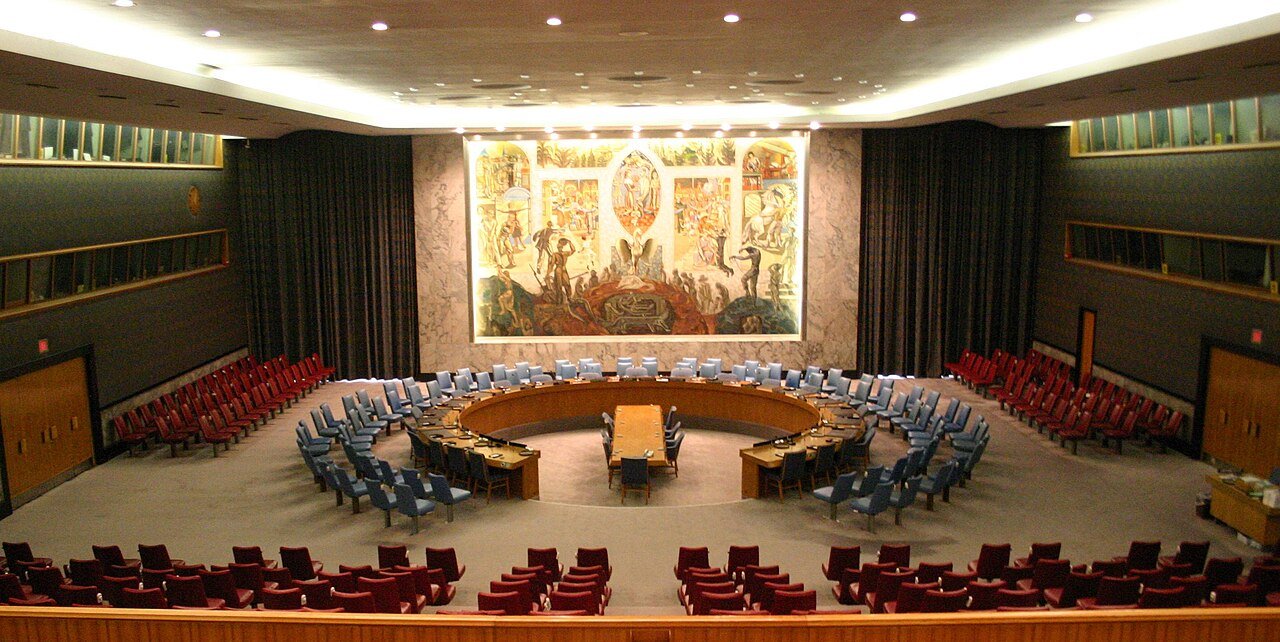
The United Nations Security Council on Tuesday 29 September extended by six months the mandate of the Gang Suppression Force (GSF) operating in Haiti. The authorisation, which was about to lapse, now runs to 31 March 2027.
The vote was 13 in favour and none against, with abstentions from Russia, China and Pakistan, which questioned how effective the deployment has been. None of the three used its veto, so the resolution passed.
A force that reached a third of its planned size
The GSF was authorised in September 2025 for an initial twelve months, replacing the Multinational Security Support Mission that Kenya had led. The design approved then provided for 5,500 uniformed personnel and 50 civilians.
That figure remains distant. According to the count cited in the debate, the force currently has around 1,500 personnel — close to 30% of what was authorised — with some 4,000 more expected in the coming months. The EFE news agency put the deployment below 1,000 personnel in July 2026, which gives the measure of how slowly contingents have arrived.
The countries that have contributed personnel are Chad, Mongolia, Jamaica, Guatemala, El Salvador and Sri Lanka. It is a short list for a mandate of this size, and the gap between authorised and deployed strength runs through every argument about Haiti: a force at 30% cannot cover the territory its mandate assigns it.
What the extension has to carry
Armed violence has not eased. More than 1.5 million people are displaced from their homes inside the country, and between April and June 2026 the UN documented 1,408 killings and more than 650 injuries linked to armed groups.
The political calendar adds pressure. Haiti has scheduled its first presidential and legislative elections since 2016 for 13 December 2026, together with a constitutional referendum. That is eleven weeks from Tuesday's vote, and the renewed mandate expires little more than three months after the ballot.
The United States ambassador to the UN, Mike Waltz, defended the force's approach and set a limit on it: "Everything is designed with one ultimate goal: for Haitians to regain control of their security and future. This cannot become an endless mission." Waltz also argued that the GSF differs from earlier deployments because it can coordinate with Haiti's army or operate on its own, rather than only backing the police.
How Port-au-Prince read it
Haiti's government welcomed the decision. The Presidency described it as an important step towards restoring security, and stressed that international support "must complement, not replace" the strengthening of the country's own capacity.
Haitian authorities said more than 2,000 police officers have been trained and that 1,500 military recruits are in instruction, with a target of 15,000 soldiers within three years. "The struggle for security continues. The Haitian State is determined to win it," the official statement said.
With information from the UN Security Council, the Presidency of Haiti, EFE, Listín Diario, Diario Libre and Al Jazeera.