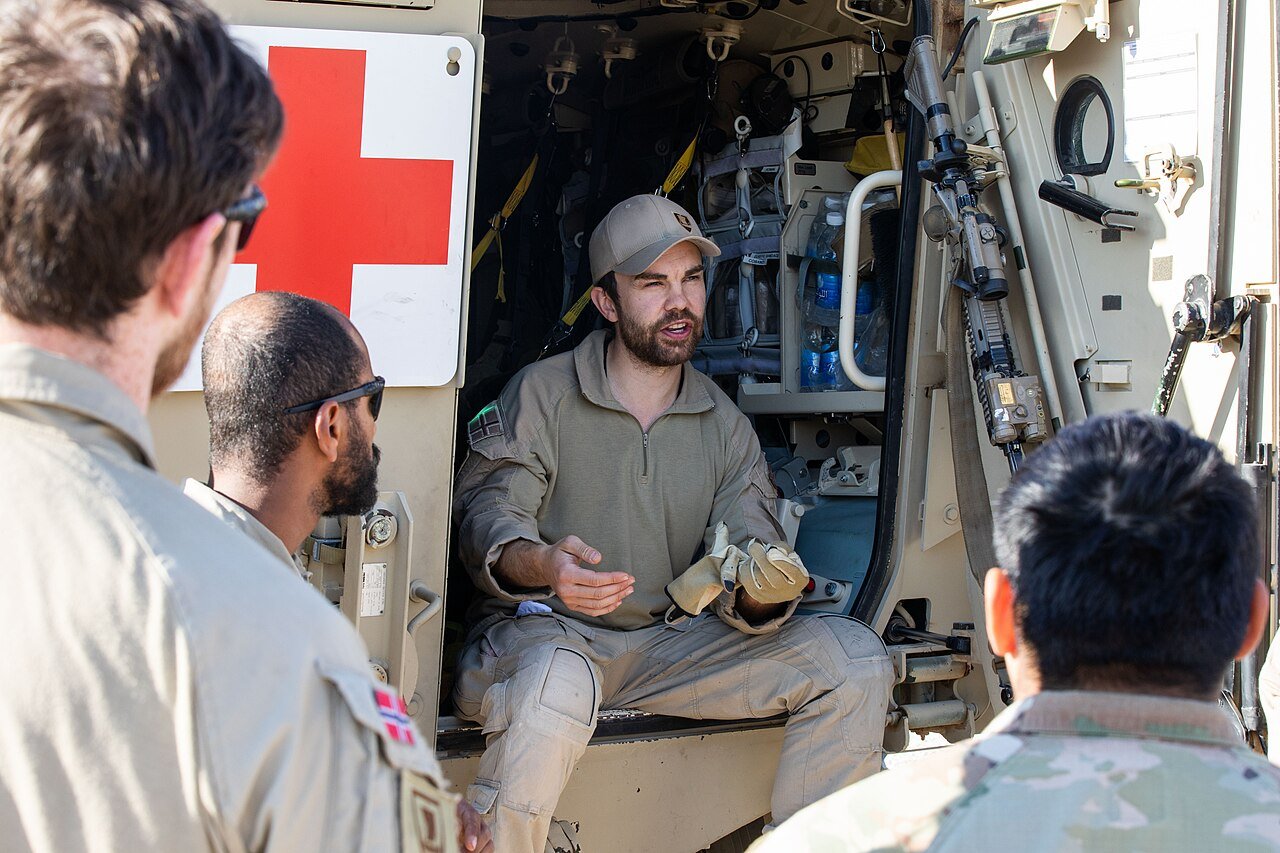
The United States Department of Defense announced on Wednesday (30) that the international coalition has completed its withdrawal from Iraq, ending a foreign military presence that began with the invasion of March 2003. The final step was the evacuation of the Erbil air base, in Iraqi Kurdistan, where American troops had been concentrated since leaving the country's other installations.
The "orderly withdrawal of coalition forces and equipment from Erbil Air Base marks the successful conclusion of the military mission that defeated" the Islamic State group, said Pentagon spokesman Sean Parnell, according to Diário de Notícias.
A date Baghdad treated as irreversible
The 30 September deadline had been presented as final by Iraqi Prime Minister Ali al-Zaidi. In August he described it as the "fixed and final date" for ending the military mission and said 1 October would mark "a new day" without a foreign military presence in the country. The timetable was agreed at a meeting with the commander of US Central Command (Centcom), General Brad Cooper, according to Al Jazeera.
Confirming the end of the coalition on Wednesday, al-Zaidi said Iraq is entering "a new phase", defined by the country's sovereignty, the strength of its institutions and balanced alliances with its partners.
Three cycles in 23 years
The foreign military presence in Iraq ran through three distinct stages. It began on 20 March 2003, with the US- and UK-led invasion that toppled Saddam Hussein. Most American troops left in 2011 but returned in 2014, this time under the mandate of an international coalition assembled to fight the Islamic State.
It is that third stage that has now ended. The transition plan for the anti-jihadist mission was announced in September 2024, when there were roughly 2,500 American troops in Iraq. The withdrawal itself began on 18 August 2025; the Al Asad air base, in the west of the country, was handed over to Iraqi forces in January 2026; NATO's mission in Iraq ended in March 2026; and Erbil was left for last.
Over the 23 years, about 4,500 American service members died in Iraq, according to the Forças Terrestres portal.
Tehran celebrates, Erbil objects
Iran is treating the departure as a strategic victory, and armed groups aligned with Tehran described it as a "crushing defeat of the American project". Kataib Hezbollah threatened to shoot down any hostile aircraft flying over Iraqi airspace after 30 September.
The sharpest reaction, however, came from the north. The leader of the Kurdistan Regional Government, Masrour Barzani, called the withdrawal shameful and argued that the region lacks defence systems capable of answering Iranian strikes. Kurdish authorities count more than a thousand missile and drone attacks on Iraqi Kurdistan since February 2026.
That figure helps measure what the departure means in practice: the US military support agreements expired on Wednesday, and the Patriot air-defence batteries that covered the region are reportedly being moved to Jordan. The United States keeps a large consulate in Erbil, but without the military structure that came with it.
With information from Diário de Notícias, Al Jazeera and the Forças Terrestres portal.