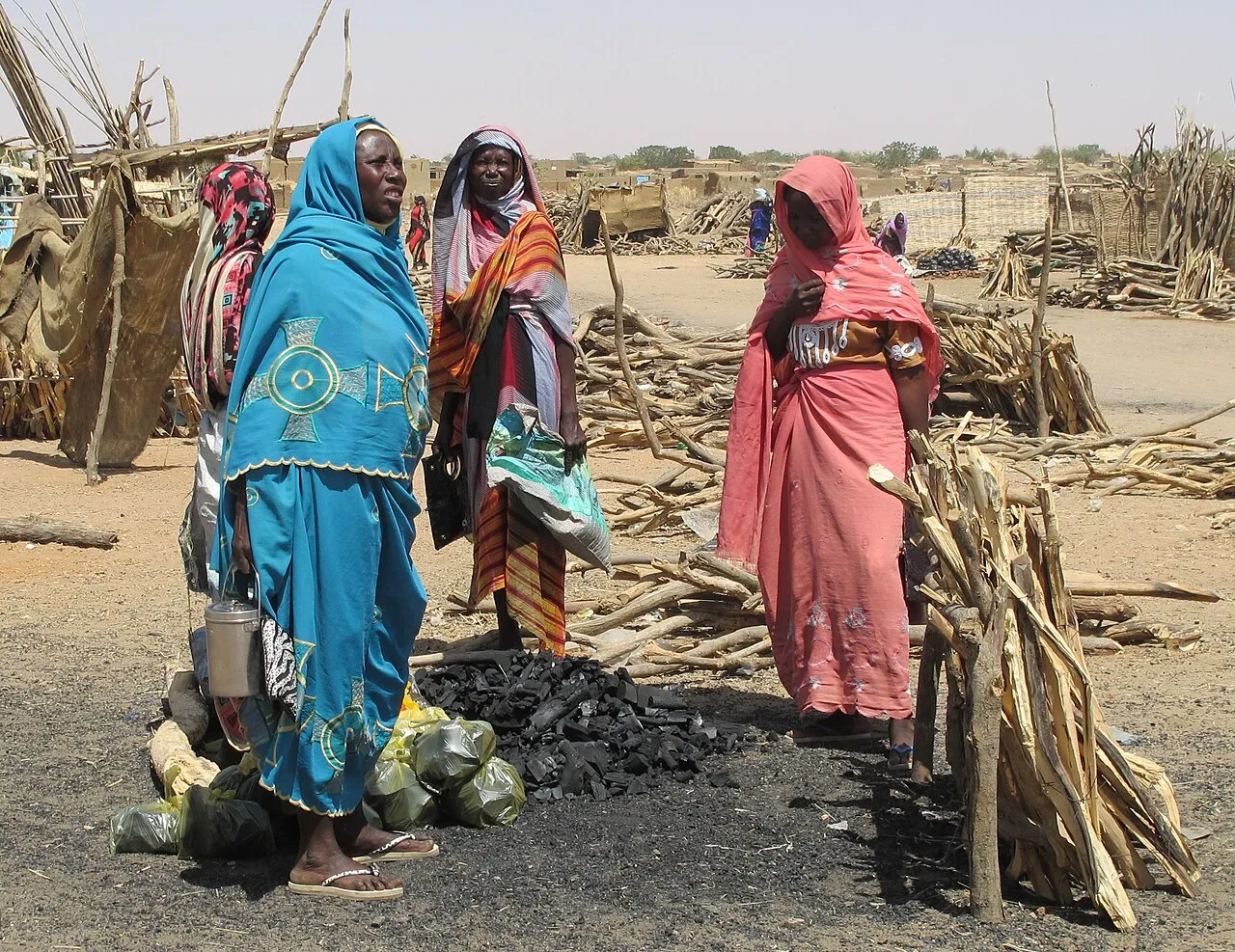
A year after the Rapid Support Forces (RSF) took El Fasher, the capital of Sudan's North Darfur state, the city remains all but empty. The aid group Solidarités International estimates that between 40,000 and 60,000 people have returned to live there or come and go regularly — out of a pre-war population of more than 300,000.
El Fasher fell on 26 October 2025, after a siege of roughly 500 days. It was the last major urban centre in Darfur outside RSF control; the group has been fighting Sudan's army since April 2023. The UN Human Rights Office estimates that more than 6,000 people were killed in three days during the final offensive, and researchers working with satellite imagery suspect the real toll runs into the tens of thousands.
Thousands still missing
The International Organization for Migration (IOM) recorded nearly 100,000 people fleeing. Thousands remain unaccounted for — killed while trying to escape, or seized by the RSF.
The UN fact-finding mission on Sudan concluded that the RSF campaign in El Fasher bore "hallmarks of genocide". Human Rights Watch, in an assessment published on 26 October, records that in the siege's final weeks residents ate animal fodder until it ran out, that the militia dug a trench around the city, and that it used drones against soldiers, allied armed groups and civilians trapped in a small area.
The organisation also says Colombian private military contractors, trained at military bases in the United Arab Emirates, fought alongside the RSF operating drones and artillery, and that Emirati military support for the militia violates the UN arms embargo on Darfur. RSF commander Mohamed Hamdan Dagalo, known as "Hemedti", still faces no new international sanctions.
"Unlike tsunamis, the horrors of El Fasher were preventable," Human Rights Watch writes.
Occupied houses, deserted streets
Aid groups entered El Fasher in January 2026, for the first time since the takeover, and described a ghost town with few civilians. Laura Mills, a researcher at Amnesty International, says only a fraction of the population has come back, out of fear: pockets of houses are still standing, with deserted streets between them.
Renaud Douci, field coordinator for Solidarités International, also points to prices — there are few market stalls, and what they sell is expensive. Residents say the new authorities are settling outsiders in the empty houses. Tasis, the RSF-led coalition governing from Nyala in South Darfur, has publicly called on displaced people to return.
The prisons
Human rights groups estimate that between 13,000 and 19,500 people were held this year at Dagris prison, near Nyala, whose official capacity is 4,500. Mohamed Faisal, of the Sudan Doctors Network, says detainees have no contact with their families and that deaths have risen, with cholera and dengue among the causes. The network calculates that about 73 health workers are being held at Dagris and at Kober, another South Darfur prison.
All of Darfur, and now Kordofan
With El Fasher, the RSF came to control virtually all of Darfur. The fighting has moved to the Kordofan region, where the UN has already warned that El Fasher's history could repeat itself — and it is that warning, more than the anniversary, that keeps the case open.
With information from Human Rights Watch, allAfrica, the UN Human Rights Office, the International Organization for Migration, Amnesty International, Solidarités International and the Sudan Doctors Network.