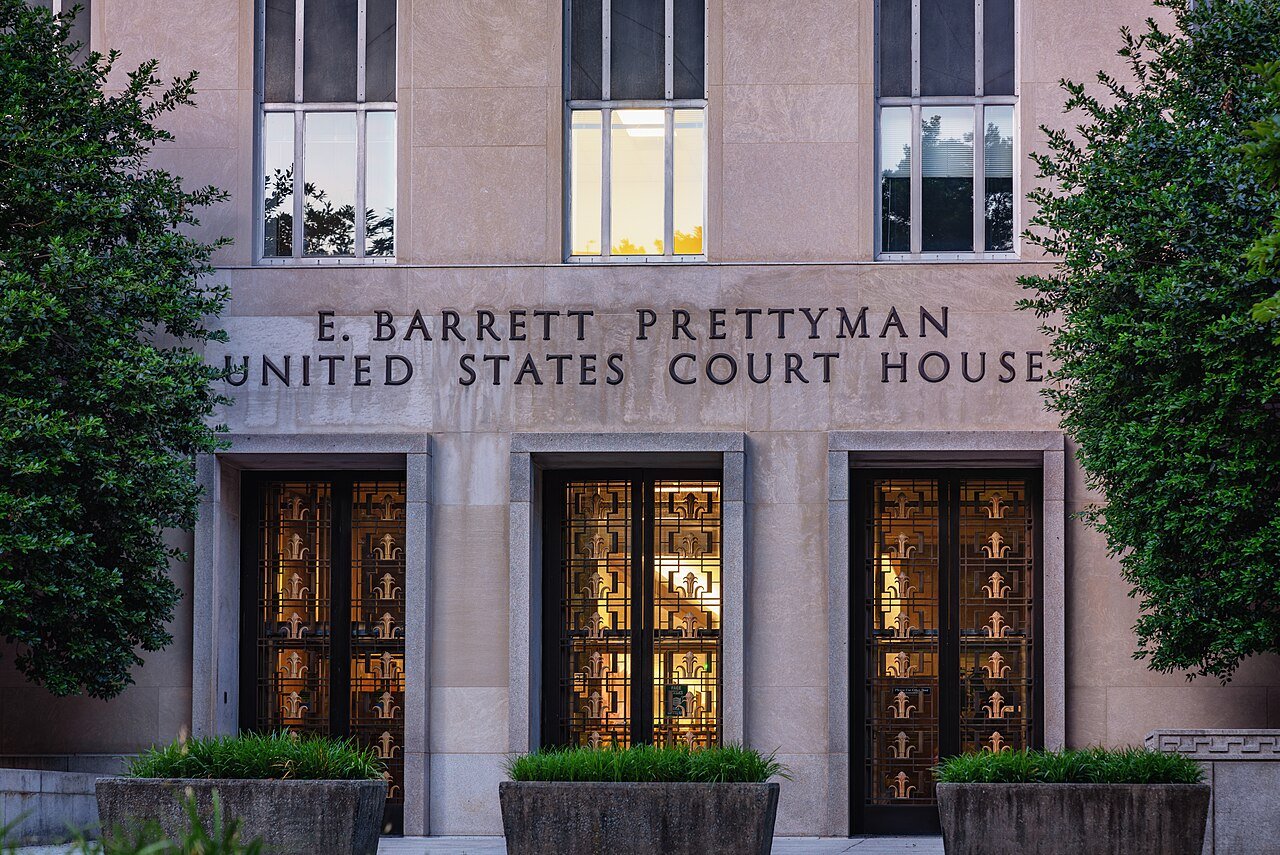
A federal appeals court on Friday upheld the Pentagon's decision to shut Anthropic out of its supply chain, ruling that the Defense Department was within its rights to label the artificial intelligence company a security risk after it refused to strip safeguards from its Claude models.
The U.S. Court of Appeals for the District of Columbia Circuit ruled 2-1. Judges Gregory Katsas and Neomi Rao formed the majority; Judge Karen LeCraft Henderson dissented.
What the Pentagon asked for, and what it got
The conflict began in February, when the department pressed Anthropic to remove the restrictions that keep Claude from being used for fully autonomous lethal weapons and mass domestic surveillance of Americans. The company refused. Chief executive Dario Amodei has argued the limits are not negotiable features of the product.
In March, Defense Secretary Pete Hegseth designated Anthropic a supply-chain risk — a label the department has generally reserved for suppliers with ties to China — which in practice bars it from federal defense work. Anthropic had signed a $200 million Pentagon contract in July 2025, before the dispute escalated.
The reasoning
The majority found the department had "ample support for its conclusion" that Anthropic's systems posed a supply-chain risk. Central to the ruling was a reading of the 2018 statute that governs these exclusions: the panel accepted that Anthropic had not acted in bad faith, but held that the law's definition of risk does not require bad motive. A supplier can be excluded for what its product does, not only for what it intends.
The decision rests on federal procurement rules and takes effect now.
Two courts, two answers
The ruling puts the D.C. Circuit at odds with a California federal court, which last month found a broader administration ban on Anthropic unlawful. That split is the first thing the company pointed to.
"We respectfully disagree with the court's decision. Another federal court has already held the government's parallel designation unlawful," an Anthropic spokesperson said. The company said it is considering "all options, including further review" — which could mean asking the full D.C. Circuit to rehear the case, or going to the Supreme Court.
What is at stake for the company
Anthropic has told the courts the designation has cost it billions of dollars in lost business and damaged its reputation at an awkward moment: the company is preparing a closely watched initial public offering, and a standing federal security label is not a line any prospectus wants to carry.
The wider question the case leaves open is who sets the terms when a supplier's refusal is itself a product decision. The Pentagon's position, now endorsed by two appellate judges, is that a vendor which declines to build what the government wants can be treated as a risk rather than simply as a vendor that lost a bid.
Reporting from UPI, CNBC, CNN and Al Jazeera.