
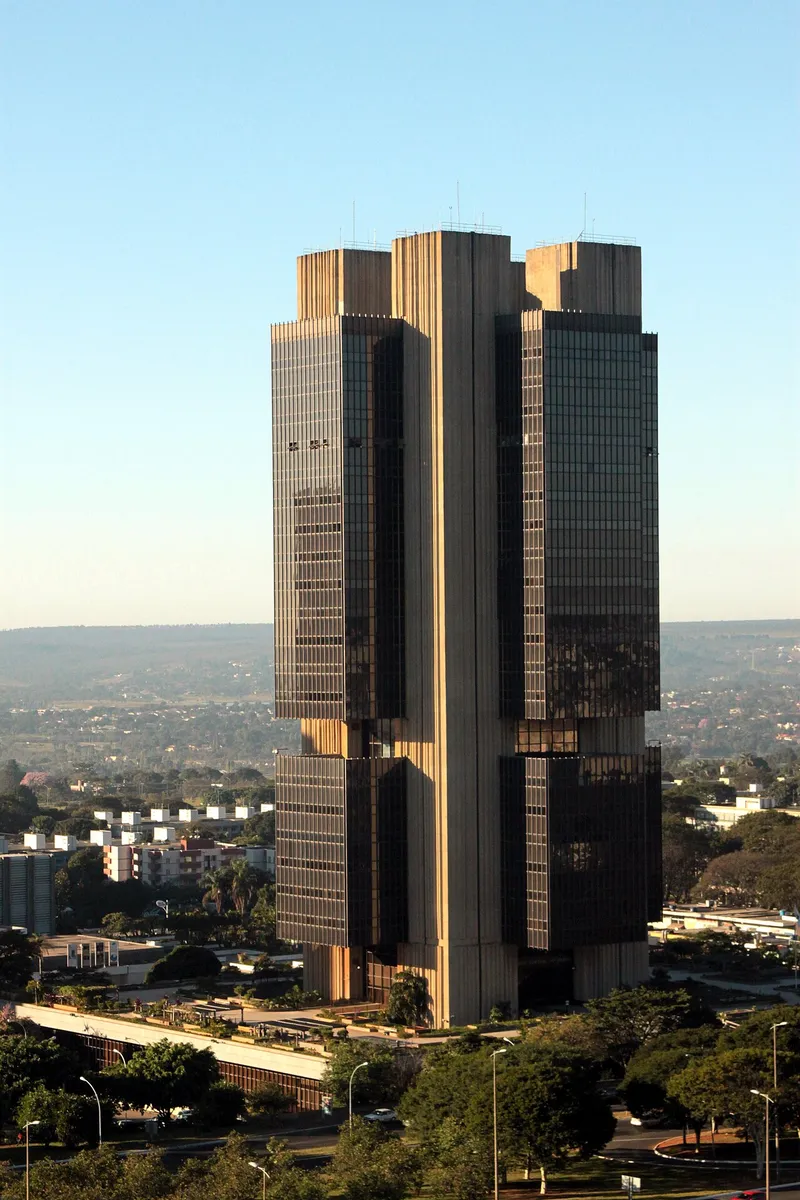
The Comitê de Política Monetária (Copom), the rate-setting committee of Brazil's central bank, held the country's benchmark Selic rate at 13.75% a year on Wednesday, in a unanimous vote by the body's seven members. It is the first time in eight months the committee has left rates untouched: the 282nd meeting breaks a run of five consecutive quarter-point cuts, which began in March and took the rate from 15% to its current level.
A pause was the majority expectation among analysts before the announcement. What the statement added was tone: the committee described an environment in which inflation still does not fit inside the target and called, in its own words, for "serenidade e cautela na sua condução" — composure and caution in the conduct of policy.
What the committee says about inflation
According to the statement, "os riscos para a inflação permanecem elevados e com assimetria altista" — inflation risks remain high and skewed to the upside, meaning the central bank considers an upside surprise more likely than a downside one. The committee's own forecast for the horizon it uses as its reference, the second quarter of 2028, rose from 3.2% to 3.5%.
That figure is the most direct explanation of the decision. Brazil's inflation target is 3%, with a tolerance band of 1.5 percentage points — a ceiling of 4.5%. A forecast of 3.5% at the relevant horizon fits inside the band but sits half a point above the midpoint, and it is that gap the committee uses to justify holding rates in contractionary territory.
Market expectations gathered in the central bank's weekly Focus survey put consumer inflation, measured by the IPCA index, at 5.2% for 2026 and 4.8% for 2027, both above the ceiling.
An economy losing pace
The statement also records the slowdown in activity, citing "a moderação mais acentuada da atividade econômica, principalmente nos setores mais cíclicos" — a sharper moderation in economic activity, especially in the more cyclical sectors — along with signs of cooling in the labour market. Those signs keep showing up in the formal payroll data: September's net job creation was 43.5% smaller than a year earlier.
It is the classic tension of a pause: activity argues for lower rates, projected inflation argues for standing still. The committee set no date for resuming cuts and tied its next steps to incoming data.
The calendar to December
- November 10: publication of the meeting minutes, the document that spells out the reasoning behind the vote.
- Late November: the Monetary Policy Report, with revised inflation forecasts.
- December 8 and 9: the Copom's final meeting of 2026, with the decision announced on the 9th.
Before the easing cycle, the Selic stood at 15% a year from June 2025 to March 2026, its highest level in almost two decades.
With information from Sou Brasília, Gazeta Mercantil and Fecomércio-RS.