Nothing about data centers appeared on a statewide ballot on November 3. The industry still had one of the worst nights of any interest group in the country.
Across at least 10 states, residents voted on dozens of local charter amendments, zoning questions and development referendums aimed at the warehouses of servers that power artificial intelligence. Of 41 such local measures, voters either approved restrictions or defeated pro-development proposals in 40, according to a Ballotpedia analysis and results compiled by CNBC. The Washington Post counted at least 38 jurisdictions that passed measures limiting or blocking the facilities outright.
The margins were not close. In Ohio, where several townships and villages put charter amendments directly to residents, unofficial county figures show a construction restriction passing in Defiance with 64.73% in favor, in Pataskala with 73.62%, and in Granville with 82.45%. In Ashville, a referendum was rejected 81.61% to 18.39%.
Only one local result ran the industry's way. In Harwood, North Dakota, roughly three-quarters of voters turned down proposed restrictions on industrial development.
The governors' races said the same thing
The pattern held in races where the office, not the question, was on the ballot.
In Texas, Democrat Gina Hinojosa defeated Governor Greg Abbott after campaigning explicitly on stopping the build-out. In a video posted on October 22, she promised to "issue a moratorium — a ban — on all data center approvals," and to keep it in place until the Legislature passes what she called real protections so Texans can have a seat at the table. Her platform also commits her to requiring union labor at the sites, protecting local water supplies, ending the sales-tax subsidies the state grants the projects, and barring operators from using nondisclosure agreements.
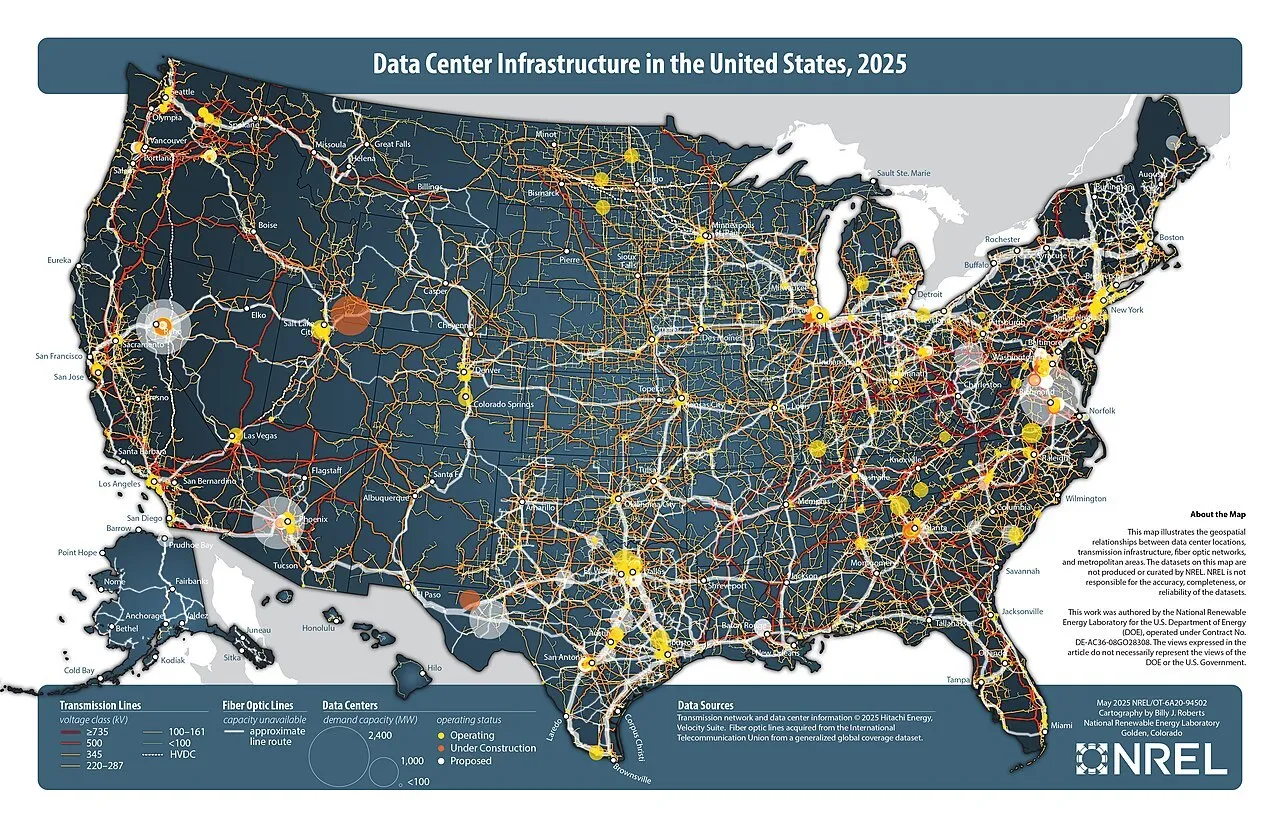
She will inherit a freeze rather than create one. Abbott himself paused approvals starting in August, first at the state grid operator and then at the environmental permitting agency, so that information about the projects could be audited and collected. That audit was expected to run through December. Hinojosa takes office on January 19, and the Legislature convenes the same month, which means approvals in the largest data center market in the country could stay frozen well into 2027.
Ohio elected Amy Acton, a Democrat who supports a moratorium and tighter rules. In Georgia, Governor-elect Keisha Lance Bottoms made holding developers accountable a central theme of her campaign.
The industry had already been losing ground before the vote. Public opposition delayed or cancelled more than 145 projects nationwide through early August, according to S&P Global figures cited by The Washington Post, and opposition accounted for most of those setbacks. A pre-election Washington Post–ABC News–Ipsos poll found seven in 10 Americans — including a majority of Republicans — opposed new data center construction in their own communities.
One number complicates the picture. An election-day poll found that 56% of voters called AI and data centers a major or crucial factor in their vote, which sounds decisive until it is ranked: that put the issue last among five, behind government corruption, the war in Iran and the cost of living. Data centers did not drive the election. They lost on the ballots where they appeared.
OpenAI pays the power bill
The response from the companies arrived within 48 hours, and it is specific in a way industry responses usually are not.
OpenAI said it will pay the full cost of powering the data centers it owns and operates, solicit community input before building, publish its construction plans, and stop signing nondisclosure agreements with public officials. It also released a policy blueprint urging lawmakers to write those standards into law for everyone — a document reportedly in development since August, which is to say since before the vote that made it look urgent.
Each of those four commitments maps onto a specific grievance. The power bill answers the fear that residential ratepayers subsidize industrial demand. The NDA pledge answers the complaint that town councils negotiate with developers under gag orders and cannot tell voters what they have agreed to; Hinojosa campaigned on banning exactly that practice in Texas.
Meta's framing was less conciliatory. Speaking at the Wall Street Journal's technology conference on Wednesday, company president Dina Powell McCormick said the Democratic midterm wins will make data centers harder to build, and that the industry has not done enough to explain their benefits. "The visible sort of manifestation of AI is a data center," she said — the building is what people can see, and so it absorbs whatever they feel about the technology.
She described what Meta considers a project that works: the company pays for its own electricity, directs tax surpluses to teachers and first responders, hires locally, and secures bipartisan support. She also said she expects future projects to be reviewed on whether constituents actually want them. Meta operates data centers in 23 states and has five planned at one gigawatt or more, including one in Texas.
The trade group took the narrower line. "Affordability, jobs, and the economy are priorities for Americans across the country," said Dan Diorio of the Data Center Coalition, arguing the facilities deliver jobs, local tax revenue and investment.
That is the argument the ballots just tested. In 40 of 41 places where voters were asked, it did not carry.
Reporting from Fox Business, TechCrunch and The Texas Tribune, with ballot and project figures compiled by Ballotpedia, CNBC, The Washington Post and S&P Global as cited in that coverage.