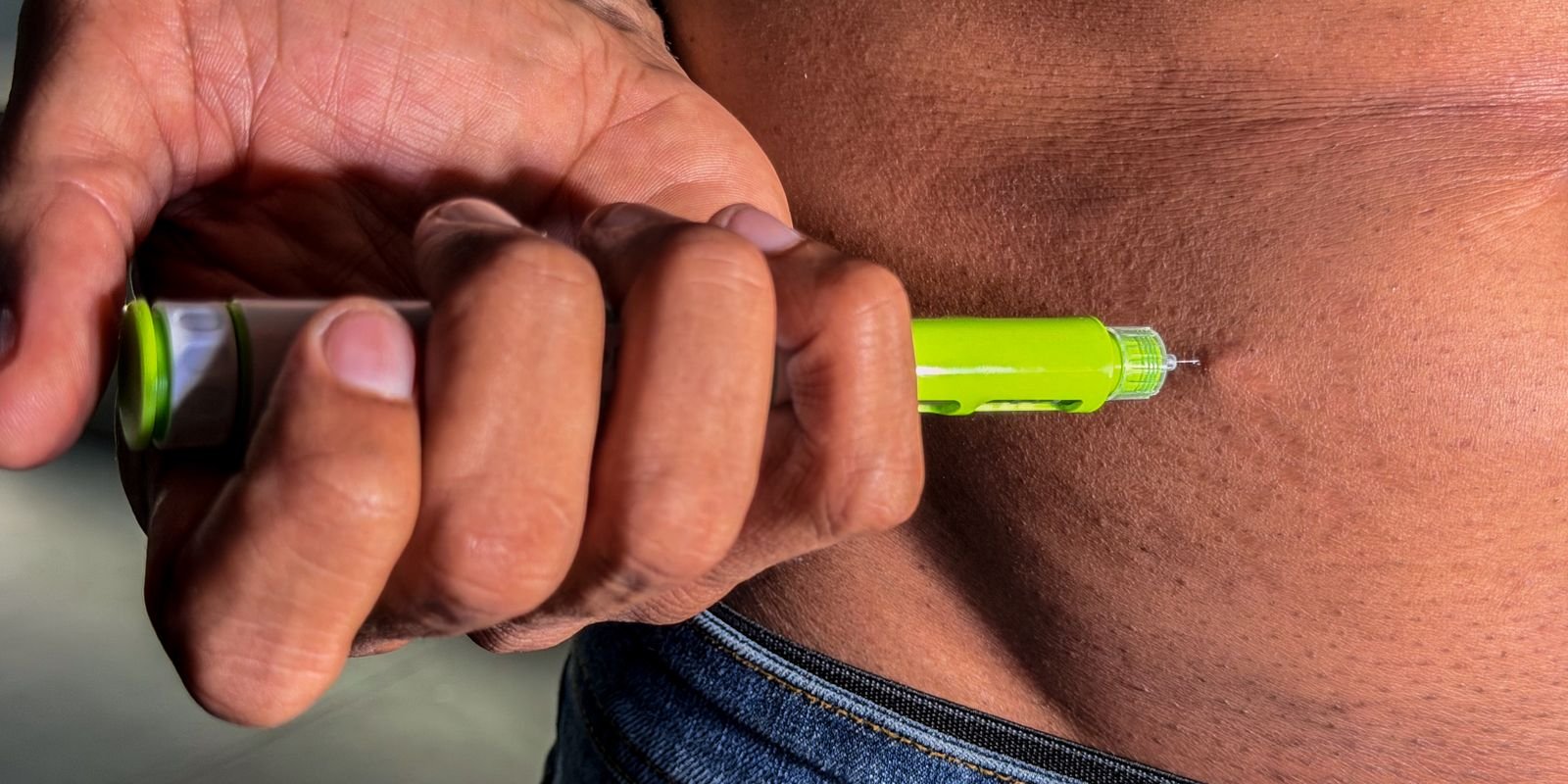
Brazil's Ministry of Health says it intends to offer weight-loss injectables — drugs based on semaglutide — through the SUS, the country's public health system, to patients with obesity. Health Minister Alexandre Padilha made the announcement on Thursday in Montes Claros, Minas Gerais, during a visit by President Lula to a new Eurofarma plant.
What exists today, however, is not an incorporation: it is a study under way and the promise of a clinical protocol.
What is already happening
The concrete part is the Real-Bari research, written by technical staff of the ministry and of the Grupo Hospitalar Conceição, in Porto Alegre: 250 SUS patients with severe obesity, or obesity alongside other conditions, have been using semaglutide since June under medical supervision.
The study asks three declared questions: whether the drug spares people on the bariatric surgery waiting list, whether it improves the condition of patients with obesity and heart problems, and whether it reduces the risk of breast cancer returning in women who have already been treated.
"We are assessing people who were on the bariatric surgery waiting list, to find out whether this medication can control obesity without the need for surgery," Padilha said. The first patient treated through the SUS, he said, has lost six kilos.
What does not exist yet
There is no start date, no eligibility criteria, no budget and no announced purchase. The ministry says the offer will come "on the basis of studies and the definition of a clinical protocol".
A decision pointing the other way is still in force. In September 2025, an ordinance made public the decision not to incorporate semaglutide into the SUS for grade II and III obesity in patients without diabetes, aged 45 or over and with established cardiovascular disease — a request filed by Novo Nordisk. In Conitec's review, the five-year cost was re-estimated at 6.5 to 7 billion reais, against the 3.4 to 3.9 billion calculated by the company. Nothing announced now revokes that ordinance.
The SUS protocol for overweight and obesity in adults, from 2020, provides for no drug treatment: it works with non-pharmacological measures and with bariatric surgery.
Price and patent
Padilha tied the announcement to falling prices: "We already have 14 registered products. And that has brought the price down for the public. What used to cost 1,700 or 2,000 reais is now between 300 and 400 at the pharmacy."
There is a calendar explanation: Ozempic's patent expired in March 2026, and the regulator Anvisa has since approved generic and similar versions of semaglutide.
The scale of the problem
By the Vigitel figures used by Conitec itself, 24.3% of Brazilian adults have obesity and 55.4% are overweight. The projection for 2030 is 29.6% with obesity.
An election year
The announcement came less than a month before the first round of the general election. CNN Brasil called it a "campaign announcement", and O Tempo placed it inside a pre-election package alongside an increase in the Bolsa Família benefit. Lula himself asked for caution in prescribing: "There has to be an agreement with doctors, because you cannot go around prescribing it left and right."
With information from the Ministério da Saúde (Ministry of Health), Conitec, Agência Brasil, CNN Brasil and O Tempo.