Brent crude closed Thursday, 26 November, at $96.57 a barrel, up $1.96, or 2.07%. It was the third consecutive session of gains: since Monday, when the contract stood at $89.37, the barrel has added roughly 8%. There was no official settlement in the United States because of the Thanksgiving holiday; WTI was trading at $84.84, up $1.16 (1.39%), at 6.21pm GMT.
The rise followed two episodes in the Persian Gulf, neither of them independently confirmed.
Mines near Khasab, according to Tehran
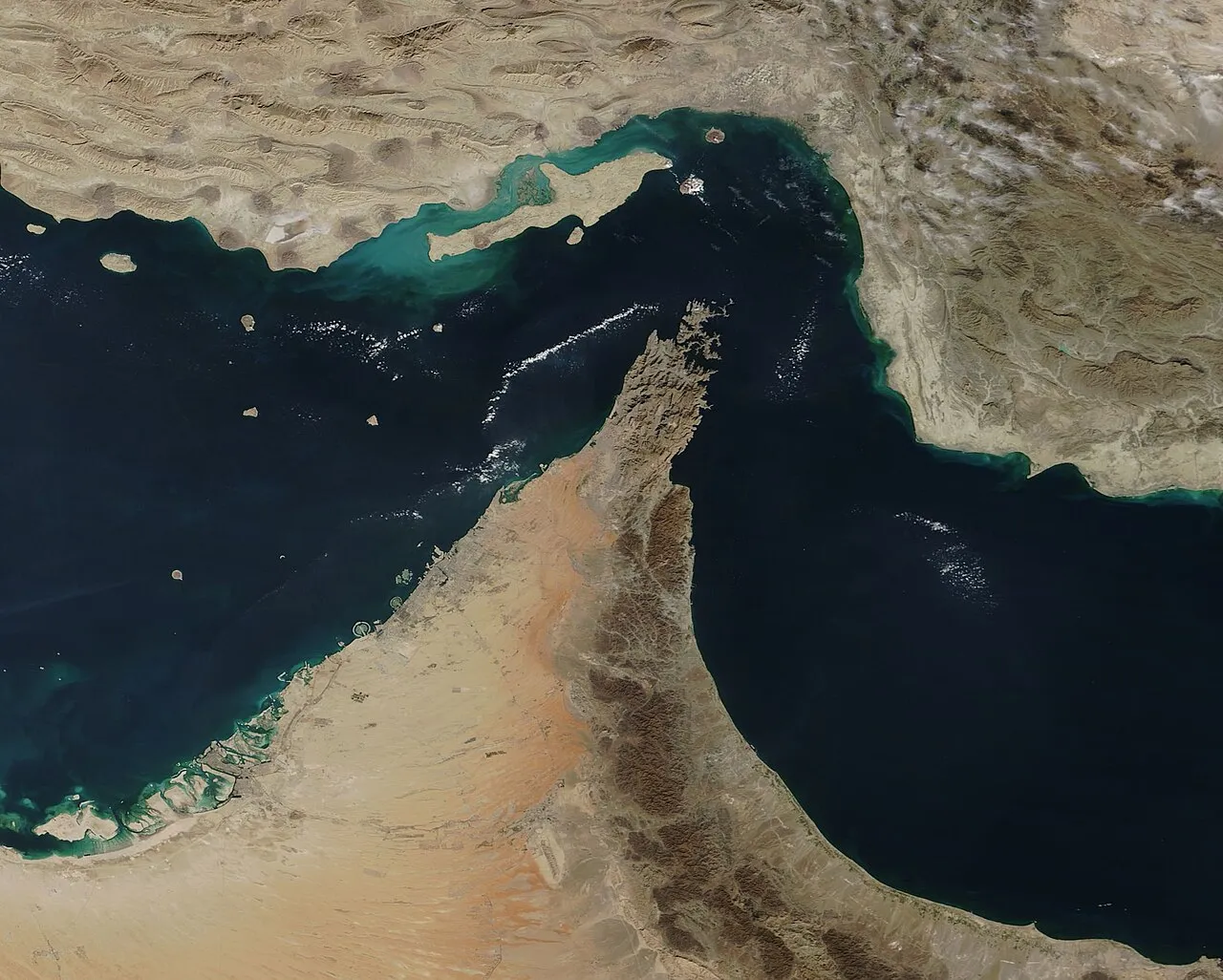
Iran's Revolutionary Guard said on Thursday that two tankers exploded and caught fire after striking naval mines near Oman's Khasab port while trying to cross the Strait of Hormuz. According to the Guard, one of the vessels was carrying more than 2 million barrels of crude. No vessel names or casualty figures were released, and the Iranian account was not corroborated by other sources.
Khasab sits at the tip of the Musandam Peninsula, an exclave of Oman some 65 kilometres from the Iranian city of Bandar Abbas — the narrowest stretch of the route carrying a substantial share of the world's seaborne oil.
The episode adds to a long run. In its weekly report released on 20 November, the UKMTO, the British office that monitors maritime traffic in the region, recorded 263 transits of the strait in the week to 18 November, down from 308 the previous week — about 65% below pre-war levels. In the same week there were six attacks on tankers, four in the strait and two in the Persian Gulf, and the Joint Maritime Information Center rated the threat level "severe". That makes 106 incidents since the conflict began on 28 February.
Ras Tanura and Jazan
The Houthis announced on Wednesday an attack on Ras Tanura, Saudi Arabia's largest refinery and export terminal. Saudi air defences said they intercepted drones aimed at the facility; the coalition led by Riyadh said it shot down four unmanned aircraft in the area but did not confirm that the refinery had been hit. Satellite images showed smoke over the site.
The coalition also attributed to the Houthis an attack on the Jazan refinery. The Saudi Energy Ministry said the resulting fire was under control, and the unit was reportedly shut down temporarily. No casualties were reported.
What OPEC+ decides on Sunday
OPEC and OPEC+ hold the first of four ministerial meetings on Sunday, 29 November, at 1pm GMT. Two people familiar with the talks told Reuters the group is expected to keep current production targets at least through the first quarter of 2027.
The underlying dispute is over each country's declared capacity, the basis for allocating quotas. Iraq is contesting a preliminary assessment of 4.9 million barrels a day for itself, and Kazakhstan is also pressing for a higher figure. Russian Deputy Prime Minister Alexander Novak said the capacity assessment will be completed by the end of the year. The United Arab Emirates left OPEC and OPEC+ earlier in 2026.
The consultancy Rystad projects an average surplus of 5 million barrels a day for 2027, and Rapidan reckons the more significant quota decisions will be deferred to next year. According to analyst Rory Johnston, about 15% of global supply is currently under a "known, acute risk". Flows through the strait had been recovering towards pre-war levels before this week's attacks.
In the United States, commercial crude stocks rose by 1.1 million barrels in the week to 20 November, to 418.9 million, according to the federal energy agency.
With information from Reuters, the UKMTO, the US Energy Information Administration (EIA) and The Nation.