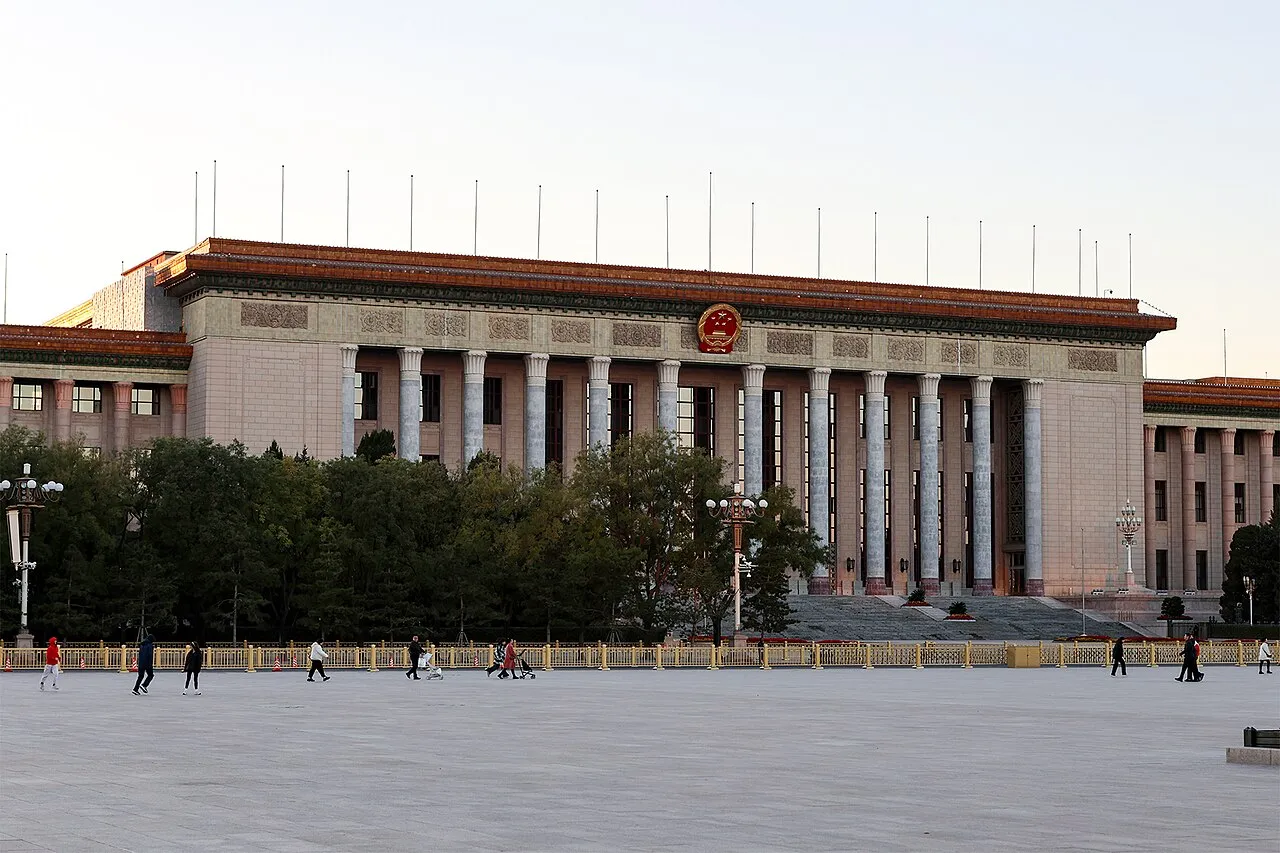
China packed three diplomatic moves aimed at the war between the United States and Iran into a single day, 2 November: a state visit by the Sultan of Oman, a meeting with a senior Iranian national security official and another with Saudi Arabia's national security adviser. The common thread is the Strait of Hormuz, through which about a fifth of global energy exports passed before the conflict restricted traffic.
The sultan's visit
Xi Jinping hosted Sultan Haitham bin Tariq on a state visit — the first by an Omani head of state since the two countries established diplomatic relations in 1978. Xi said the Middle East and the Gulf "should not become an arena for great-power rivalry and geopolitical conflict", and described the bilateral relationship as standing at a "new historical starting point".
The two countries signed 14 cooperation documents covering artificial intelligence, green energy and supply chains, plus a currency swap agreement.
In their joint statement, China and Oman called for safe navigation through the Strait of Hormuz to resume and urged Washington and Tehran to return to negotiations. Oman sits across the strait from Iran and has a record of mediating between the Americans and the Iranians.
Iran and Saudi Arabia on the same day
Foreign Minister Wang Yi received Ali Bagheri Kani, deputy secretary of Iran's Supreme National Security Council, in Beijing. Wang said dialogue and negotiation are "the only viable path forward" and warned that the region's conflicts "drag on and risk further spillover". He also reaffirmed Chinese support for Iranian sovereignty and security — Beijing blames the United States and Israel for starting the conflict.
According to the Khaama news agency, Wang also received Musaed bin Mohammed Al-Aiban, Saudi Arabia's national security adviser, who delivered a letter from Crown Prince Mohammed bin Salman to Xi. On the same occasion, the foreign minister described the situation as "a critical crossroads between war and peace".
China's Ministry of Foreign Affairs said Zhai Jun, the country's special envoy for the Middle East, will visit Iran, Oman and Saudi Arabia later in November.
Why Beijing is moving now
China is one of the world's largest energy importers, Iran's main trading partner and the biggest buyer of Iranian crude. Restricted traffic through Hormuz hits its imports directly.
Al Jazeera's Beijing correspondent, Katrina Yu, assessed that Chinese diplomacy on the conflict had been stalled for weeks and described the country as "very frustrated" and keen to be seen inside the process.
That is what sets this sequence apart from a protocol gesture: three interlocutors inside 24 hours, together with the special envoy's already-scheduled itinerary, suggests less a statement of circumstance than an attempt to position itself as a channel — so far with no announced result.
With information from Al Jazeera, Reuters and Khaama Press.