With the leaders' summit over, the 31st United Nations Climate Change Conference (COP31) moved on Thursday into the phase where the text is actually written. Meeting in Antalya, Turkey, delegates from more than 190 countries now have to turn two days of clashing speeches into a decision everyone is willing to sign. The conference runs until 20 November.
The axis of the deadlock is financial, and United Nations Secretary-General António Guterres set it out bluntly at the opening: "We cannot demand that countries transform their economies while denying them the means to do so."
The bill Guterres put on the table
Guterres called for a "climate justice compact" resting on four fronts — a managed transition away from fossil fuels, protection for populations already hit, affordable finance from wealthy countries and stronger international cooperation. And he called for taxes on the windfall profits of oil companies: "Polluters must pay."
The argument came with arithmetic. The world's nine largest oil companies earned $95 billion in a single quarter. The international loss and damage fund, created to help countries struck by climate disasters, has raised about $600 million — the equivalent, according to the secretary-general, of roughly 14 hours of those same companies' profits.
Guterres also pressed for action on methane, a gas that traps more than 80 times more heat than CO₂ over a 20-year horizon and accounts for nearly a third of the warming recorded so far. Since 2023, the United Nations Environment Programme (UNEP) has issued more than 5,000 leak alerts; only about one in eight has drawn a response.
Electrification as a way out — and as a dispute
The Turkish presidency of the conference is betting on an electrification target: raising electricity's share to 35% of global energy consumption by 2035, up from a little over a fifth today. The proposal has European backing and was endorsed by British Prime Minister Andy Burnham: "The shift to clean energy is the only route to energy security," he said, citing the supply disruptions caused by the wars involving Iran and Ukraine.
The target has a blind spot negotiators will have to settle: Turkey has not said whether that additional electricity would necessarily be renewable. Without that definition, a country could meet the target by burning coal.
The countries that do not want to leave oil behind
On the other side, fossil fuel producers defended continued consumption. Venezuela's acting president, Delcy Rodríguez, was direct: "We reaffirm our sovereign right to strengthen our energy and oil industry as a driver of our national development."
Small island states — the Bahamas, Tuvalu, the Solomon Islands, Saint Lucia — pushed the other way, for rapid emissions cuts. "Major emitters must move beyond the usual promises," said Saint Lucia's Prime Minister Philip J. Pierre. Activist Greta Thunberg summed up the climate movements' position: "The planet is not dying. It is being killed."
What is at stake in the coming days
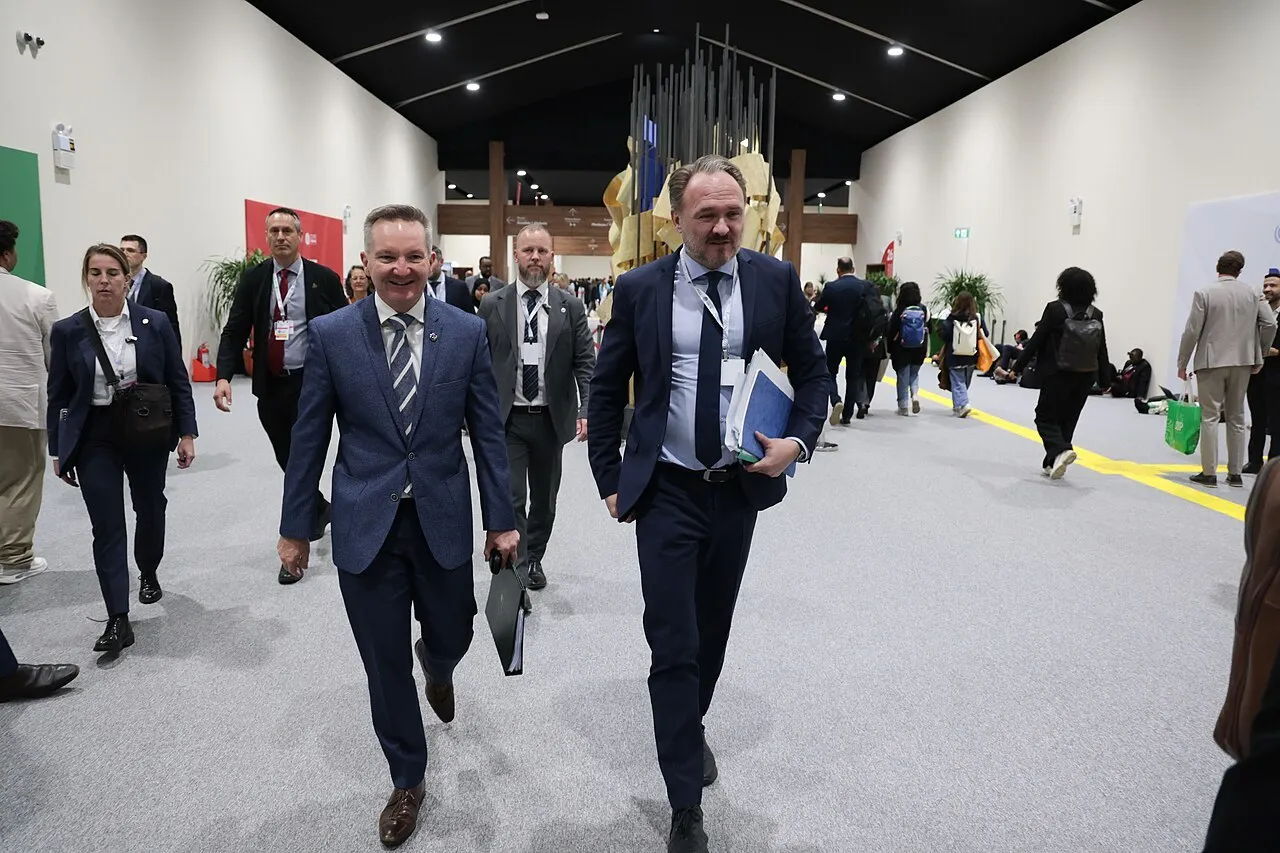
Chris Bowen, COP31 president of negotiation, said his role is to "steer consensus to the strongest, most ambitious possible outcome", but avoided describing what a good deal would look like: he still had "many more hours of consultations" ahead.
The backdrop is unfavourable in two senses. A recent UN report indicates the world is on course to exceed the 1.5°C limit set in the Paris Agreement, and current national plans, if fully implemented, would lead to more than 2.5°C of warming by the end of the century. The other is political: Turkish President Recep Tayyip Erdoğan acknowledged that decades of conferences have produced ideas but not enough implementation, and Brazilian President Luiz Inácio Lula da Silva warned that wars and trade disputes have pushed climate down the list of priorities.
Fernanda de Carvalho, of WWF, called the speeches underwhelming and said it is "worrying that the climate issue is not as high on the global political agenda as it needs to be".
With information from UN News and Daily Maverick.