Germany voted in two states on Sunday, and the two results pointed in opposite political directions. In Berlin, Die Linke (The Left) finished first in the contest for the Abgeordnetenhaus, the capital's state parliament, with double the vote it won in 2023. In Mecklenburg-Vorpommern, in the country's north-east, the Alternative für Deutschland (AfD) finished ahead of the SPD of state premier Manuela Schwesig.
The figures below come from the Sunday evening projection published by public broadcaster ZDF on the basis of a partial count. The official count is still under way.
Berlin: Die Linke doubles in size
In the capital, the 19:32 local time projection gave 25.5% to Die Linke, against 19.9% for the CDU, 15.3% for the Greens, 14.3% for the AfD, 11.9% for the SPD and 5.0% for the BSW.
Set against the 2023 election, that is close to a full reversal. The CDU, which had taken 28.2%, lost around eight points. The SPD fell from 18.4% to under 12%. Die Linke, on 12.2% three years ago, doubled its share.
In the seat allocation projected by ZDF, the 130-seat chamber would give 36 seats to Die Linke, 28 to the CDU, 22 to the Greens, 20 to the AfD, 17 to the SPD and 7 to the BSW. A majority requires 66 votes.
That leaves the arithmetic tight. A coalition of Die Linke, the Greens and the SPD would reach 75 seats; one of the CDU, the Greens and the SPD, 67. The current CDU-SPD coalition loses its majority. No party is willing to govern with the AfD, and the CDU rules out any deal with Die Linke.
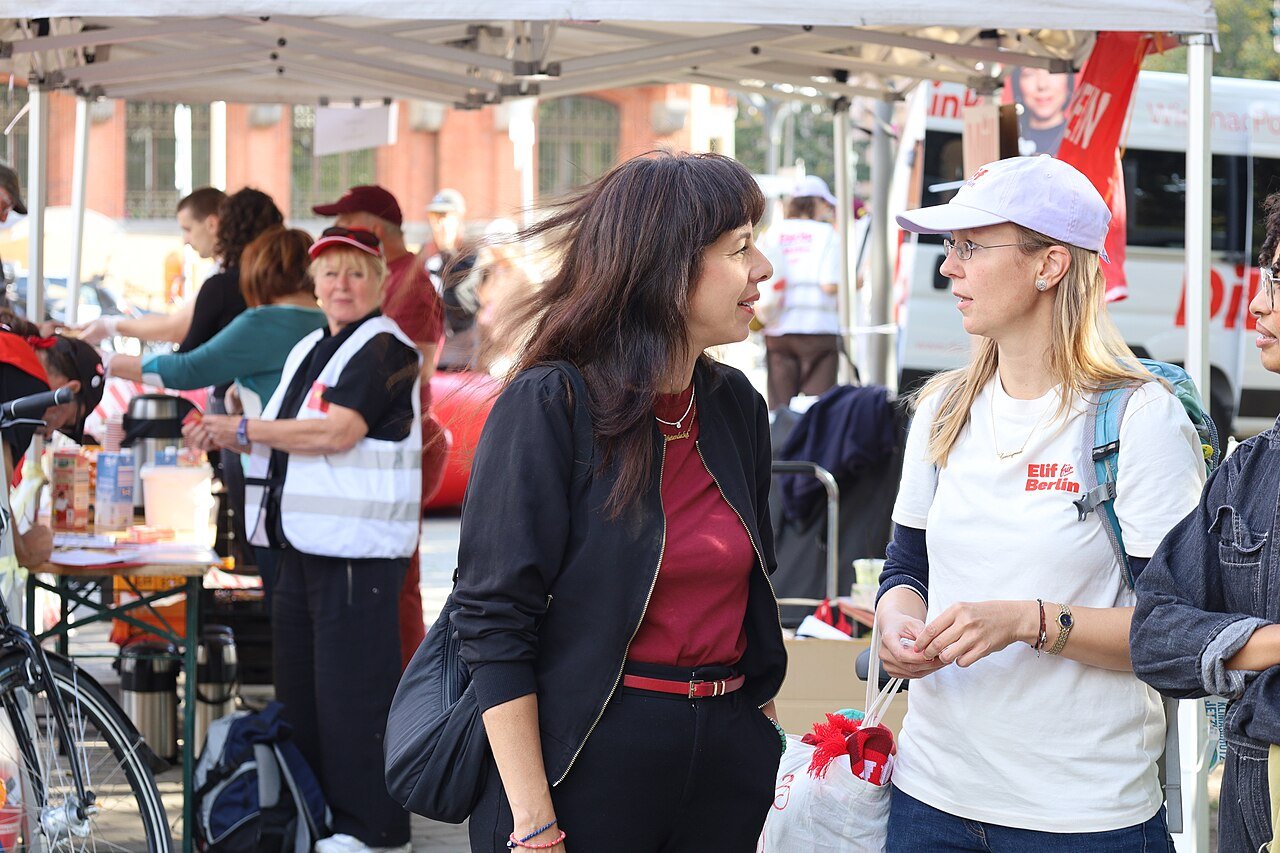
Die Linke's lead candidate, Elif Eralp, compared the result to Zohran Mamdani's win in New York: "If a left-winger can win in New York, then he can just as well in Berlin," she said. If she manages to assemble a coalition, Eralp would be, according to Euronews, the first person with a migration background to lead Berlin's city government.
Mecklenburg-Vorpommern: the AfD first, by two points
In the north-eastern state, the 19:27 projection gave 37.9% to the AfD and 35.9% to the SPD — a gap of two percentage points. Behind them came Die Linke on 6.5%, the Greens on 5.4%, the CDU on 5.2% and the BSW on 4.9%.
The comparison with 2021 measures the shift: that year the SPD took 39.6% and the AfD 16.7%. The far-right party more than doubled its vote in the state. The CDU, which had 13.3%, ended up close to the 5% threshold for entering the state parliament.
Coming first is not the same as governing. Germany's other parties maintain the so-called firewall, the formal refusal to enter coalition with the AfD, and Schwesig said she intends to stay on as state premier. The AfD's candidate, Leif-Erik Holm, said he hoped to govern "if possible".
The message for federal Berlin
The harshest result for the federal government is the CDU's. The party of Chancellor Friedrich Merz lost eight points in the capital and was cut to little more than 5% in Mecklenburg-Vorpommern. Merz called the performance "a disaster" and said his party had been ground down between the AfD and the SPD.
Both contests are state elections and do not change the composition of the Bundestag. But German state elections work as a thermometer for the federal coalition — and on Sunday night the thermometer showed an electorate moving away from the centre in both directions.
With information from ZDF, Euronews and Al Jazeera.