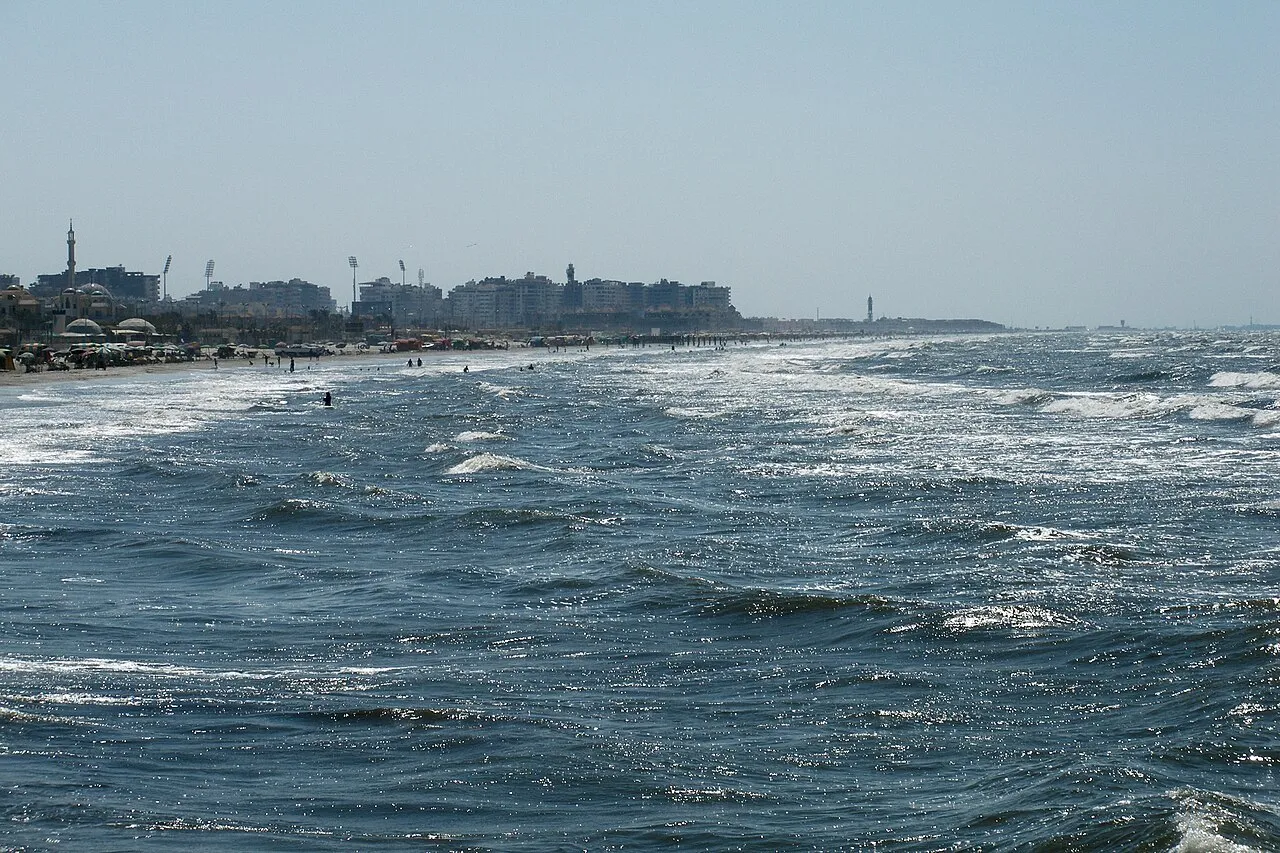
Egypt has announced a new natural gas discovery in Mediterranean waters, with the original volume in place estimated at about 200 billion cubic feet — roughly 5.7 billion cubic metres. The announcement came from the country's Ministry of Petroleum and Mineral Resources.
The exploratory well is called Nasim-1X. It found a gas-bearing layer about 15 metres thick in net true vertical depth. The drilling was carried out by Petrobel, the Egyptian operating company, on behalf of Italy's Eni, which holds the concession, and its partner in the area, Australia's Woodside.
What the number means, and what it does not
Two hundred billion cubic feet is the preliminary estimate of the gas originally held in the reservoir — not of the gas that can be taken out of it. How much is recoverable, at what daily rate, and whether the economics work are questions that depend on technical and reservoir studies still under way. No production start date has been announced.
For comparison, Egypt's annual gas output is measured in trillions of cubic feet; the discovery is modest in that context, and its value lies less in its size than in its location.
The 22-km pipeline
That is where the most consequential detail of the announcement sits: the plan calls for a pipeline of about 22 kilometres connecting the well to the Abu Madi–El Gamil transport line in the Nile Delta. Using infrastructure that is already in place is what shortens the gap between discovery and first gas — and it is also what makes a small volume economically defensible.
Why Egypt needs it
Egyptian domestic output has fallen in recent years, and the country has come to depend more on imports to meet demand driven by the power and industrial sectors. Egypt, which once positioned itself as a regional gas exporter, has watched that equation reverse.
The ministry credited the results to higher investment and exploration activity, an improved business environment, and progress in settling overdue payments owed to foreign energy companies — a liability that in recent years held back new spending by international oil firms in the country.
With information from Anadolu Agency, Euronews and SEE News.