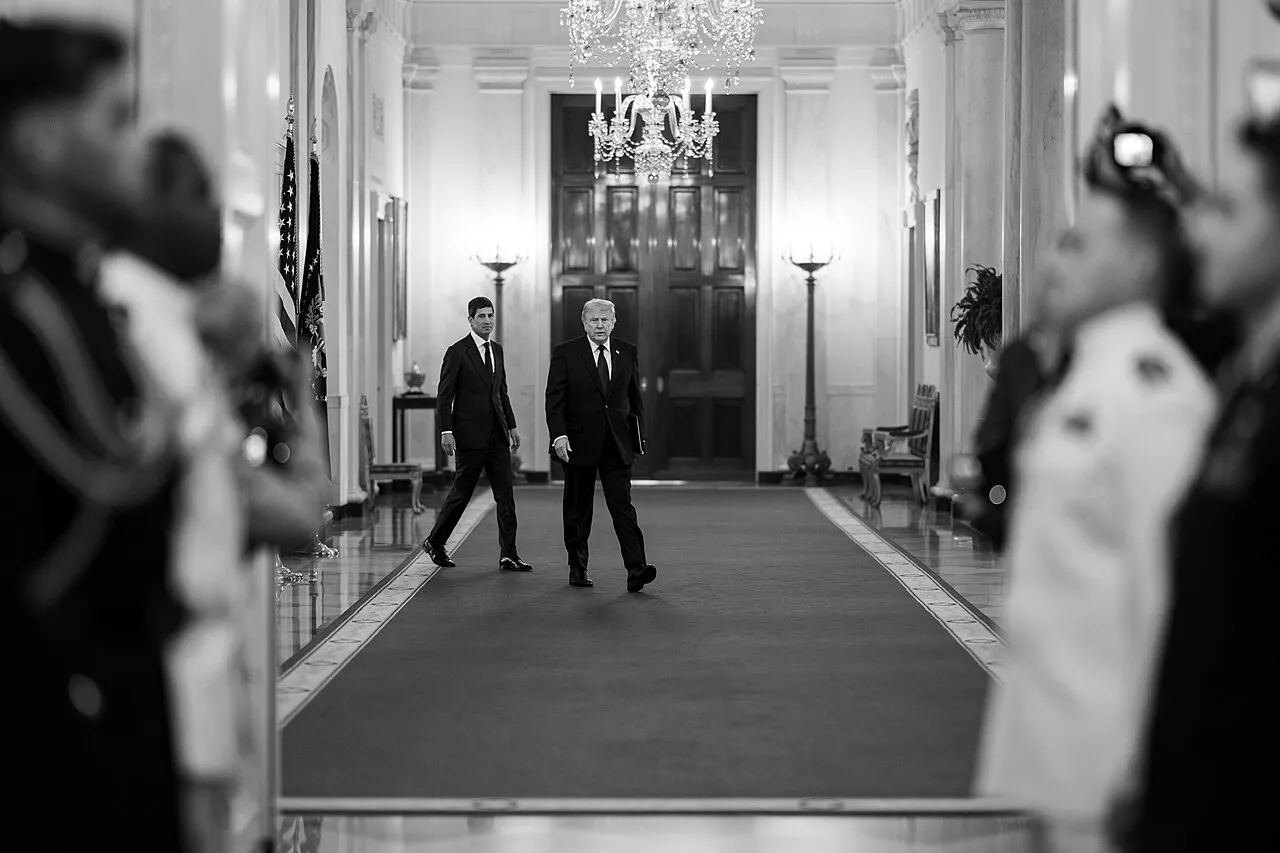
Federal Reserve Chair Kevin Warsh opened a day-long conference on productivity and jobs at the central bank's San Francisco branch on Monday, November 16, 2026, by laying out three ways artificial intelligence could reorder the American economy: a sustained growth boom, widespread job losses, or a reversal in asset prices that pushes unemployment higher. He did not mention inflation.
The conference was convened by the Federal Reserve Board and the Federal Reserve Bank of San Francisco as part of the Productivity and Jobs Task Force, one of five task forces feeding the Fed's broader policy review. Warsh gave the opening remarks, moderated two panels and led a fireside chat. Executives from Stripe, Palo Alto Networks and Affirm were among the speakers, along with Stanford University President Jonathan Levin, Brookings Institution President Cecilia Rouse and former Commerce Secretary Gina Raimondo.
The upside case rests on research itself speeding up
Warsh's most optimistic scenario does not turn on cheaper labour but on faster discovery. "What might set SI apart, as an economic influence, is that it could supercharge idea generation," he said. If that holds, the effect would not be a one-off jump in output but a higher cruising speed for the whole economy: "If idea generation broadens, growth could be sustained at a level substantially higher than the long-run average."
The second case is the one most people argue about
The downside Warsh described first is widespread job loss, arriving if the enormous spending on data centres, chips and models does not earn its keep.
The third runs through the stock market
After a long stretch of heavy investment and large equity gains, Warsh said, "expected returns could turn down and equity valuations could fall" — a sequence that would slow the economy and raise unemployment more sharply than the other paths. He told the audience that "great opportunities rarely come risk free", and that the risks being overlooked now are the ones most likely to prove disruptive and costly.
Warsh said Fed staff have started to model how each of those paths might unfold.
The term the Fed is required to use
Throughout, the technology was called "super intelligence", or SI, rather than artificial intelligence. That is not a house preference: an executive order signed by President Donald Trump requires federal agencies to use the term.
What was left out
Warsh said nothing about what the AI build-out is doing to prices, and nothing about where interest rates go next. Both gaps sit awkwardly against what his own colleagues have been saying.
Last week, policymakers pointed to AI-driven demand lifting the cost of chips, electronics, electricity and copper; smartphone prices rose last month at the fastest pace on record in federal data. On Friday, Vice Chair Philip Jefferson said faster AI-driven growth could push interest rates higher over time even if inflation slows, because stronger productivity increases firms' demand for funding.
Warsh also did not comment on October's inflation report, which showed consumer prices up 0.4% on the month and led several members of the rate-setting committee to signal support for a further increase at the Fed's December 8-9 meeting. For a chair whose task force exists to tell the Fed how productivity gains bear on its employment and price goals, the half of that mandate he addressed on Monday was the first one.
Reporting from the Associated Press, Fast Company and The National News Desk, and from RecortNews's earlier coverage of the October inflation report.