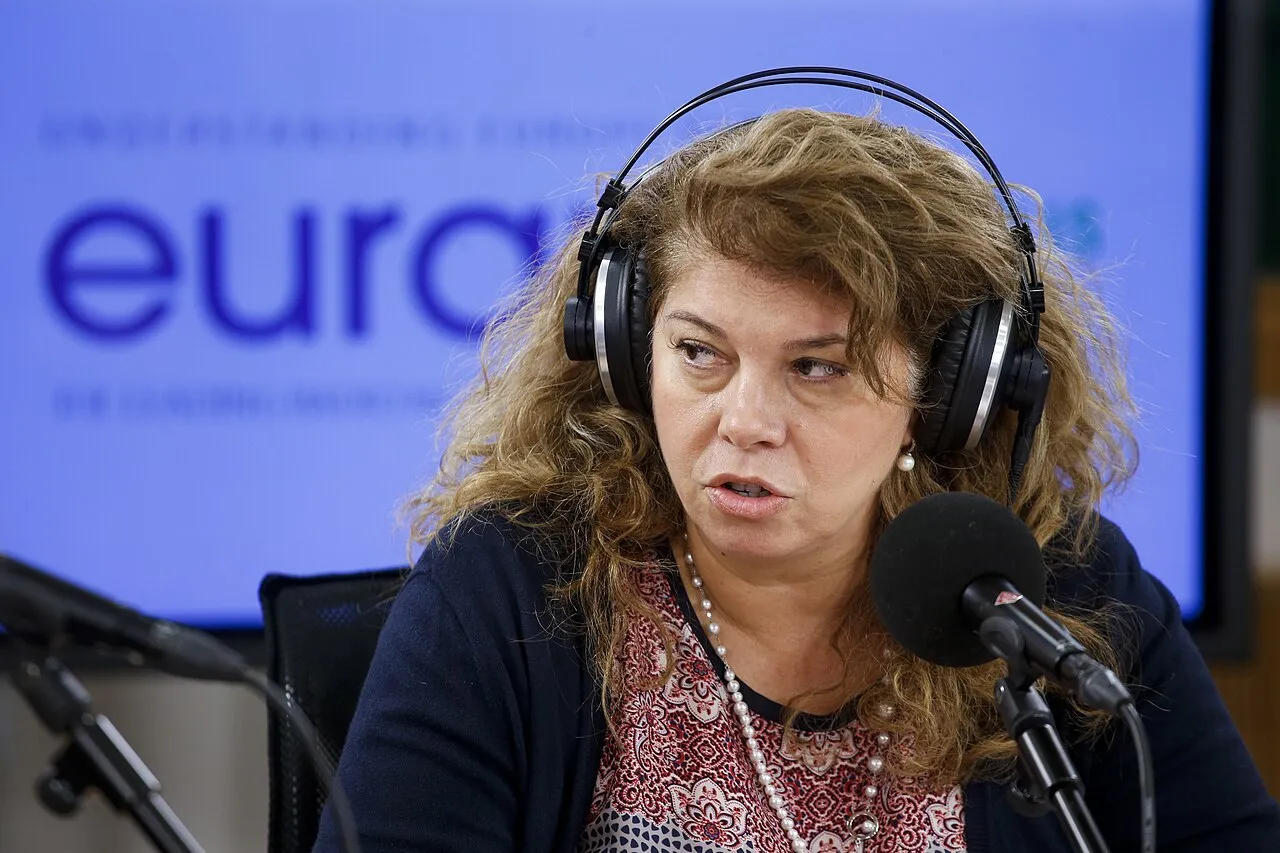
From January, Bulgaria is set to have the first woman ever elected president in its history. Parallel counts released by polling agencies after voting closed on Sunday put acting President Iliana Iotova on between 57.1% and 58.2% of the runoff vote, against 38.6% to 39.9% for Andrey Gyurov, a former caretaker prime minister.
The official result rests with the Central Election Commission and is expected on Monday, once ballots have been counted.
Four counts, the same lead
Polling stations closed at 8pm in Sofia (6pm GMT). The parallel counts completed overnight, as reported by the Bulgarian news agency Novinite, clustered within a narrow band:
- Market Links: Iotova 57.4%, Gyurov 39.6%
- Alpha Research: Iotova 57.4%, Gyurov 39.6%
- Trend: Iotova 58.1%, Gyurov 38.9% — a 19.2-point gap
- Myara: Iotova 58.2%, Gyurov 38.6%, with another 3.2% choosing the "I support no one" option
- Gallup, at 75% counted: Iotova 56.1%, Gyurov 39.9%
The exit polls published as the polls closed had shown a much tighter race — Trend had it at 51.4% to 43.6%, and Myara at 51.0% to 44.7% — and the gap widened as the counts progressed.
Turnout close to 30%
The Central Election Commission recorded 19.33% turnout at 4pm, above the 15.95% at the same hour in the first round. At the close, Alpha Research estimated 29.1%, roughly 1.92 million voters, and Myara put it at 27.2%; the agencies projected a final figure just under 30%.
Even so, that is a historically low level. The first round, on October 25, ended at 22.98% — the lowest turnout in a Bulgarian presidential election since the return to democracy, according to the newspaper The Sofia Globe.
The arithmetic matters less for the margin than for the size of the mandate: by Novinite's estimates, Iotova reaches the presidency with somewhere between 1 million and 1.1 million votes, well below the 2,738,420 won by Zhelyu Zhelev in 1992 and the 2,063,032 won by Rumen Radev in 2016.
Who the two are
Iotova, 61, has been acting president since January 2026, when Radev stepped down to run in the parliamentary election — he is now prime minister. She is serving out Radev's term, which ends in January 2027. She ran as an independent, backed by Radev's Progressive Bulgaria party and by left-wing parties, and argues, in her own words, that the country should have a "foreign policy of its own" and a strong voice in the European Union. Before that, she served in the European Parliament with the Socialists and Democrats group.
Gyurov, 50, was caretaker prime minister earlier this year, after serving as deputy governor of the Bulgarian National Bank. He was backed by the reformist, pro-Western We Continue the Change–Democratic Bulgaria coalition and, as premier, signed a security cooperation agreement with Kyiv. Former prime minister Boyko Borissov said he would vote for him but did not ask his supporters to do the same.
The running mates on the two tickets are Kiril Valchev, with Iotova, and Georgi Kandev, with Gyurov. In the first round, the final official result was 34.76% for Iotova and 31.95% for Gyurov, and the runoff was called because neither reached a majority.
Voting under attacks in the Black Sea
The election came in a month when drone attacks struck merchant ships off Bulgaria's Black Sea coast. Some two dozen seafarers are presumed dead, and on Wednesday a Greek container ship sank after being hit by sea drones, according to Reuters. The government has asked allies for help with maritime security, and both candidates condemned the attacks and called for a diplomatic end to the war in Ukraine.
Radev said the outcome of the attacks "benefits the Russian Federation." On the election, he said: "I know that Iliana Iotova will be a worthy president." Petar Vitanov, of Progressive Bulgaria, said that "after tomorrow, Bulgaria will be more stable and calmer." In Gyurov's campaign, Aleksandrina Pendachanska rejected any reading of defeat: "We cannot speak of any decline or loss of votes."
The Bulgarian presidency is a largely ceremonial office, but it has gained political weight in recent years through the succession of caretaker governments appointed by the palace.
With information from Novinite, The Sofia Globe, Reuters and Euronews.