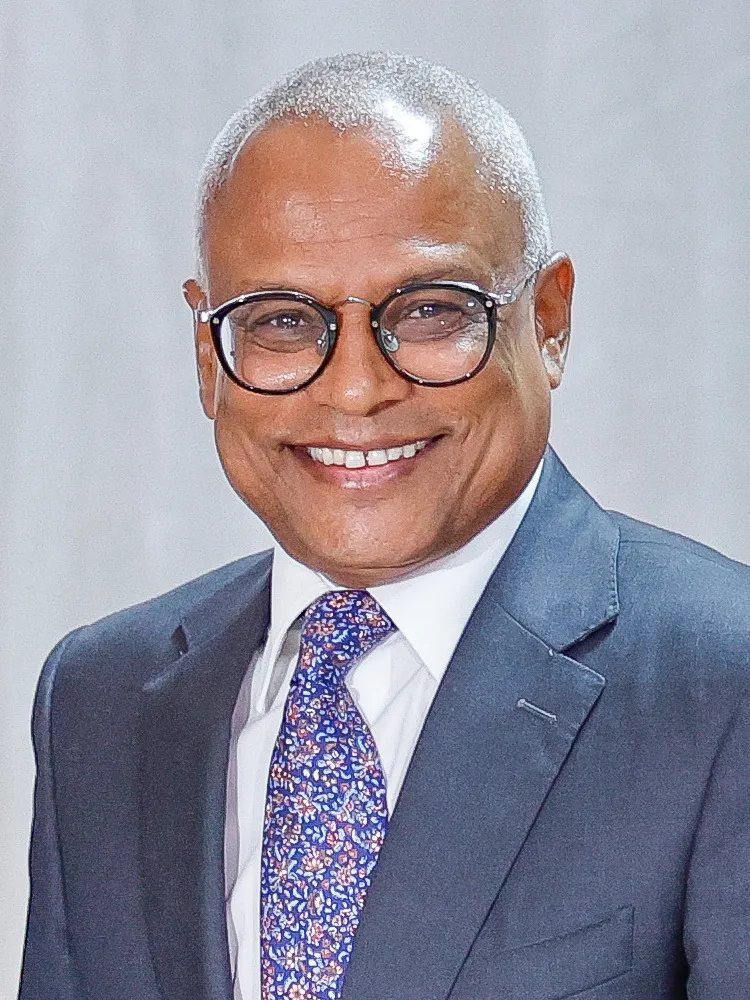
Cape Verde's president, José Maria Neves, was re-elected to a second five-year term in Sunday's election with about 63.9% of the vote — 80,875 votes — with 98% of polling stations counted, according to the provisional count released by electoral authorities and reported by the Portuguese newspaper Observador. In 2021, when he first won, Neves had taken 52%.
His main rival, Joana Rosa, backed by the opposition Movimento para a Democracia (Movement for Democracy, MpD), took 31.5% — 39,950 votes. She conceded at 9pm local time, with counting still under way, and said she would stay in politics as an elected member of parliament. A former justice minister between 2021 and 2026, Rosa was the first woman to run for the presidency of Cape Verde.
Antero Tavares, Casimiro de Pina, Gilson Alves and Loisito Sousa also stood.
The figure that troubled both sides
Provisional abstention came in at 68.1% — above the 52% of 2021 and the 64.5% of 2016. The country had about 419,400 registered voters, of whom 76,400 live abroad. In practice, little more than a third of the electorate turned out.
Winner and loser reached the same diagnosis by different routes. Rosa called the figure a "black mark" on Cape Verde's democratic record and said institutions need to get closer to people. Neves proposed a study into the causes of abstention and attributed the number to large-scale emigration and movement between islands without any update of the electoral rolls — meaning part of the registered electorate no longer lives where it is registered. He also argued for electronic voting as a way to lift participation.
That caveat matters for reading the data: in a country of 500,000 people with a large diaspora, the electoral register tends to inflate the denominator, and abstention measured against it does not translate directly into political disengagement.
One party at both ends of power
The win carries an institutional effect. Neves's Partido Africano da Independência de Cabo Verde (African Party for the Independence of Cape Verde, PAICV) had already won a majority in the legislative elections of May 2026, which brought Francisco Avelino Vieira de Carvalho, a former mayor of Praia, to the premiership. With the re-election, the PAICV now holds the presidency and the office of prime minister at the same time for the first time in more than a decade.
Cape Verde has a hybrid system in which the head of state holds veto power while executive authority is concentrated in the prime minister. In a televised address on Sunday night, Neves spoke of "a great victory" and promised to keep to the referee's role: he said he would remain an "independent, impartial" president, "an arbiter and moderator of the political system".
He also pledged to unite all Cape Verdeans, including the diaspora, to defend freedoms, democracy and the rule of law, and to pursue growth that raises wages and household incomes. On the campaign trail, continued economic expansion and protection for emigrants were the central themes, and Neves said he intended to convene a youth summit on emigration.
Who Neves is
Born in 1960, Neves was prime minister for 15 consecutive years, until 2016, before reaching the presidency in 2021. The second term closes out a career spanning three decades of Cape Verdean politics.
The archipelago ranks third among 54 countries in the 2025 Ibrahim Index of African Governance, behind Seychelles and Mauritius, and is frequently cited as one of the continent's most stable cases.
With information from Observador, New African Magazine and Renascença.