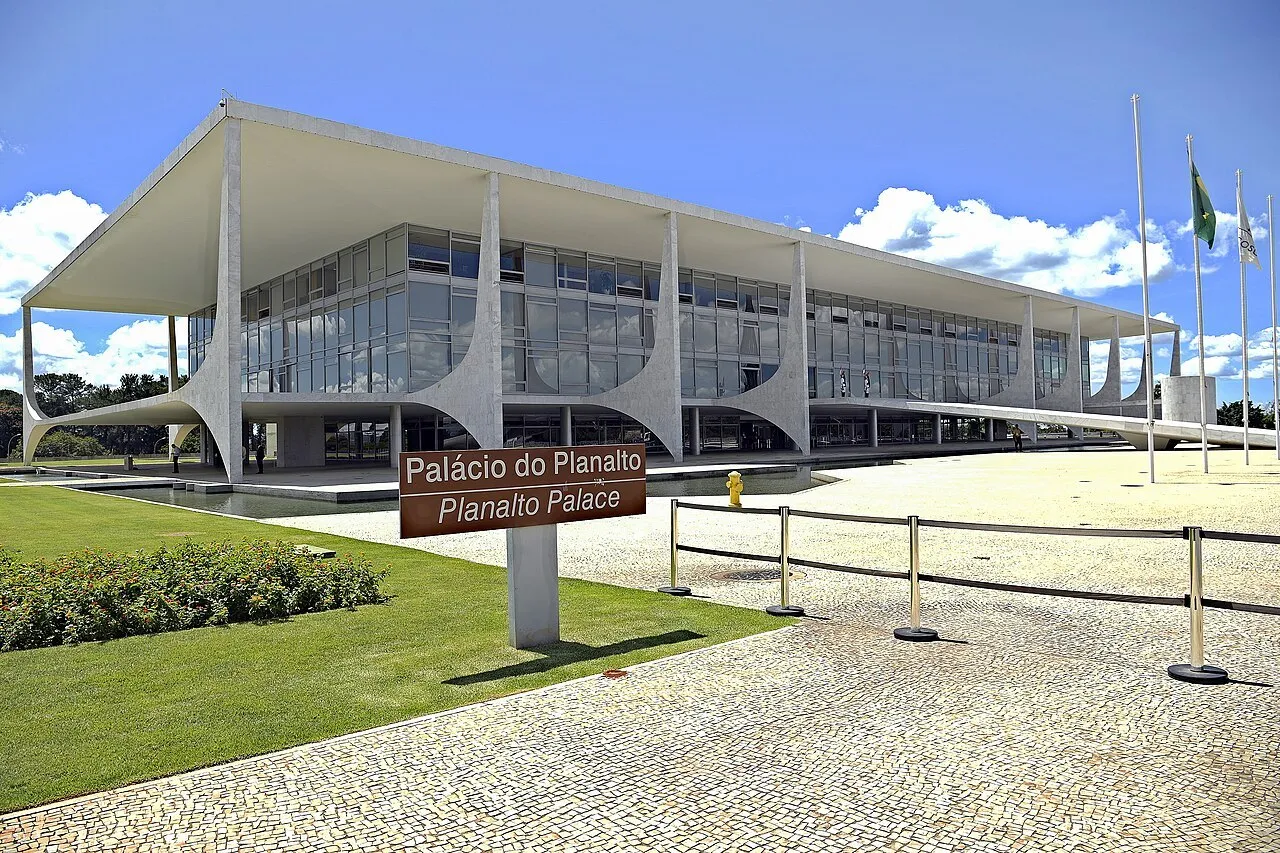
President Luiz Inácio Lula da Silva signed Brazil's fiscal adjustment law on Tuesday (24) with no vetoes, a day after the Congresso Nacional (National Congress) finished approving it. The text was published in a special edition of the Diário Oficial da União (the official gazette) and, according to Canal Rural, became Complementary Law 239 of 24 November 2026, originating from bill PLP 299/2026.
Speed was the most visible feature of its passage. The Senado (Senate) finished its part on Thursday (19), and the Câmara dos Deputados (Chamber of Deputies) voted in an extraordinary session called by its speaker, Hugo Motta (Republicanos-PB), at the request of the presidential palace, at a moment of a rising dollar and expectations of further monetary tightening. Barely more than a day passed between the final vote and the signature.
The spending growth cap falls to 2%
At the core of the law is a set of triggers that can be switched on when the fiscal target is at risk. In the years those mechanisms are activated, from 2027 onwards, the cap on real spending growth drops from 2.5% to 2% — that is, the budget may grow at most two percentage points above inflation.
The law also allows the government to freeze spending even when the projected primary balance sits within the target's tolerance band. Until now, being inside that band meant no freeze was required; it no longer does. And mandatory expenditures not set out in the Constitution become eligible for freezing.
Tax breaks: the across-the-board cut doubles
The linear cut in federal tax breaks rises from 10% to 20%, with the exceptions written into law preserved. Under the schedule, the wider cut takes effect in January or March 2027, depending on the tax.
The law also opens the way to restricting companies' use of tax credits — so-called cross-offsetting, in which a credit from one tax is used against a debt from another — and authorises the use of up to 40% of leftover balances in public funds.
The immediate effect is worth R$ 10.5 billion
The one provision that bites this year is the authorisation to exclude up to R$ 10.5 billion in diesel subsidies from the calculation of the 2026 primary balance target. That reduces the need for spending restraint in the year's final bimonthly revenue and expenditure report, due the same Tuesday.
It is the only clause that changes the arithmetic of 2026. Everything else starts to operate in 2027.
How much the package saves: the figures do not match
Here the sources diverge, and not by a little. Canal Rural, citing Estadão Conteúdo, says the estimated impact fell to R$ 50 billion in 2027 after changes made by the Senate. Poder News, the same day, reports savings of up to R$ 56 billion for the year. Neither explains the difference, and the government released no consolidated official figure alongside the signing.
The gap between the two numbers — R$ 6 billion — is larger than many federal programmes. Until the Ministério da Fazenda (Finance Ministry) publishes its calculations, the size of the adjustment remains an estimate in dispute.
Who pays
States and municipalities are on the list. The law caps federal transfers to state and municipal pension schemes at R$ 3 billion a year from 2027 to 2030, and cuts compensation under the Lei Kandir (the Kandir Law) from R$ 4 billion to R$ 2 billion a year until 2031 — the payment the federal government makes for exempting exports from state VAT. The Confederação Nacional de Municípios (National Confederation of Municipalities) estimates a loss of around R$ 5 billion a year for city halls.
Health is affected too: revenue from the export tax on petroleum is left out of the base used to calculate the constitutional health spending floor until 2030. According to Poder News, that could mean R$ 9 billion less for the sector in 2027.
Top public salaries are left to Congress
The signed text also addresses the ceiling on civil service pay — the so-called supersalaries — and gives Congress 60 days to regulate the matter. The ceiling currently stands at R$ 46,366.19.
The complementary law was also signed by Planning and Budget Minister Bruno Moretti and Finance Minister Dario Durigan. None of the outlets consulted carried a statement from the president or the ministers at the time of signing.
With information from Canal Rural (Estadão Conteúdo), Poder News and Área VIP.