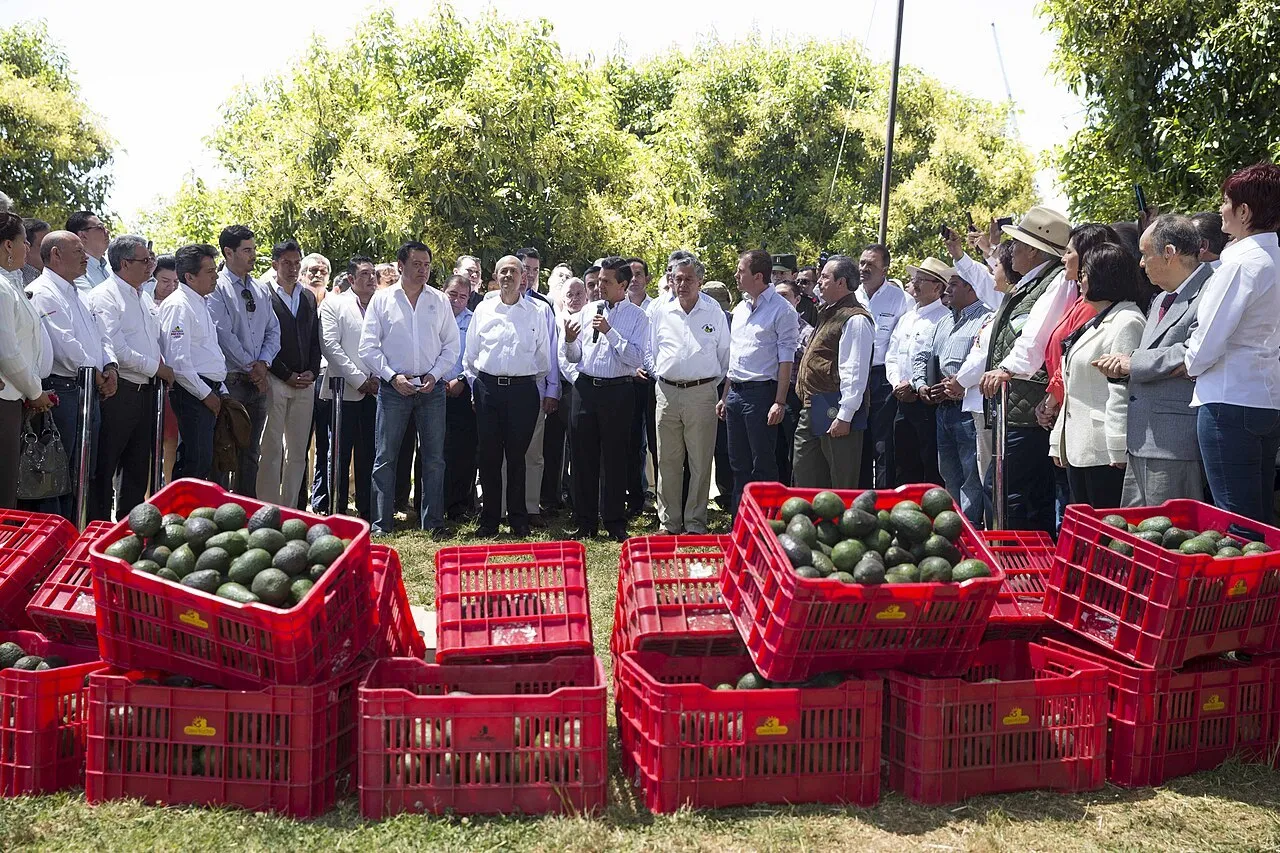
Mexican avocado shipments to the United States resume on Thursday, November 5, after growers, cutters and packing houses in Michoacán agreed to end the stoppage that had halted the harvest since the third week of October.
The agreement was struck on the night of Tuesday the 3rd and announced on Wednesday by Agriculture Secretary Columba López Gutiérrez at President Claudia Sheinbaum's morning press conference. "It was agreed that agro-export is restored tomorrow," the official said, according to El Informador. Neither she nor the government disclosed the terms, so it is not clear whether the growers' core demand — the price — was settled.
The number that set off the conflict
Avocados were selling for about 13 pesos a kilo in parts of Michoacán, and up to 20 pesos elsewhere, according to the Secretaría de Agricultura (Mexico's agriculture ministry). The cumulative fall exceeds 30% over recent months, a level growers say is below their production cost. Sheinbaum attributed part of the drop to rising production in other countries.
Luis Javier de la Rocha, director of the Asociación de Productores y Empacadores Exportadores de Aguacate de México (APEAM, the growers' and packer-exporters' association), located the explanation in supply and demand in the US market, which takes about 80% of Mexico's avocado exports.
What the stoppage cost
Weekly shipments to the United States fell roughly 40% during the dispute, according to APEAM. The volume figures reported by El Informador are harsher still: from 28,000 tonnes in October down to 11,000. The gap between the association's percentage and the tonnage suggests the adjustment was not uniform week by week, and the 40% is best read as the figure the industry itself stands behind.
The scale explains why a single state's labour dispute becomes a matter of foreign trade. Michoacán grows more than 70% of Mexico's avocados and is — together with Jalisco — one of only two states currently authorised to export fresh avocados to the United States. In the first half of 2026, avocado exports earned US$3.809 billion, making it the country's leading export fruit.
The dispute over the pest
The episode became tangled with a plant-health argument. Productores Unidos de Aguacate de Michoacán reported the destruction of as much as 52 tonnes of fruit from Nayarit, Jalisco and Colima during pest inspections.
Authorities gave a different reading of the two cases circulated on video: the Jalisco shipment was bound for an oil plant, and in Nayarit the insect turned up in the transport boxes rather than in the fruit. López said that case "was not screwworm". APEAM said phytosanitary inspection filters continue to operate under the previous conditions.
What remains open
The agriculture ministry says it carries out monthly random inspections across 500 hectares of production in Michoacán. In parallel, a labour certification for agro-exports is in a pilot phase and a zero-deforestation certification still has to be developed. Sheinbaum said the government is working with growers, cutters and agro-exporters, and with the United States, to guarantee shipments and prices.
As of Wednesday's close, full normalisation had not been confirmed: Thursday is the agreed date, not a fact already verified in the field.
With information from El Informador and El Imparcial.